Table of Contents
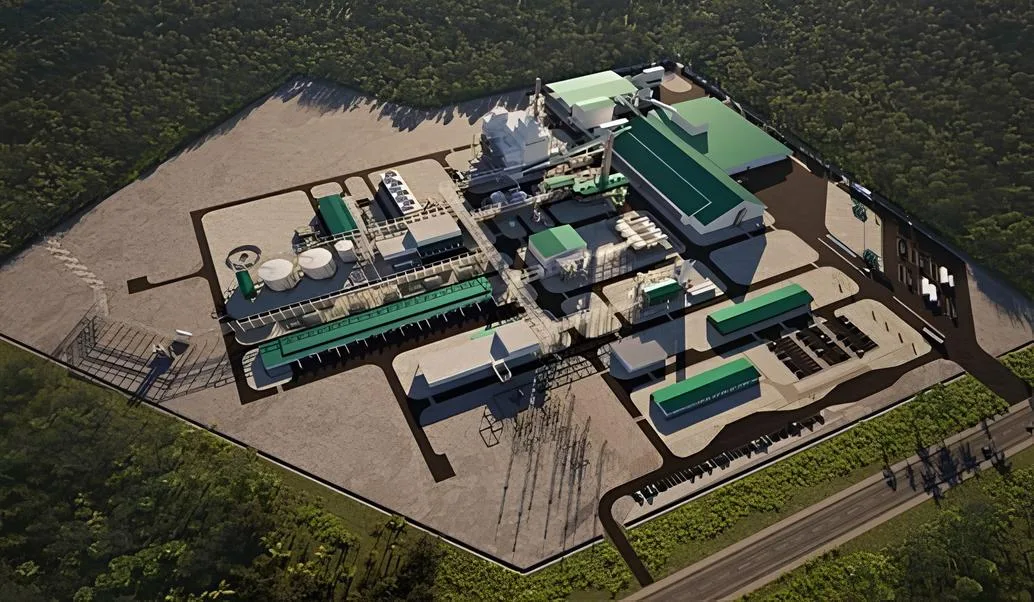
ATOME PLC confirmed the final investment decision to build in Villeta, Paraguay, the world’s first industrial-scale plant that will produce green fertilizers, of low carbon footprint. The total investment initiative is approximately US$665 million.
This is very important because it is the first project of its kind to reach this stage without the need for government subsidies, demonstrating that it is commercially viable on its own.
Why is it relevant?
Currently, more than 50% of the world’s population depends on nitrogen fertilizers to produce food, but almost all of them are manufactured using fossil fuels like gas natural or oil. This causes two problems:
- CO₂ emissions
- Geopolitical dependence
The Villeta solution
The plant will use 100% renewable hydroelectric energy from Paraguay, since the country has abundant renewable energy from enormous dams like Itaipu. This is how it will produce calcium ammonium nitrate (CAN)a low carbon footprint fertilizer, without relying on volatile fossil fuels.
The plant will have the capacity to generate around 260,000 tons per year of fertilizer. ATOME secured marketing through an agreement with Yara International, a Norwegian fertilizer giant, which will buy 100% of the production for a period of ten years.
Expected impact
The Villeta plant will allow for approximately a reduction in 500,000 tons of CO₂ emissions equivalent each year. For Paraguay, this means job creation, industrial strengthening, and added value to its clean energy.
Construction of the plant is expected to begin in the short term, with the goal of starting commercial operations before October 2029.
Source and photo: ATOM