
Sempra Infrastructure activates gas pipeline to supply Port Arthur LNG
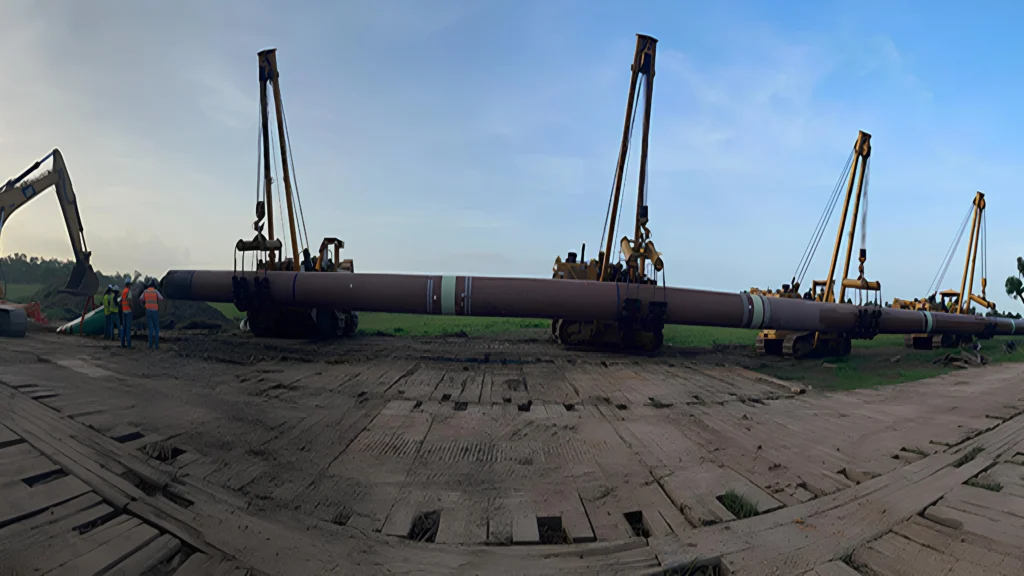
Sempra Infrastructure has commissioned the Louisiana Connector Pipeline, a new natural gas pipeline designed to supply the Port Arthur LNG project on the U.S. Gulf Coast. The commissioning of this infrastructure increases gas transportation capacity to one of the largest liquefied natural gas export facilities currently under development in North America.
A natural gas pipeline designed to expand supply
According to the company, the project includes 72 miles of 42-inch diameter pipeline and a compressor station located in Beauregard Parish, Louisiana. The infrastructure can transport up to 2 billion cubic feet per day of natural gas to meet the operational needs of the first phase of Port Arthur LNG.
Furthermore, Sempra Infrastructure noted that construction was completed ahead of schedule and with an investment of less than the $1 billion initially budgeted for the project. This result reinforces the company's strategy of expanding its energy assets in the United States.
The gas pipeline is integrated into the Gulf energy network
The new pipeline improves the integration of the gas transportation network in southern Louisiana by connecting it to the Gillis Hub Pipeline system. This interconnection facilitates greater supply and distribution options within one of the nation's most active energy regions.
The infrastructure will also be linked to the natural gas storage project that Sempra is currently developing in Louisiana. Once completed, this asset will provide additional storage capacity and greater flexibility to respond to fluctuations in regional and export demand.
Port Arthur LNG is moving towards its next operational stage
Construction of Port Arthur LNG Phase 1 continues to progress with the goal of reaching an approximate capacity of 13 million tons per year of liquefied natural gas. The facility is designed to serve international markets through long-term supply contracts.
In this context, the availability of a stable gas supply is essential to ensure the terminal's future operation. The commissioning of the Louisiana Connector Pipeline provides precisely that additional capacity, enabling the planned operations to continue once the complex is operational.
New boost to US natural gas exports
The start of operations for this natural gas pipeline represents a new step forward in the expansion of U.S. energy exports. The project helps strengthen the Gulf Coast energy corridor and improves the logistical capacity needed to meet the growing global demand for liquefied natural gas.
Sempra Infrastructure 's position within the development of strategic energy infrastructure and strengthens Port Arthur LNG 's readiness to become one of the leading LNG export hubs in the United States.
News of additional interest
TGS adds new wind power contract in Europe
TGS announced it has been awarded a contract to characterize a site for a future offshore wind farm in Europe. The company will begin data acquisition in early August using the vessel Ramform Vanguard and expects the campaign to last approximately three weeks. The project is part of the 2026 European offshore wind energy development season.
The company highlighted that it will use ultra-high-resolution 3D seismic technology to obtain detailed images of the seabed. This information will allow for the identification of geological conditions relevant to the safe and efficient installation of wind turbines. TGS also indicated that it is exploring new market opportunities with the intention of expanding its activities in the region in the coming months.
SLB strengthens its presence in deep waters with bp
SLB announced that its joint venture, OneSubsea, has been selected by bp to supply a subsea pumping system for the Thunder Horse project in the Gulf of America. The agreement covers engineering, procurement, manufacturing, testing, and project management to support the development of this deepwater asset.
The contract adds to other recent agreements secured by OneSubsea for the Kaskida and Tiber projects, also operated by bp. All three developments will employ the same standardized subsea pumping solution, a strategy aimed at streamlining project execution and reducing commissioning times. The technology is designed to improve production flow and increase resource recovery in the reservoirs.
France bets on a large SAF plant in Dunkirk
Technip Energies, Airbus, Safran, and Tereos have signed an agreement to create Rebound, a joint venture that will develop a sustainable aviation fuel (SAF) plant in the port of Dunkirk, France. The project envisions a production capacity of approximately 160,000 tons per year using Alcohol-to-Jet technology, which transforms advanced ethanol from agricultural and forestry waste into fuel suitable for commercial aviation.
The partners will finance the initial development phase, which includes engineering studies, permits, and other necessary activities before making a final investment decision. Each company will contribute a specific role within the value chain: Technip Energies will lead the technical development, Airbus and Safran will participate as industrial partners and potential buyers, while Tereos will supply the raw materials needed for production. The facility aims to become one of the largest of its kind in Europe.
Six cranes will reinforce the North Sea wind farm network
Seatrium has acquired six Liebherr RL 2600 marine cranes, which will be installed on three TenneT power transmission platforms in the Netherlands. The cranes will be distributed among the IJmuiden Ver Beta, IJmuiden Ver Gamma, and Nederwiek Beta projects, all linked to 2 gigawatt offshore wind infrastructure in the North Sea.
The cranes were designed to operate in offshore environments and are notable for their compact structure, lifting capacity of up to 25 tons, and reach of 45 meters. They will also be equipped with the LiMain digital system, which allows for remote monitoring and maintenance from land. This technology is particularly useful on unmanned platforms, as it reduces travel distances and improves operational efficiency.