Aramco is making progress in the recovery of its oil corridor to the Red Sea after restarting operations of the Saudi Arabian East-West pipeline, the reactivation opens the door to the return of crude oil shipments from the port of Yanbu after several days of interruption.
According to sources cited by Reuters, the system has begun transporting oil again at a reduced rate, Aramco is seeking to gradually increase the flow to approximately 4 million barrels per day although the infrastructure has a total capacity close to 7 million barrels per day.
The recovery comes after drone attacks that forced the system to temporarily shut down and affected much of the crude oil shipments from Yanbu. The disruption impacted a strategic route used by Saudi Arabia to move oil from fields and terminals in the east of the country to the Red Sea coast.
Aramco will gradually restore capacity to the East-West pipeline
For now, the return to normal operations will be gradual. A security source consulted by Reuters indicated that reaching close to 40 % of the pipeline’s capacity it could take a few days, while full recovery could extend between six and eight weeks another source linked to the oil industry estimated that the full restoration of pumping could be completed within up to six weeks.
The damage caused by the attack affected three pumping stations of the system, the East-West pipeline has 11 pumping stations and it also has two independent facilities designed for pressure relief and operational safety functions, the resumption of transport will also allow the progressive restoration of crude oil supplies to Aramco’s refineries located on the Red Sea coast, facilities that depend on this corridor to receive raw materials.
Yanbu returns to the center of Saudi oil exports
Before the pipeline’s reactivation was confirmed, Aramco had informally informed several Asian refineries that shipments from Yanbu could resume soon, at that time, there were no official loading notices or a confirmed date for the full restart of operations. With the partial return of flow, the situation changed. According to one of the sources cited by Reuters, a crude oil shipment was scheduled to depart from Yanbu bound for China.
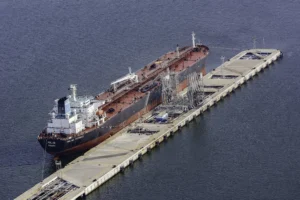
The Yanbu terminal is of strategic importance to Saudi Arabia because it provides a direct outlet to the Red Sea reducing dependence on facilities located on the Persian Gulf coast. Before the disruption, approximately 4 million barrels per day they were transported via this corridor to Yanbu, that volume represents approximately 4 % of the world’s oil supply.
Aramco maintains alternative routes for its cargo
The temporary suspension of the East-West pipeline forced Saudi Arabia to use alternative logistics to maintain its supply commitments. These measures included oil shipments from Ras Tanura and the crude oil transfer operations between ships carried out near the port of Sohar, in Oman.
The location of Sohar, outside of Strait of Hormuz this provided an additional route for reorganizing some of the cargo while the corridor to Yanbu remained restricted. Furthermore, market operators began positioning tankers inPort Said and Sidi Kerir, Egypt, given the expectation of a recovery in Saudi flows and the possibility of new ship-to-ship transfer operations.
The evolution of pumping will be crucial in the coming weeks. Aramco is first seeking to restore operational stability to the East-West pipeline, while Yanbu gradually resumes its role as a strategic hub for Saudi crude oil exports.
Source: EcoPulse24
Photo: Shutterstock