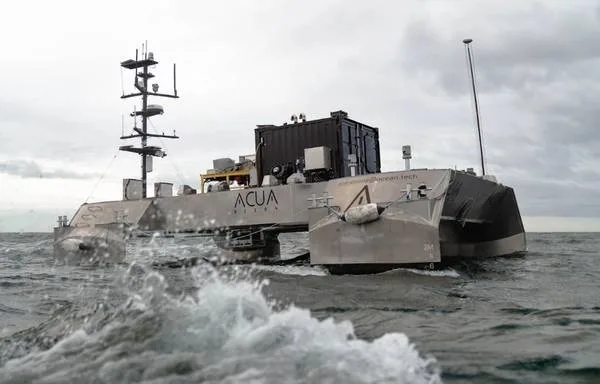
ACUA Ocean and Forssea Robotics completed a three-week campaign in the waters of Plymouth, UK, aimed at validating a combined USV (Uncrewed Surface Vessel) and ROV (Remotely Operated Vehicle) system for subsea inspection and light interventions controlled entirely from shore.
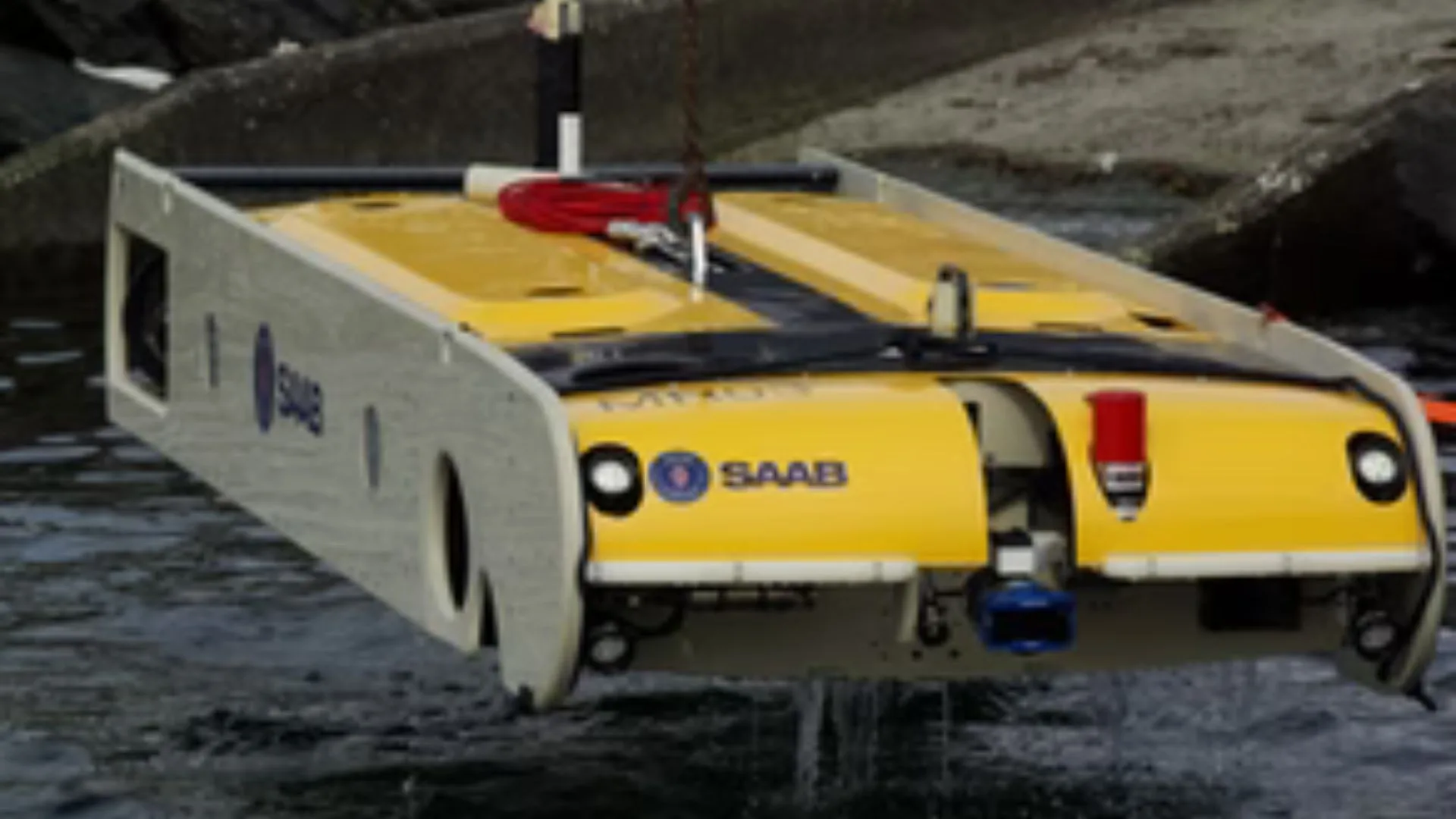
The campaign, conducted under a contract with the European Space Agency, exceeded 40 deployments of the 170 kg ARGOS ROV, using ACUA’s Pioneer as the surface platform.
The technically relevant aspect is that the operation was not limited to demonstrating that both vehicles could function separately. The system had to resolve a complete sequence: USV approach, ROV launch, immersion, positioning, inspection, recovery, and cycle repetition.
During six days at sea, up to eight launch and recovery sequences were achieved in a single day, while the ARGOS operated at depths of over 20 meters with up to 35 meters of umbilical deployed.
This turns the campaign into a test of marine systems integration, where the availability of the subsea vehicle also depends on the stability of the surface platform, the positioning system, and the ability to manage the physical link between the two.
Positioning connects the USV to the ROV
One of the fundamental components was the Sonardyne Mini-Ranger 2 USBL system, installed on the Pioneer to track the WSM6+ transponder located on the ARGOS. This architecture allows the ROV’s relative position to the surface platform to be determined during the subsea operation.
The importance of the system becomes apparent when the ROV is no longer directly linked to a conventional crewed vessel. The operator must keep the subsea vehicle on target while the surface platform also maintains its position. The tests utilized both manual station-keeping and dynamic positioning to keep the ARGOS on task.
The USV is not simply a substitute for the ship carrying the ROV. It becomes an active part of the mission’s control and positioning architecture. Inspection quality depends on surface, navigation, acoustic tracking, umbilical, and ROV functioning as a coordinated system.
ACUA Ocean and Forssea Robotics: Over 40 tests under sea conditions
The tests included the inspection of the Poulmic wreck, a seabed formation, and a concrete block used as a target in Cawsand Bay. Operations were also conducted with one-meter waves, average winds of 18 knots, and gusts between 20 and 30 knots.
In another phase, operations were carried out with waves of up to two meters south of the Plymouth breakwater; the companies reported that these conditions did not affect the ROV.
The most significant operational data point is repeatability: up to eight launch and recovery cycles in one day. For a technology intended for offshore inspection, repair, and maintenance, demonstrating an isolated cycle has a different value than proving the system can repeat the operation multiple times within a campaign.
The engineering challenge then shifts from simple vehicle capability to variables such as availability, recovery time, stability during launch, umbilical management, positioning precision, and the ability to consistently recover the ROV. These variables will ultimately determine the system’s real productivity.
Offshore inspection architecture is changing
The system was operated from ACUA Ocean’s Remote Operations Center at Turnchapel Wharf, while Forssea simultaneously supervised operations from Sète, France.
The companies aim to use the integrated platform for offshore inspection, repair, and maintenance, surveys, and work on subsea infrastructure.
ACUA maintains that this configuration can expand the weather window available compared to certain operations performed with crewed vessels and reduce the need for support vessels and offshore personnel. This is a company claim and must be validated through larger-scale operational campaigns and economic metrics.
SOURCE and PHOTO: https://www.oedigital.com/