Sharara Zawiya pipeline resumes crude oil transport after five days
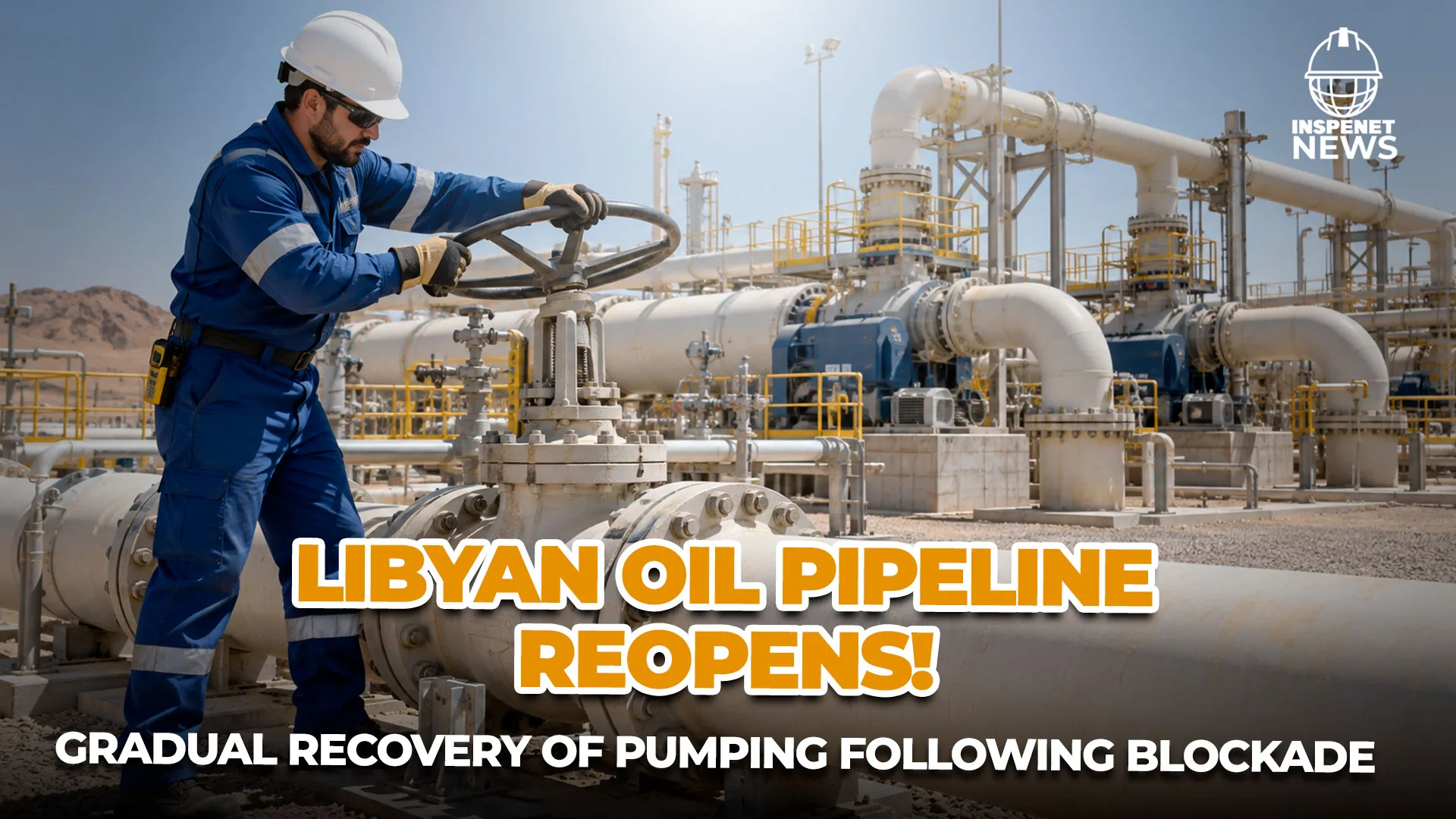
After a five-day shutdown, the Sharara Zawiya pipeline resumed crude oil transport in Libya following the reopening of valve number 7 on the main line. The National Oil Corporation (NOC) reported that flow began to gradually recover as its teams carried out the necessary procedures to normalize the system.
According to estimates from the state oil company, the shutdown resulted in a loss of 942,376 barrels of production. This volume was valued at approximately $95 million and illustrates the impact that even a brief interruption can have on one of the country's main oil corridors.
Sharara-Zawiya regains flow after five days of interruption
The disruption began on September 21 when an armed group and members of the Petroleum Facilities Guard closed a valve on the pipeline. The action significantly reduced production at Sharara and limited crude oil shipments to Zawiya.
Afterward, the reopening allowed for the resumption of transport to the refinery and export terminals. The NOC indicated that the return to flow would be gradual due to the technical operations necessary to safely restart the system.
For now, the recovery does not imply that Sharara has immediately returned to its usual levels; the field has an approximate capacity of between 300,000 and 320,000 barrels per day, so normalization will depend on the speed at which the flow increases during the next operations.
Libya lost 942,376 barrels during the shutdown
During the five-day shutdown, Sharara's production accumulated a loss of 942,376 barrels. If that volume is distributed over the five days, the average equates to approximately 188,500 barrels per day that went unproduced during that period.
However, that average is a calculation derived from the total volume reported by the NOC and does not mean that the reduction was identical each day. Production could vary as the disruption progressed and field operating conditions changed.
Furthermore, the economic estimate placed the losses at around 95 million dollars, a figure that allows us to understand the weight of Sharara within Libya's oil production and the financial effect of the disruptions affecting its transport infrastructure.
How did the outage affect the Zawiya refinery?
The closure of the Sharara Zawiya pipeline had consequences beyond the producing field; the reduction in available crude oil forced the shutdown of a unit at the Zawiya refinery due to the reduced supply from Sharara.
In this sense, the refinery has a capacity of approximately 120,000 barrels per day, and its operation is important for the processing of crude oil and for the internal supply of fuels in Libya.
Therefore, the connection between Sharara and Zawiya illustrates how a disruption in transportation can quickly spread to other areas of the industry. Lower production limits the supply to the refining system and also reduces the volume available for oil exports.
Sharara's production is gradually beginning to recover
With the valve reopened, technical teams began operations to increase the flow in a controlled manner. The goal is to restore production at Sharara and resume shipments to Zawiya and export points.
Meanwhile, the pace of recovery will be one of the data points to monitor; the physical reopening of the line allows transport to restart, but the return to levels close to normal capacity depends on the stability of the system and the conditions on the ground.
In this way, Libyan oil production can recover some of the lost volume if the corridor remains open. The continued flow will also alleviate pressure on the refinery and improve the availability of crude oil for export.
Why is the Sharara-Zawiya corridor important for Libyan oil?
In operational terms, Sharara is Libya's largest oil field, and its capacity of up to 320,000 barrels per day gives it considerable weight within national production. Its connection to Zawiya allows crude oil to be transported to processing facilities and terminals linked to export.
Furthermore, the difference between the capacity of Sharara and that of the Zawiya refinery demonstrates that the corridor serves a broader function than simply supplying the refining complex. Part of the transported volume also supports the country's oil exports.
At the same time, the incident again highlights the sector's vulnerability to localized shutdowns. Sharara has suffered recurring disruptions associated with protests, disputes, and technical problems that have affected crude oil production and transportation at various times.
When could production fully return to normal?
For now, the NOC did not indicate that the field had immediately recovered its full capacity; the company reported that flows were gradually returning while operations continued to safely restore the system.
Consequently, the next production data will allow us to gauge how long it takes Sharara to return to its normal levels. It will also be important to observe the recovery of supply to the Zawiya refinery and the volume available for export terminals.
Finally, the reopening of the Sharara Zawiya pipeline restores transport capacity to a vital connection for Libya's oil industry. After five days of closure, the focus has now shifted from the accumulated losses to how quickly Sharara can recover production and normalize crude oil shipments.

News of additional interest
US relaxes CO₂ limits for power plants
The U.S. Environmental Protection Agency (EPA) repealed most of the carbon standards approved in 2024 for fossil fuel-fired power plants. It also proposed eliminating other remaining federal requirements on greenhouse gases. According to estimates cited in available information, this change could generate approximately 123 million additional metric tons of CO₂ over the next decade compared to the scenario under the previous regulations.
The measure alters the landscape for coal and gas-fired power plants as electricity demand grows due to data centers, artificial intelligence, and new industrial activities. The EPA estimates that the partial repeal could save approximately $310 billion in costs, and that removing the remaining requirements would save an additional $370 million in direct compliance costs. However, this second modification still needs to complete the regulatory process, and the figures are based on the agency's own projections.
Texas filters AI energy frenzy
Texas is facing a surge in applications to connect large consumers to its electrical grid. ERCOT is reviewing a backlog of nearly 474 GW , and about 90% of those applications are related to data centers. This figure is more than five times the system's recent record peak demand. Faced with this volume, the operator is auditing the projects to separate viable developments from duplicate applications or those that may not materialize.
The process primarily affects large loads of 75 MW or more and requires developers to demonstrate their actual electricity needs. Texas has also established a flat fee of US$100,000 for interconnection studies for large consumers. The digital expansion is already driving transmission projects, new substations, and supply agreements. Some data centers are even considering dedicated power plants to ensure they have the energy they require.
The US expects higher gasoline consumption through 2050
vehicle efficiency standards that could increase fuel consumption over the next few decades. The proposal aims for an average of 34.5 miles per gallon by 2031, down from 50.4 mpg under the previous standards. According to estimates from the Department of Transportation, the change could reduce the average cost of a new vehicle by about $930.
Lower fuel efficiency would have the opposite effect on vehicle usage. Projections indicate approximately 100 billion additional gallons of fuel consumed by 2050 and an extra US$185 billion in expenses for drivers. A roughly 5% increase in CO₂ emissions is also projected. These figures are cumulative, and their final impact will depend on factors such as mileage and the adoption of electric vehicles.
AQO seeks to reduce the cost of underwater operations
subsea equipment market with a proposition focused on reducing costs, delivery times, and mobilization difficulties. The new brand is backed by SMD and will utilize standardized designs to facilitate the integration of its systems with offshore operations. Its model will combine SMD's technical expertise with manufacturing and supply capabilities in China.
The strategy aims to serve operators who don't require equipment designed from scratch for each project. AQO will offer predefined configurations that could simplify the transport, installation, and commissioning of underwater vehicles and systems. SMD, meanwhile, will continue to focus on more technically complex projects. To date, AQO has not released pricing or specific figures regarding potential cost or delivery time reductions.