Talking about a cleaner and more efficient hydrogen production implies analyzing the technologies used, the energy source that powers them, energy consumption, technological maturity, and the possibility of scaling each alternative. The International Energy Agency (IEA) points out that global hydrogen production exceeded 100 million tonnes in 2025, while low-emission production still represents a small fraction of the total. At the same time, installed electrolysis capacity exceeded 4 GW, reflecting the rapid evolution of this technology.
In this scenario, hydrogen production technologies are evolving in several directions: reforming with carbon capture integration, alkaline and PEM electrolysis, high-temperature electrolysis, methane pyrolysis, thermochemical pathways, and processes based on biomass or solar energy. Not all have the same degree of maturity or the same infrastructure needs, but all are part of the technological debate on how to produce hydrogen more efficiently.
Hydrogen production: Emerging technologies
Hydrogen has consolidated itself as a strategic energy vector for sectors where direct electrification presents limitations, such as certain industrial applications, the production of synthetic fuels, and some heavy transport segments. However, hydrogen is not a primary energy source: it must be produced from a raw material and through a process that requires energy. Hydrogen can be obtained through thermal, electrolytic, photochemical, and biological processes. The United States Department of Energy (DOE) groups among the main pathways natural gas reforming, biomass gasification, electrolysis, solar thermochemical processes, and certain biological pathways.
This technological diversity is important because there is no single optimal pathway for all projects. The choice depends on the availability of raw materials, electricity, and heat, the required scale, product purity, energy costs, existing infrastructure, and applicable environmental and regulatory criteria.
Processes from natural gas
The main source for obtaining hydrogen is natural gas, composed mainly of methane. The combination of three factors-large global reserves, its relatively low cost, and its chemical composition-makes natural gas currently the most interesting hydrogen source for the global market.
Methane reforming: evolving technology
Natural gas reforming, especially steam methane reforming (SMR), continues to be one of the main industrial technologies for producing hydrogen. In the conventional process, methane reacts with steam at high temperature and in the presence of a catalyst, generating a synthesis gas that subsequently undergoes the water-gas shift reaction and a separation and purification stage, usually through pressure swing adsorption (PSA).
The main steam reforming reaction can be expressed as:
CH₄ + H₂O → CO + 3H₂
Subsequently, carbon monoxide reacts with steam to produce carbon dioxide and additional hydrogen:
CO + H₂O → CO₂ + H₂
The industrial maturity of SMR is an important advantage, as there is accumulated experience in catalysts, operation, thermal integration, and gas separation. However, the conventional pathway relies on a hydrocarbon as a raw material and generates process-associated emissions. The incorporation of carbon capture, utilization, and storage (CCUS) can modify its environmental performance, although it introduces new infrastructure, energy, cost, and CO₂ management requirements.
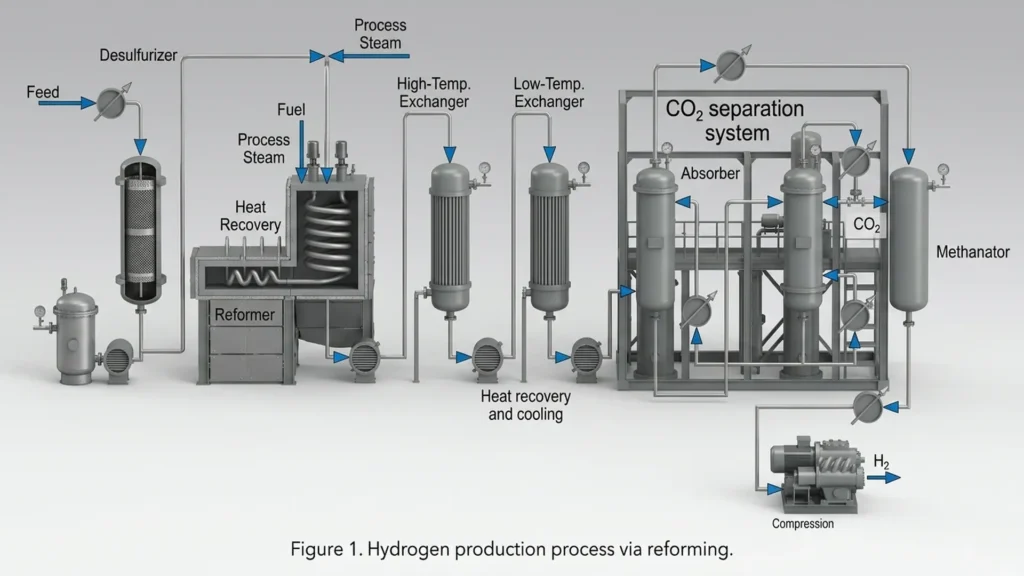
PSA: hydrogen purification after reforming
Pressure swing adsorption (PSA) allows the separation of hydrogen from other components of the process gas using adsorbent materials that preferentially retain certain molecules. The cycle generally comprises adsorption, depressurization, purge, and repressurization. Adsorbent selection, as well as pressure and temperature conditions, determines separation performance.
PSA is not a hydrogen production technology in itself, but rather a separation and purification stage that allows obtaining a product with the quality required by the application.
Methane pyrolysis: emerging solution
Methane pyrolysis, also called thermal cracking of methane, seeks to decompose the CH₄ molecule into hydrogen and solid carbon:
CH₄ → 2H₂ + C
Unlike reforming, the reaction does not require introducing an oxidizing agent that directly generates CO or CO₂ as reaction products. The technological appeal of this pathway lies in producing hydrogen and a carbonaceous byproduct that, depending on its properties and the process, can have commercial applications.
Among the research lines are plasma- and microwave-assisted processes, as well as catalytic systems. Catalysts can reduce activation energy and favor the rate of methane decomposition. However, catalyst stability, carbon management, heat transfer, and process scalability remain relevant challenges.
The IEA identifies microwave plasma pyrolysis among the technologies that advanced in technological readiness level during the recent period, showing that this pathway is moving from research toward more advanced demonstrations, although it does not yet possess the commercial maturity of conventional technologies.
Water electrolysis: Expanding technological platform
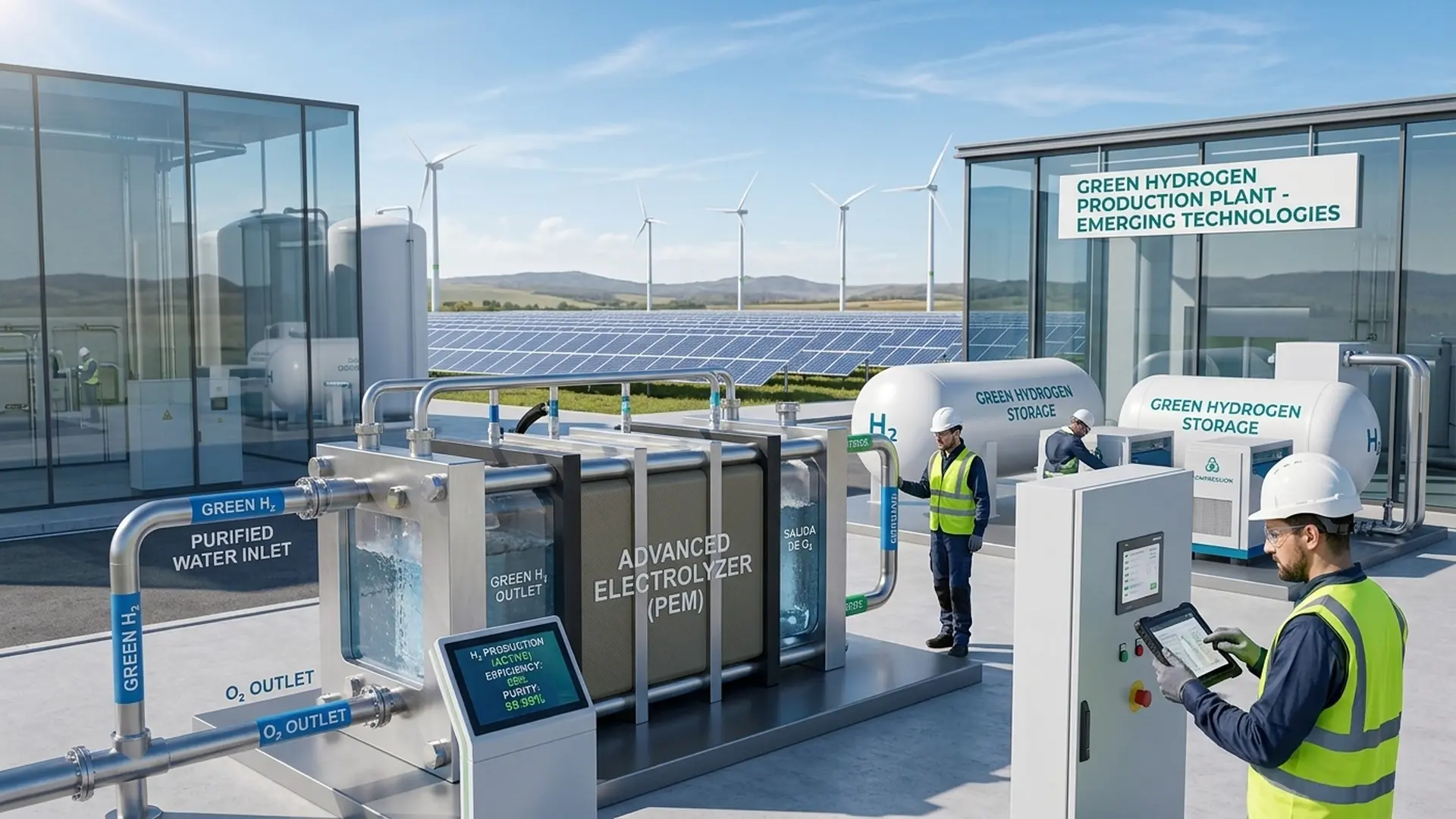
Water electrolysis uses electricity to separate water into hydrogen and oxygen. Its appeal for the energy transition lies in its ability to be coupled with renewable sources, although the environmental and economic performance of the resulting hydrogen depends on the electricity used, the electrolyzer efficiency, and project conditions.
In general terms, the overall reaction is:
2H₂O → 2H₂ + O₂
Different families of electrolyzers exist. Alkaline systems are a mature commercial technology; proton exchange membrane (PEM) systems offer good dynamic response and high current density; and solid oxide electrolyzers (SOEC) operate at elevated temperatures, utilizing part of the energy in the form of heat. The DOE also highlights the development of anion exchange membranes (AEM), which seek to combine the advantages of different architectures.
Global installed electrolysis capacity exceeded 4 GW in 2025, after doubling during that year. The IEA foresees that the expansion will continue, although it warns that costs, availability of competitive electricity, financing, infrastructure, and demand uncertainty continue to condition the pace of deployment.
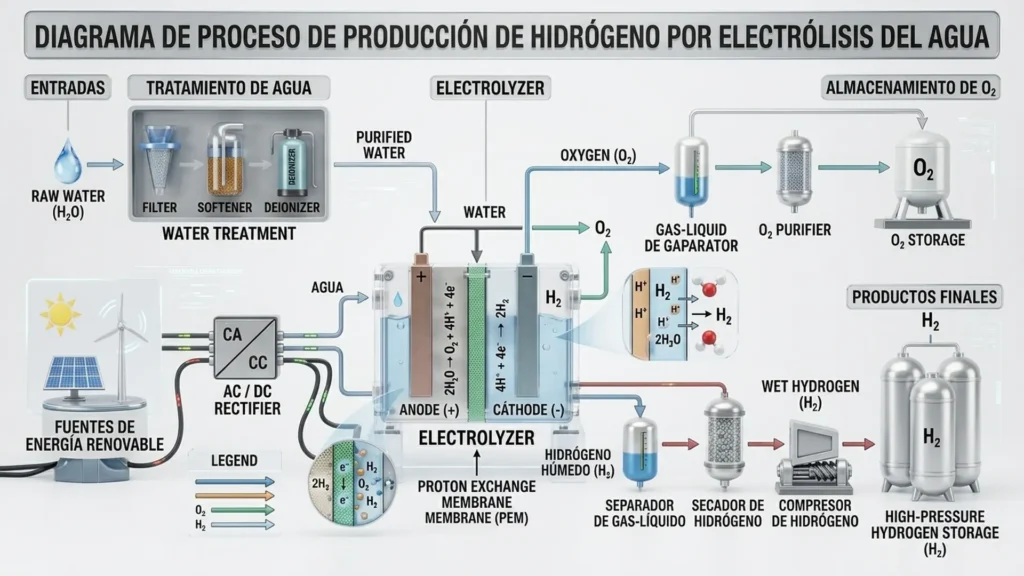
New electrolyzers and materials: Reducing energy consumption
The evolution of electrolysis does not depend solely on increasing installed capacity. It also requires improving efficiency, durability, current density, material utilization, and thermal management. In this context, the development of electrodes and catalysts with higher electrochemical activity can reduce losses associated with overpotentials and improve overall system performance.
The challenge is particularly relevant because the production costs of electrolytic hydrogen are linked to electricity, equipment costs, and electrolyzer utilization. Therefore, research into materials, catalysts, membranes, and cell architectures constitutes one of the main pathways to improving competitiveness.
High-temperature electrolysis and other emerging pathways
High-temperature electrolyzers seek to leverage available thermal energy to reduce part of the electrical demand required to split water. Solid oxide systems are especially interesting for applications where a suitable heat source exists and where thermal integration can improve process efficiency.
In addition to electrolysis, there are solar thermochemical, photoelectrochemical, and biological pathways. These alternatives present varying degrees of maturity and still require advances in materials, stability, yield, and scalability. The DOE considers these pathways within a broad technology portfolio to produce hydrogen from various resources.
Which technology can offer a more efficient hydrogen production?
There is no universal answer. The efficiency of a hydrogen production technology must be evaluated considering the entire system and not just the reactor. The energy source, raw material, scale, thermal integration, purification, storage, infrastructure, and final end-use of the hydrogen can substantially modify the result.
The current situation shows a coexistence of mature and emerging technologies. Natural gas reforming continues to be competitive and widely deployed; electrolysis is growing rapidly and can be integrated with low-emission electricity; pyrolysis seeks to leverage a pathway without direct formation of carbon oxides in the main reaction; and thermochemical, photoelectrochemical, and biological technologies maintain long-term potential.
The IEA notes that low-emission hydrogen is still more expensive than unabated fossil pathways in much of the world, although the gap could narrow with lower technology costs, competitive renewable electricity, supportive policies, and greater scale.
Innovation will define the next stage of hydrogen
The evolution of hydrogen production does not depend on a single technology, but on the ability to combine innovation in processes, materials, catalysts, electrolyzers, gas separation, and energy integration. The challenge lies in moving from technically viable solutions to systems that can operate in a stable, efficient, and economically competitive manner at an industrial scale.
The current trend points toward greater technological diversification. Electrolysis is expanding its scale, while technologies such as pyrolysis, advanced electrolyzers, and thermochemical pathways continue to mature. In parallel, conventional technologies can incorporate efficiency improvements and carbon capture systems. Consequently, the future of hydrogen will likely be a multi-pathway scenario, selected according to the resources and conditions of each region.
Conclusions
Hydrogen production depends on a wide variety of technologies and the availability of raw materials and energy. Methane reforming maintains high industrial maturity, while the incorporation of CCUS seeks to reduce its climate impact.
Electrolysis represents one of the main platforms for producing low-emission hydrogen when using low-carbon intensity electricity. Innovation in electrolyzers, catalysts, membranes, and new pathways such as pyrolysis will be decisive in improving efficiency, costs, and scalability.
References
- International Energy Agency (IEA). (2026). Global Hydrogen Review 2026. Paris: IEA.
- International Energy Agency (IEA). (2025). Global Hydrogen Review 2025. Paris: IEA.
- U.S. Department of Energy. Hydrogen Production Pathways. Office of Clean Energy Demonstrations / Hydrogen and Fuel Cell Technologies Office.
- U.S. Department of Energy. Hydrogen Production: Natural Gas Reforming.
- U.S. Department of Energy. Hydrogen Production: Electrolysis.
- U.S. Department of Energy. Hydrogen Production Processes.
FAQs – hydrogen production
Which technology offers the best balance between efficiency and cost today?
There is no universally superior technology. The option depends on the availability and cost of energy, raw material, project scale, infrastructure, and operating conditions. Electrolysis is particularly attractive when competitive low-emission electricity is available.
What materials will enable more durable electrolyzers?
The development of new catalysts, membranes, and electrode materials seeks to increase electrochemical activity, reduce degradation, and decrease the use of critical materials. Solutions will depend on the type of electrolyzer and operating conditions.
Can pyrolysis reach a competitive industrial scale?
It has potential, but still faces challenges related to heat supply, catalyst stability, solid carbon management, and scalability. Its competitiveness will depend on technological evolution and economic conditions.
How will hydrogen costs change toward 2030?
It is expected that electrolyzer cost reductions, scaling up, the availability of competitive electricity, and technological improvements will favor a progressive decrease. However, evolution will depend on each region and energy market conditions.