Artificial intelligence (AI) has gone from being an emerging technology to becoming a fundamental tool for many everyday activities. We can see this in everything from virtual assistants and search engines to advanced systems capable of analyzing vast amounts of information in a matter of seconds. Its growth has been so significant that it is transforming the way businesses, industries, and even governments operate.
However, behind all these advancements, it is important to highlight an aspect that rarely receives the same attention: the massive amount of energy required for artificial intelligence to function. This has raised concerns regarding energy supply. Ensuring there is enough electricity to power these infrastructures is a priority for companies and governments. Therefore, the development of the digital economy and the transformation of the industrial and energy sectors depend on technological innovation as well as the capacity to produce and distribute energy reliably.
AI and energy demand
AI requires a much higher processing capacity than that used by traditional digital technologies. Training these advanced models and running complex applications requires thousands of specialized processors working simultaneously over long periods of time.
Conventional data centers are completely different from facilities designed for artificial intelligence, because the latter use large amounts of graphical processing units or GPUs—meaning equipment that consumes much more energy due to the massive number of calculations they perform. Furthermore, in order to guarantee service availability, these operations must remain active permanently.
According to Chevron (2025), an AI-oriented data center can consume up to fifty times more electricity per square meter than a traditional commercial building. This difference helps us understand why the growth of AI has sparked concern among energy planners.
To reaffirm the exponential nature of this growth, projections also indicate that the infrastructure associated with artificial intelligence will represent approximately 1% of global electricity demand by the year 2030 (Chen et al., 2026). It is a percentage that may seem small, but the problem fundamentally lies in the fact that energy consumption is concentrated in specific regions where large data centers are installed.
This situation represents a major shift in how electricity demand has historically grown. For decades, the main factors of increase were population growth and industrial expansion. Today, a significant portion of new demand comes from digital facilities that require constant power and high levels of reliability to avoid disruptions in their operations.
Power grids under increasing pressure
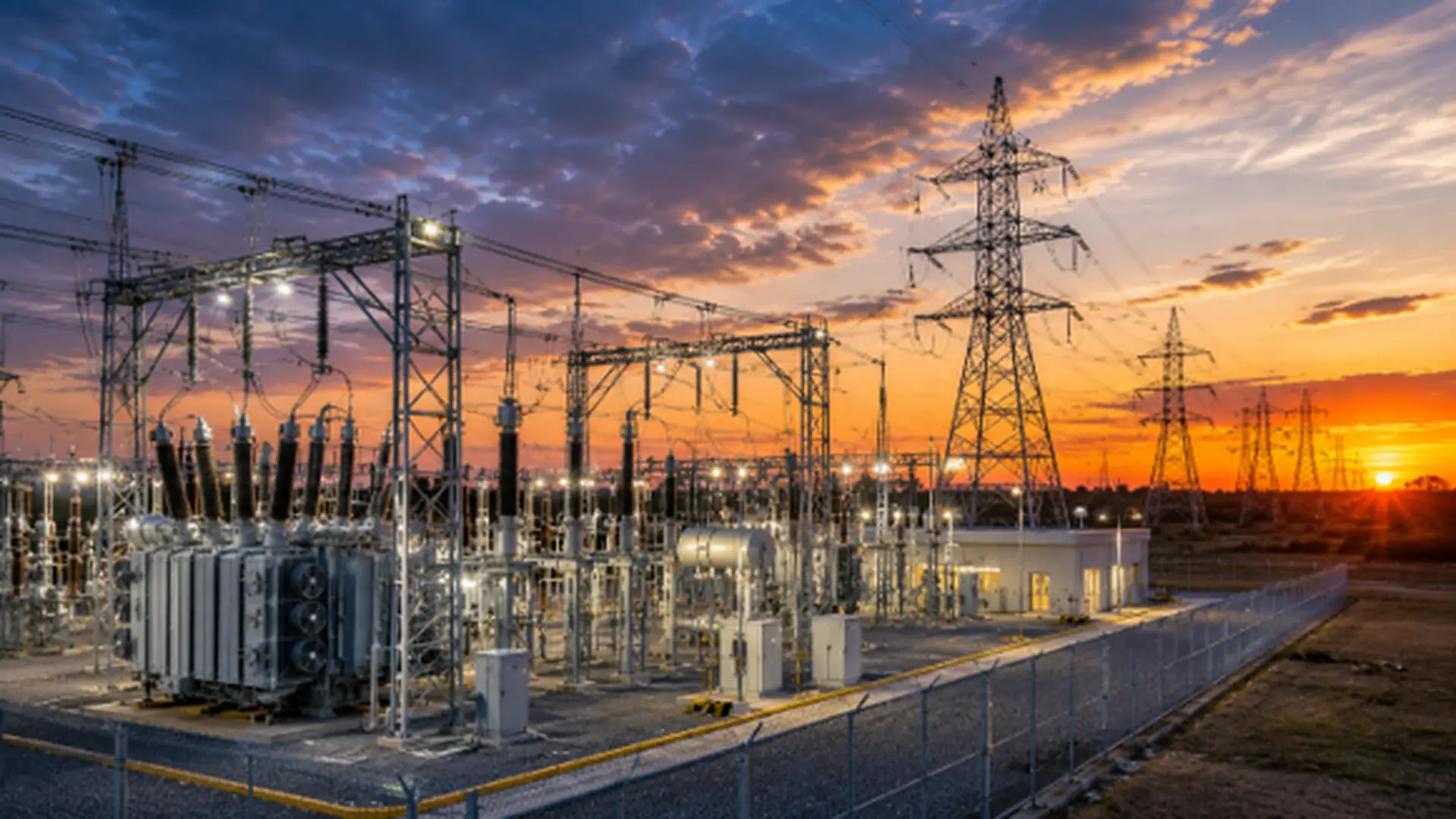
Data centers are growing at full speed and are putting power grids to the test. Much of the current infrastructure was designed to serve consumption patterns very different from those presented by these technological facilities.
Inevitably, when several large data centers concentrate in the same region, the grid experiences congestion issues such as delays in electrical connections. In this case, the need to make major investments in new transmission lines, transformers, and substations is a priority.
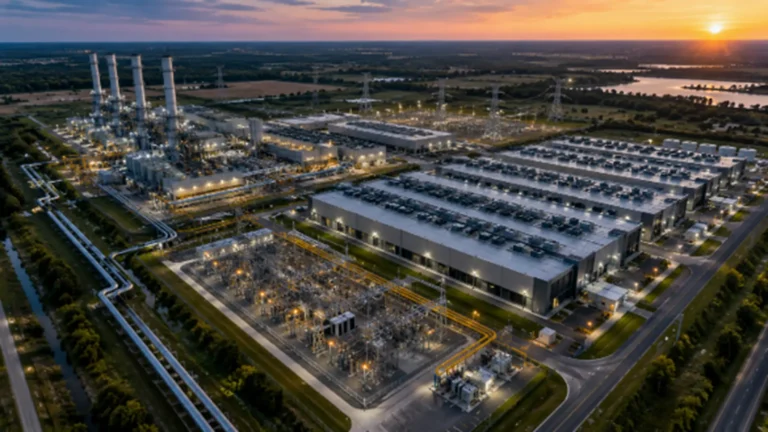
Some companies are already looking for alternative solutions. One of the most widely used strategies consists of building power generation plants near data centers. In this way, energy is produced practically in the same place where it will be consumed, reducing dependence on traditional grids and improving supply reliability (Reuters, 2025).
The United States is one of the countries where this trend is most clearly observed. States like Texas, Virginia, and Arizona have become major development hubs for the tech industry. As a consequence, power operators have had to accelerate expansion projects and reinforce their investment plans to respond to an ever-increasing energy demand.
The return of natural gas
In recent years, much of the energy debate focused on the expansion of renewable energy. However, the rapid demand for electricity generated by data centers has brought back to the table the importance of having sources capable of producing power continuously.
Although solar and wind energy are fundamental to moving toward more sustainable systems, their production depends on weather conditions. In contrast, natural gas allows electricity to be generated constantly and can respond quickly to variations in demand.
With this objective, Chevron, Engine No. 1, and GE Vernova announced an alliance in 2025 aimed at developing energy projects specifically designed to supply data centers. The initiative includes facilities capable of generating up to four gigawatts of electricity, an amount sufficient to power millions of homes in the United States (Chevron, 2025).
One of the most important aspects of this project is that the electricity will be supplied directly to the data centers, avoiding some of the existing limitations in conventional transmission grids. Additionally, the facilities will use technology developed in the United States and will be located in strategic regions for the growth of the digital industry.
For the companies involved, guaranteeing access to reliable energy is essential to maintain the country’s technological leadership in the field of artificial intelligence.
Technology and energy
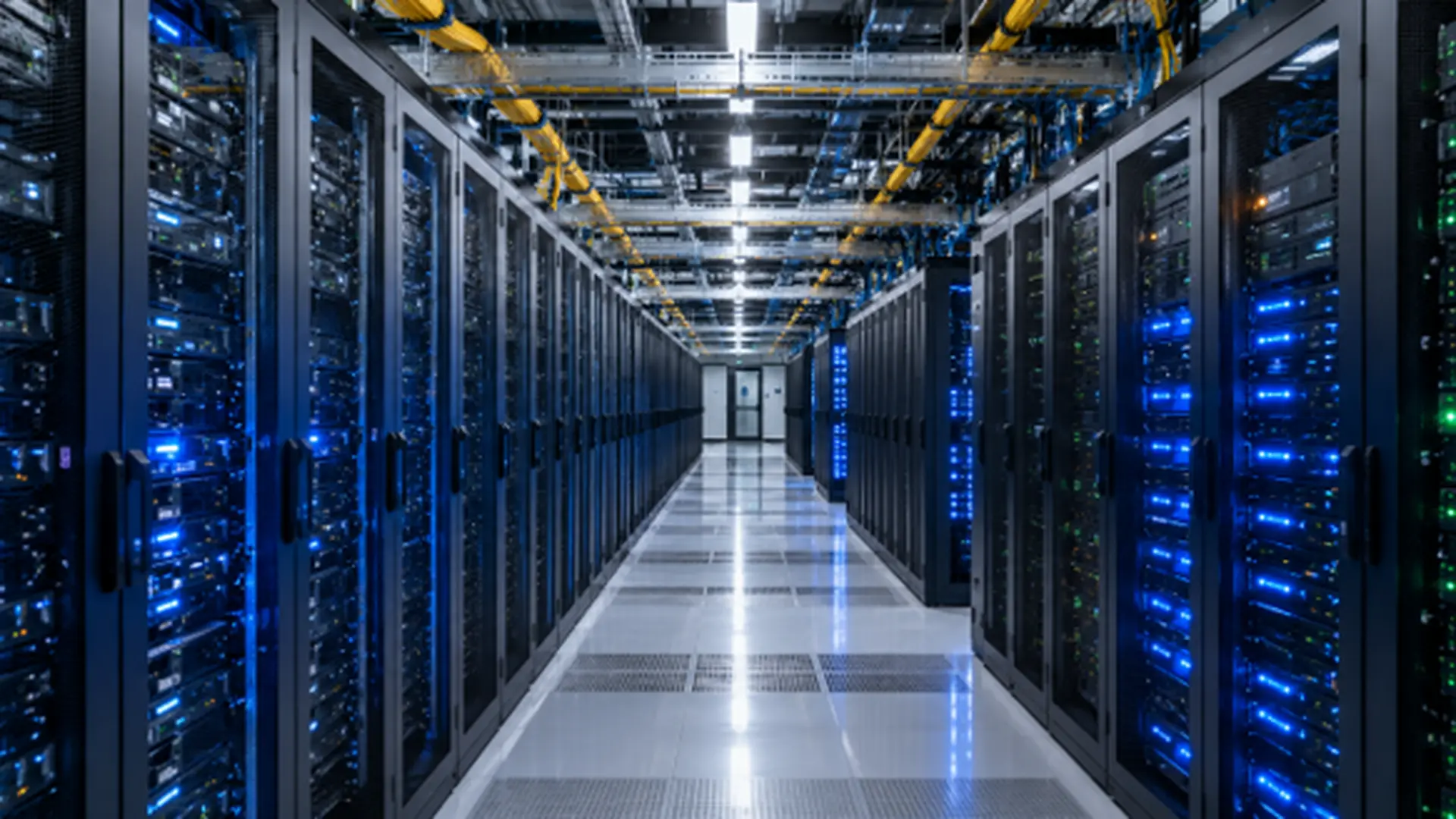
As the demand for electricity rises, tech companies are establishing stronger alliances with companies in the energy sector. This collaboration seeks to secure the necessary supply to sustain the growth of digital infrastructure.
A recent example is the agreement signed between Chevron and Microsoft to develop the Kilby project in Texas. According to Reuters (2026), the initiative includes a natural gas-powered facility capable of supplying up to 2.67 gigawatts of power intended for Microsoft data centers dedicated to artificial intelligence services.
The contract covers a twenty-year energy supply, which demonstrates the strategic importance that energy has acquired for the technology sector. This type of agreement allows companies to reduce uncertainty related to the future availability of electricity.
In practice, energy is shifting from being simply a support service to becoming a strategic resource as important as the computer systems themselves. Without sufficient electricity, the development of artificial intelligence could be limited regardless of the technological advancements achieved.
Consequences for pipelines and the midstream sector
The growth of data centers does not only affect power grids. It also has major implications for the infrastructure responsible for transporting natural gas.
Generation plants built to supply data centers need a continuous supply of fuel. This implies higher volumes transported through pipelines, expansions in compression stations, and new connections to ensure the constant arrival of the energy resource.
From an industrial perspective, data centers are beginning to behave like large energy consumers, comparable to petrochemical complexes or large-scale manufacturing facilities. As new technological projects are built, the need to develop infrastructure capable of supporting their operation also increases.
Many of these initiatives are being located in regions with abundant natural gas resources, such as the Permian Basin in Texas. This situation facilitates integration among producers, transporters, and energy consumers, generating benefits for all actors involved (Reuters, 2026).
For companies dedicated to gas transportation, this scenario represents a significant growth opportunity, especially since contracts related to data centers typically extend over long periods and demand high levels of reliability.
Conclusions
Artificial intelligence is transforming much more than technology. Initiatives developed by companies like Chevron, GE Vernova, Engine No. 1, and Microsoft demonstrate that energy availability has become one of the most important factors for the future development of AI.
Today, building a data center does not only involve installing servers and computer equipment; it also requires guaranteeing an energy infrastructure capable of sustaining its operation for decades. The relationship between technology and energy is closer today than ever before, and everything indicates that this connection will continue to strengthen as artificial intelligence continues to expand in the coming years.
References
- Chen, D., Zhou, Z., Cai, Y., Qin, J., Katchova, A., & Chen, L. (2026). Concentrated siting of AI data centers drives regional power-system stress under rising global compute demand. arXiv.
- Chevron. (2025). Engine No. 1, Chevron and GE Vernova to power U.S. data centers. Chevron Corporation.
- Chevron. (2025). US companies make bold move to power nation’s data centers. Chevron Corporation.
- Reuters. (2025, January 28). Chevron partners with Engine No. 1, GE Vernova to power U.S. data centers.
- Reuters. (2026, June 22). Chevron signs power supply deal with Microsoft for Texas data center.
- World Oil. (2025). Chevron to power AI data centers with U.S. natural gas under new partnership. (Chevron)