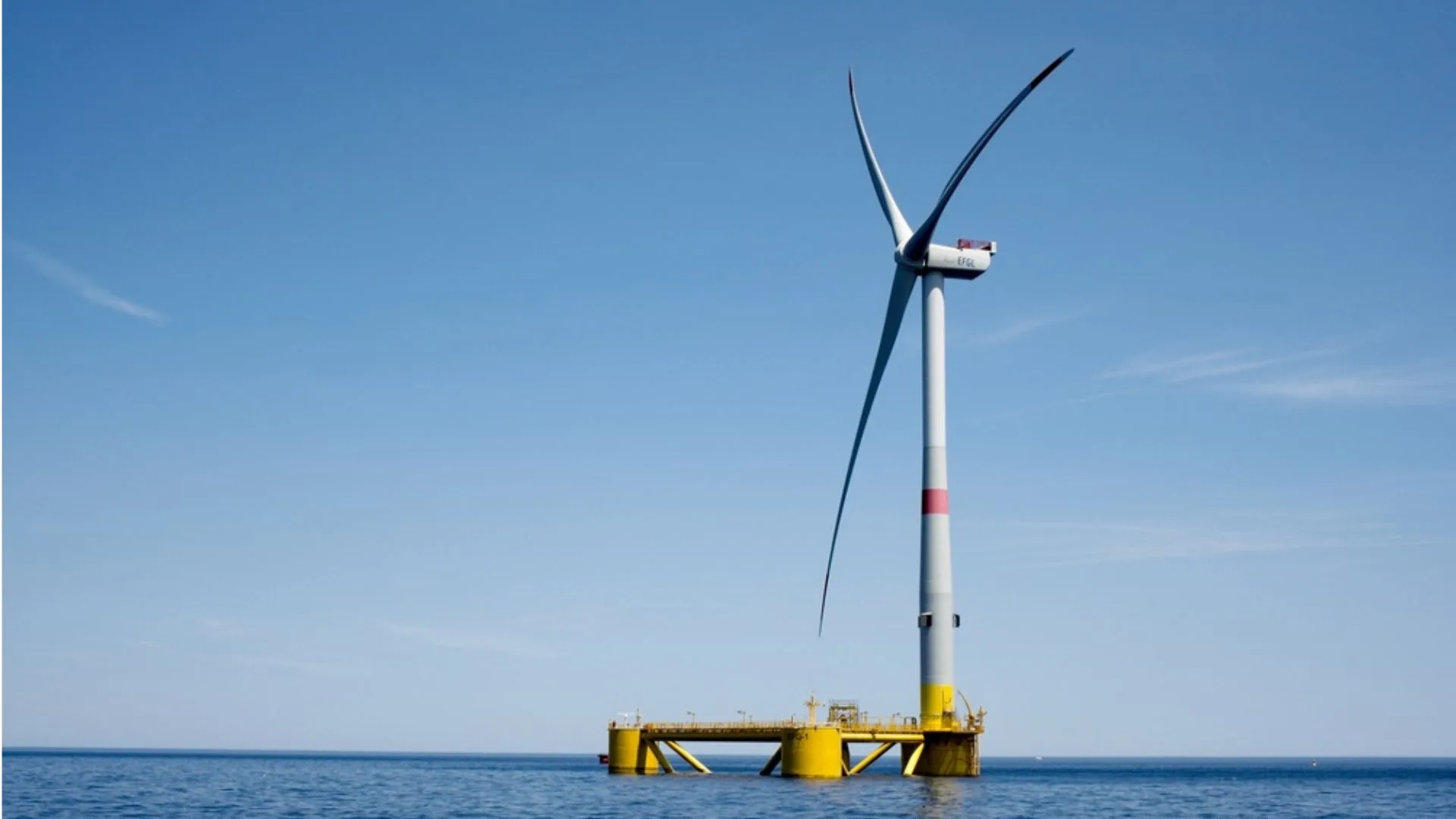
The Spanish company X1 Wind it closed its fourth round of strategic funding ahead of its deployment 8.5 MW X100 floating wind platform at PlemCat, off the coast of Catalonia.
The new resources will allow the NextFloat project to be accelerated and support the company’s transition from the technology validation phase to a stage of greater commercial development.
The funding round was led by Grow Ventures, which will now control approximately 8% of X1 Wind’s share capital. Avançsa, an investment company based in Catalonia, acquired a similar stake.
The operation also includes the conversion of financial instruments previously contributed by investors already present in the company, including Technip Energies, EIC Fund and CDTI Innvierte.
The 8.5 MW X100 platform will arrive at PlemCat
He NextFloat project the plan envisions deploying the X100 at the PlemCat test site, located in the Mediterranean Sea off the coast of Catalonia. The facility has already received environmental approval, and the platform’s construction is scheduled to begin in 2027.
For X1 Wind, the X100 represents a decisive step in the evolution of its floating wind energy technology, the unit will allow the company to scale up its design and calculation methodologies before moving on to platforms designed for higher-power turbines.
The experience gained during the development and operation of the X100 will also serve to promote the commercialization of the future X150 platform.
This model is designed to integrate wind turbines of between 15 MW and 20 MW and represents the next step in the company’s technological strategy.
X1 Wind notes that it already has contracts linked to the X150 for projects in Europe and Asia, its development is based on calculation methodologies validated during the X100 certification process.
X1 Wind combines TLP technology and semi-submersible structures
From a technical point of view, the floating wind platform of X1 Wind combines features of a Tension-Leg Platform (TLP) with elements typical of semisubmersible structures.
The design uses vertical mooring lines to reduce the surface area occupied on the seabed compared to traditional catenary systems. This configuration also prevents chains from dragging on the seabed and aims to decrease underwater noise generated during operation.
According to X1 Wind, less occupation of the seabed can facilitate the coexistence of floating wind projects with other activities carried out in the area, including fishing.
The concept is also based on a lightweight structure that aims to simplify manufacturing, installation, and maintenance tasks.
The company estimates that this configuration could reduce CAPEX by up to 50% compared to certain pre-commercial floating wind projects recently installed in Europe.
A connection system designed to reduce offshore times
Another key design component is the Quick Connector System, a patented solution by X1 Wind to streamline platform connection and disconnection operations. According to the company, the system allows these operations to be completed in a single day.
X1 Wind estimates that this technology can reduce connection times by more than 80% compared to floating wind projects pre-commercials previously deployed internationally.
This capability could simplify certain offshore operations, as it would allow the platform to be disconnected more quickly and facilitate interventions that would otherwise require longer work at sea.
From the X30 to a commercial-scale floating wind platform
The development of the X100 also incorporates the experience gained by X1 Wind during its previous demonstration programs. These include the X30 platform, deployed at the PLOCAN test center in the Canary Islands.
The operational data obtained during these tests has been progressively incorporated into the design and development of larger platforms. With the new funding round and the upcoming production of the X100, X1 Wind is now entering a new phase of NextFloat.
The aim will be to demonstrate its 8.5 MW floating wind turbine technology in the Mediterranean Sea and use that experience as a basis to later move towards the X150, designed for larger commercial-scale projects.
Source: offshoreWind
Photo: Shutterstock