Table of Contents
- What is mild steel?
- Low-carbon steel
- Mild steel vs. carbon steel
- Chemical composition and alloying elements
- Common grades of mild steel
- Microstructure: ferrite and pearlite
- Physical properties of mild steel
- Mechanical properties of mild steel
- What is mild steel used for?
- Mild steel pipe
- ASTM A36, ASTM A53 y ASTM A106
- Corrosion and surface protection
- Advanced manufacturing and trends
- Industrial selection criteria
- Conclusions
- References
- Frequently Asked Questions (FAQs)
When a structure presents permanent plastic deformation, a pipeline loses thickness due to corrosion, or a welded joint exhibits cracking, the root cause is usually associated with an incomplete material specification and not just an operational failure. Mild steel is one of the most widely used carbon steels in materials engineering because it combines low carbon content, high malleability, ductility, good toughness, excellent weldability, and wide commercial availability.
Its industrial value depends on controlling chemical analysis, ferritic-perlitic microstructure, yield strength, density, heat number, mill certificate, and compatibility with standards applicable to metal fabrication, mild steel piping, welding, inspection, and service.
What is mild steel?
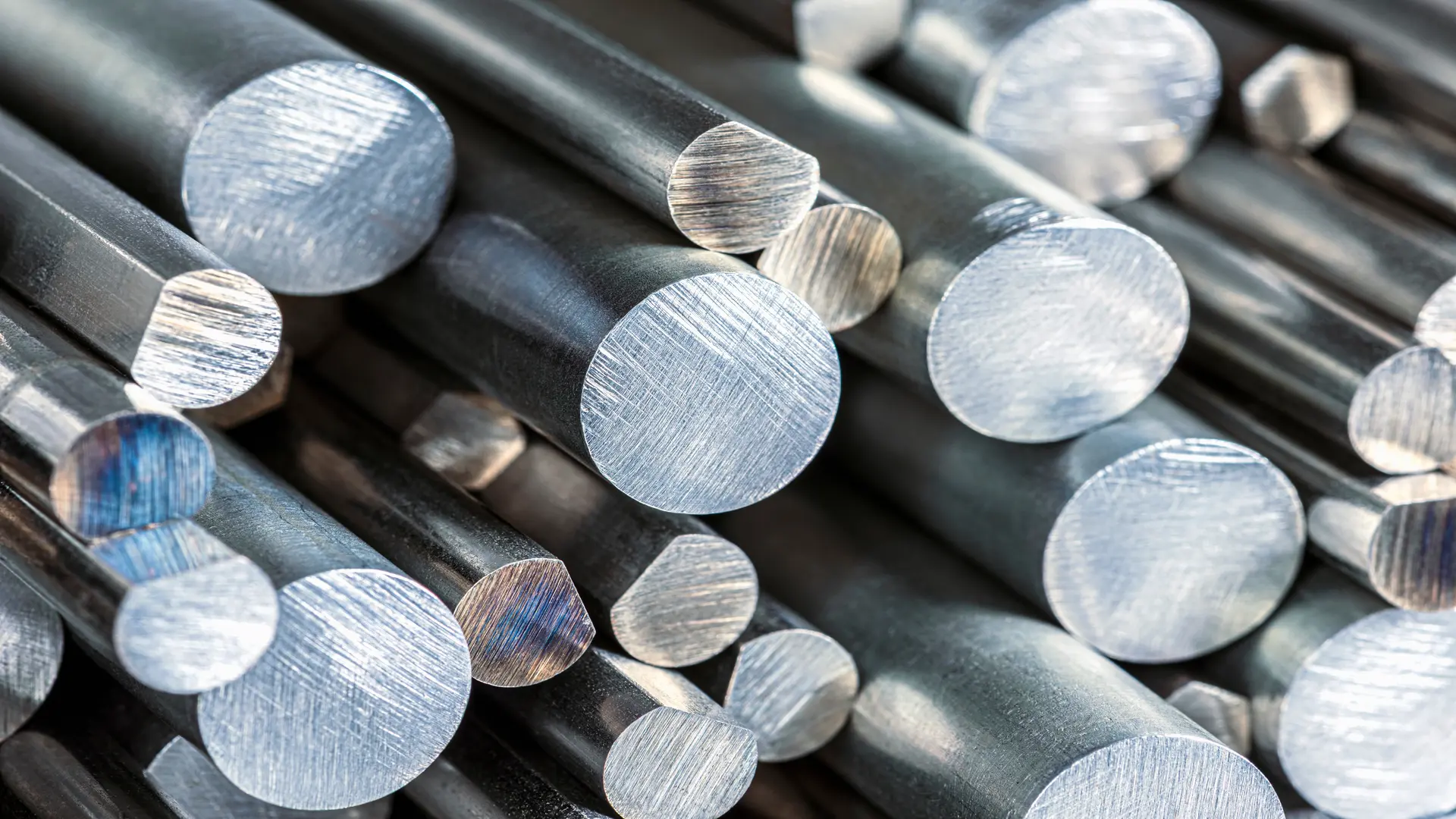
Mild steel, known as mild steel or MS, is an iron-carbon alloy with a low percentage of carbon. Generally, it contains less than 0.30% carbon by weight, which allows it to combine moderate strength, high ductility, good toughness, ease of forming, machining, and excellent weldability.
From a metallurgical point of view, this material presents a ferritic-perlitic microstructure and an approximate density of 7.85 g/cm³. Ferrite provides ductility and plastic deformation capacity, while pearlite increases mechanical strength and hardness. Its low carbon equivalent reduces the tendency to form brittle microstructures in the Heat Affected Zone (HAZ), decreasing the risk of cracking during welding when the procedure is controlled.
Its main limitation is lower hardness and wear resistance compared to alloy steels, in addition to its susceptibility to atmospheric corrosion if it does not have paint, galvanizing, coatings, or surface protection.
Low-carbon steel
Low carbon steel should not be interpreted as a low-quality material. Its importance lies in the balance between cost, moderate strength, conformability, weldability, and ease of machining. This combination allows the fabrication of structures, pipelines, supports, profiles, sheets, frames, machined parts, and industrial components with competitive production times.
The low carbon concentration facilitates plastic forming, forging, bending, rolling, and machining. It also decreases the tendency toward localized hardening during welding, especially when thermal input, diffusible hydrogen, interpass temperature, and joint restriction are controlled.
Engineering note: in professional practice, the generic designation “mild steel” is insufficient. A purchase order must specify standard, grade, delivery form, thickness, tolerances, surface finish, required testing, delivery condition, and final application. A structural plate, a free-machining bar, and a pressure service pipe may belong to the same family of carbon steels, but they are not interchangeable in design.
Mild steel vs. carbon steel
Mild steel is not a material foreign to carbon steel; it is a category within this family. Todo acero contiene carbono como elemento de aleación principal, pero su porcentaje define el tipo de material, su microestructura y sus propiedades.
In medium and high carbon steels, the increase of this element raises hardness and strength, but reduces ductility, malleability, and ease of welding. In contrast, this alloy retains a low carbon content, which favors its forming, machining, and weldability. This difference explains its use in structures, pipelines, metal fabrication, and industrial components where a balance between cost, fabrication, and performance is required.
To complement the relationship between mild steel and carbon steel, the following video summarizes the general characteristics of this material, highlighting how its composition favors ductility, ease of fabrication, and weldability.
Chemical composition and alloying elements
Spectrometric chemical analysis allows determining if a batch meets normative limits and anticipating its mechanical, metallurgical, and weldability behavior. Its base matrix combines iron and carbon, with controlled additions of manganese and silicon as metallurgical adjustment elements, in addition to strict restrictions for phosphorus and sulfur.
Depending on the manufacturing method and grade specification, residual elements or traces of copper, nickel, chromium, molybdenum, or vanadium may also appear. Each chemical element fulfills a specific function:
- Carbon: determines tensile strength, hardness, and carbon equivalent (CE) value.
- Manganese: increases mechanical strength by solid solution and improves hot processability by fixing residual sulfur.
- Silicon: acts as a deoxidizer during steel pouring and contributes to metallurgical cleanliness.
- Phosphorus and sulfur: are critical impurities; phosphorus can reduce toughness, and sulfur favors hot shortness, inclusions, and weldability problems.
Consequently, the mill certificate should not be treated as an administrative document. It is the technical evidence that links real material, design hypotheses, manufacturing, traceability by heat number, and quality assurance (QA/QC).
Common grades of mild steel
In industrial applications, mild steel is not purchased as a generic category, but as a verifiable grade. Selection must relate chemical composition, yield strength, thickness, weldability, toughness, supply form, and applicable standard.
- AISI/SAE 1008 and 1010: used in sheets, stamping, deep drawing, forming, and parts with low mechanical demand, where ductility and ease of fabrication are prioritized.
- AISI/SAE 1018: frequent in bars, shafts, pins, bushings, machined parts, and components where a balance between strength, machinability, and weldability is required.
- AISI/SAE 1020: employed when slightly higher strength is sought without losing the good conformability and weldability characteristic of low carbon steels.
- ASTM A36: structural grade widely used in metal fabrication due to its availability, weldability, and predictable mechanical behavior. Its application must be validated according to product form, thickness, and design requirements.
- S275 and S355: structural grades used in projects governed by European standards. Their selection must be validated by yield strength, toughness, thickness, weldability, and supply standard.
This differentiation avoids buying “mild steel” without technical traceability and reduces specification errors in purchasing, manufacturing, and inspection.
Microstructure: ferrite and pearlite
The properties of mild steel are explained by its microstructure. At room temperature, it is mainly composed of ferrite, a ductile and soft phase with a body-centered cubic structure, combined with colonies of pearlite, a lamellar mixture of ferrite and cementite that increases strength and hardness.
- Ferrite provides the capacity for plastic deformation, ductility, and ease of forming.
- Pearlite raises mechanical strength and hardness.
When the carbon content increases within the permitted range, the fraction of pearlite usually increases; this improves tensile strength but can reduce ductility and affect weldability. This relationship between composition, microstructure, and performance explains why two visually similar parts can behave differently in bending, machining, welding, or corrosive service.
Physical properties of mild steel
The physical properties of mild steel are determinant for calculations of weight, lifting, thermal expansion, heat transfer, and fabrication. The density of mild steel is normally considered close to 7.85 g/cm³, equivalent to 7,850 kg/m³; in cold-drawn grades, such as AISI 1018, values close to 7.87 g/cm³ can be found.
Its melting point is located approximately between 1420 °C and 1460 °C, depending on the exact chemical composition. This range allows hot rolling, forging, oxy-fuel cutting, plasma cutting, laser cutting, and fusion welding. However, thermal cycles modify local microstructure, hardness, and residual stresses, so thermal input and cooling must be controlled.
The alloy is also ferromagnetic below the Curie point and possesses sufficient thermal and electrical conductivity for common structural applications. Even so, it should not be presented as a lightweight material compared to aluminum nor as a superior electrical conductor compared to copper.
Mechanical properties of mild steel
The mechanical properties of mild steel include yield strength, ultimate tensile strength, elongation, hardness, modulus of elasticity, and impact toughness. In ASTM A36, one of the most widely used structural grades, the minimum yield strength is 36 ksi (250 MPa), with an approximate tensile strength between 400 and 550 MPa, depending on product thickness and form. Its modulus of elasticity approximates 200 GPa.
These properties allow the material to work within the elastic regime under static design loads and tolerate moderate deformations without premature fracture. Its ductility favors stress redistribution, energy absorption, and reduction of the risk of brittle failure under normal service conditions.
Limitations: it presents low hardness and lower fatigue limit compared to medium and high carbon steels. In parts subjected to abrasion, severe friction, continuous impact, or intense cyclic loads, surface treatment, hardfacing, redesign, or selection of a higher-strength steel may be required.
Carbon equivalent and ZAC
The weldability of this alloy is associated with its low carbon equivalent (CE). The lower the tendency to form hard and brittle microstructures in the HAZ, the lower the risk of hydrogen-induced cold cracking.
However, good weldability does not eliminate the need for welding engineering. In structural or pressure joints, Welding Procedure Specifications (WPS) backed by Procedure Qualification Records (PQR) must be developed. It is also required to control low-hydrogen consumables, edge preparation, preheating when applicable, interpass temperature, thermal input, visual inspection, and non-destructive testing (NDT) according to AWS D1.1 or ASME Section IX.
What is mild steel used for?
Mild steel serves to manufacture structural profiles, connection plates, platforms, walkways, equipment supports, machinery frames, ventilation ducts, hoppers, silos, atmospheric tanks, casings, racks, skids, guards, machined parts, and auxiliary piping systems.
Its industrial utility lies in the fact that it allows fast manufacturing processes, wide availability in multiple commercial forms, and direct field repairs with conventional tools.
Exclusion criterion: its application must be restricted or redesigned when there are highly corrosive fluids, cryogenic temperatures with risk of ductile-to-brittle transition, high temperature with risk of creep, severe wear, or chloride-saturated environments. Under these conditions, a low initial cost can become a high lifecycle cost due to maintenance, inspection, coatings, shutdowns, or premature replacements.
Mild steel pipe
Mild steel piping is used in industrial water, compressed air, inert fluids, fire protection networks, auxiliary services, drainage, and general conveyance. However, in formal design, the generic term must be replaced by a standardized specification under codes such as ASME B31.3 or ASME B31.1, and dimensions aligned with ASME B36.10M.
The final selection must cross-reference critical variables: fluid, pressure, temperature, velocity, erosion, corrosion allowance, schedule, hydrostatic testing, non-destructive evaluation (NDE), coatings, and traceability.
ASTM A36, ASTM A53 y ASTM A106
Although they belong to the universe of carbon steels, ASTM A36, ASTM A53, and ASTM A106 are not equivalent nor directly substitutable in critical applications. Each specification responds to a product form, a manufacturing method, and a different service condition.
- ASTM A36: is oriented toward structural products. It does not replace a piping specification intended for fluid containment, pressure, or strict tightness requirements.
- ASTM A53: is used in black or galvanized, electric resistance welded (ERW) or seamless pipes, for general conveyances and moderate pressure services.
- ASTM A106: specifies seamless carbon steel pipe for high-temperature service. Its use is frequent in process plants and systems where temperature, design pressure, and metallurgical reliability demand greater control.
The confusion between these standards in technical purchasing can result in incompatibility with the design code, absence of mandatory testing, rejection in QA/QC audits, or integrity events in operation.
Corrosion and surface protection
The main weakness of mild steel is its low natural resistance to corrosion. When exposed to oxygen and moisture, it forms non-passivating oxides (rust) that do not halt the progress of degradation. Industrial mitigation strategies require a systemic approach:
- Surface preparation: Abrasive blast cleaning to achieve a correct anchor profile (e.g., SSPC-SP 10 / ISO Sa 2 ½ grade).
- Industrial paint systems: Schemes that include zinc-rich primers (galvanic protection), epoxy barriers, and polyurethane finishes for UV resistance.
- Hot-dip galvanizing (HDG): Creation of zinc-iron intermetallic layers for sacrificial protection.
- Cathodic protection: Use of sacrificial anodes or impressed current in buried or submerged structures.
In highly aggressive environments (ISO 12944 C5 categories), even a correct material specification can fail prematurely if paint is applied over soluble salts, moisture, or a deficient anchor profile.
Advanced manufacturing and trends
Metal fabrication with this carbon steel includes saw cutting, shearing, oxy-fuel, plasma, fiber laser, punching, CNC bending, rolling, machining, welding, galvanizing, and painting.
In the processing route, hot rolling allows producing structural profiles, plates, and bars; cold rolling improves surface finish, tolerances, and dimensional precision; and finishes such as pickling, oiling, galvanizing, or painting increase surface protection according to service.
Modern workshops integrate digital nesting to optimize plates, pin marking, QR codes for traceability, 3D dimensional inspection, welding robotics, and automated quality control.
In metallurgy, decarbonization is transforming production through electric arc furnaces (EAF), recycled scrap, direct reduced iron (DRI), hydrogen, and carbon accounting. The future selection of this material will increasingly depend on origin, CO₂ footprint, traceability, and documented performance.
Industrial selection criteria
The technical-economic specification must integrate mechanical, metallurgical, operational, and logistical variables. The structural and process engineering checklist must validate:
- Design parameters: magnitude and type of static, dynamic, or cyclic stresses; safety factor; design temperature; internal fluid pressure and assembly conditions.
- Composition and metallurgy: limits of carbon, manganese, phosphorus, and sulfur; carbon equivalent (CE) restrictions for weldability; analysis of impurities and verification of the heat certificate.
- Environmental conditions: relative humidity, exposure to chlorides, marine atmospheres, chemical agents, sour gases such as H₂S, and definition of corrosion allowance when applicable.
- Fabrication and welding: cutting process, forming, machining, WPS/PQR, thermal input, preheating, interpass temperature, low-hydrogen consumables, and final inspection.
- Galvanic compatibility: when coupling this alloy with more noble metals, such as stainless steel, copper, bronze, or certain alloys, in the presence of an electrolyte, dielectric isolation, isolation joints, or protective barriers must be installed to avoid accelerated galvanic corrosion
These criteria prevent the material from being treated as a generic product. In industrial applications, its performance depends less on the trade name and more on the correct relationship between standard, composition, microstructure, fabrication, surface protection, and actual service.
Conclusions
Mild steel maintains its relevance as a base material in the industry because it combines balanced mechanical properties, high ductility, excellent weldability, predictable density, simple fabrication, and low relative cost. Its performance does not depend on the trade name, but on the correct specification of chemical composition, standard, grade, microstructure, welding, surface protection, and actual service conditions.
For designers, manufacturers, inspectors, and operators, ceasing to treat it as a generic commodity is key to safe and efficient engineering. Properly selected, documented, and protected, it remains a reliable solution for structures, mechanical parts, and piping systems.
References
- ASTM International.ASTM A36/A36M: Standard Specification for Carbon Structural Steel.
- Worldsteel – Climate change and the production of iron and steel.
- ASTM International. ASTM A106/A106M: Standard Specification for Seamless Carbon Steel Pipe for High-Temperature Service.
- American Welding Society. AWS D1.1/D1.1M:2025 Structural Welding Code—Steel.
Frequently Asked Questions (FAQs)
What is mild steel?
It is a carbon steel with low content, generally less than 0.30% by weight. It is characterized by a ferrite and pearlite microstructure, high ductility, good toughness, ease of forming, and excellent weldability.
What is mild steel used for?
It serves to manufacture structures, commercial profiles, connection plates, supports, platforms, machinery frames, atmospheric tanks, common machined parts, and auxiliary service piping.
Is it the same as low-carbon steel?
In commercial use, they are usually treated as equivalents. In engineering, “low carbon” describes the metallurgical category, while each application requires a specific standard and grade.
Which steels are considered mild steel?
It includes grades from the AISI/SAE nomenclature such as 1008, 1010, 1015, 1018, and 1020, as well as ASTM specifications such As A36, A53, and A106, depending on the product form and its service.
Can stainless steel be welded to mild steel?
Yes, but it is considered a dissimilar welded joint. It requires a qualified WPS and a high-alloy filler metal, commonly ER309L, to control chemical dilution, avoid brittle martensitic phases, and mitigate galvanic corrosion at the interface.