Table of Contents
- Industrial safety based on field signals
- Innovation in safety and management standards
- Critical controls before technology
- Advanced technologies for field safety
- Drones, robotics and reduced direct exposure
- Digital permits, SIMOPS and critical barriers
- Digital twins and process safety
- Exoskeletons and advanced ergonomics
- Physical barriers and prevention by design
- Technologies by risk type
- Emerging risks of digitalization
- Indicators of verifiable prevention
- Practical tool for selecting technology
- Conclusions
- References
- Frequently asked questions (FAQs)
Industrial safety fails when a degraded barrier reaches the field without being detected: a removed physical safeguard, an unverified atmosphere, a route obstructed by mobile equipment, or a lone worker without effective communication can turn a routine task into a severe incident.
Safety innovation is essential for detecting warning signs before direct exposure occurs. Its value does not lie in deploying technology because it is trending, but in strengthening critical controls, reducing operational failures, and verifying that permits, barriers, sensors, and field decisions truly reduce risk.
In modern industrial operations, prevention no longer depends solely on periodic inspections or post-incident reports. Connected sensors, remote monitoring, drones, robotics, computer vision, and risk analytics intervene before a deviation becomes an accident.
Industrial safety based on field signals
Operational industrial safety requires reading environmental conditions before they escalate. A recurring gas alarm, a delayed work permit, a pedestrian route blocked by equipment, a removed physical safeguard, or a poorly defined lifting operation are all symptoms of loss of control.
These warning signs appear before an incident occurs. The problem arises when they are recorded too late, treated as isolated events, or left without technical follow-up. Safety innovation helps capture, prioritize, and transform them into verifiable actions.
Risk prevention improves when the collected data are connected to high-exposure tasks:
- Lockout/tagout (LOTO).
- Confined space entry and hot work.
- Operation of mobile equipment and moving machinery.
- Handling of chemicals and pressurized lines.
- Exposure to electrical, thermal, and mechanical hazards.
- Lone work in remote or low-supervision areas.
Innovation in safety and management standards
Innovation must be integrated into the organization’s management system rather than operating as an isolated tool. ISO 45001 provides a framework for identifying hazards, assessing risks, defining operational controls, measuring performance, and improving occupational safety with worker participation.
It is also advisable to consider approaches such as ANSI/ASSP Z590.3, which focuses on Prevention through Design (PtD). This approach is essential in field operations because it requires reducing risk through the engineering design of access points, platforms, equipment, tools, traffic routes, and intervention points.
Safety technologies must answer specific questions: What risk is being controlled? Which barrier is being reinforced? What data trigger the decision? Who responds? How is effectiveness verified? Without this operational logic, innovation becomes merely decorative.
Critical controls before technology
The adoption of digital tools strengthens critical controls but does not replace them. In industrial environments, the most severe incidents continue to be associated with hazardous energy, falls from height, mobile equipment, lifting operations, toxic or explosive atmospheres, pressure, heat, electricity, and hazardous chemicals.
Before investing in sensors, cameras, or artificial intelligence platforms, organizations must first verify the condition of their existing barriers: whether they exist, whether they are available, whether they are being used correctly, and whether their performance can be measured.
- A proximity alarm does not replace the physical segregation of traffic routes.
- A digital work permit does not replace the physical lockout of a valve.
- An intelligent camera does not replace a machine guard.
- A wearable device does not replace supervision of critical tasks.
The most reliable prevention strategies combine traditional engineering, clear procedures, and real-time verification. Guardrails, interlocks, machine guards, ventilation, atmospheric monitoring, speed limits, safety signage, and work permits can all be enhanced with data, but they remain the foundation of field safety.
Advanced technologies for field safety
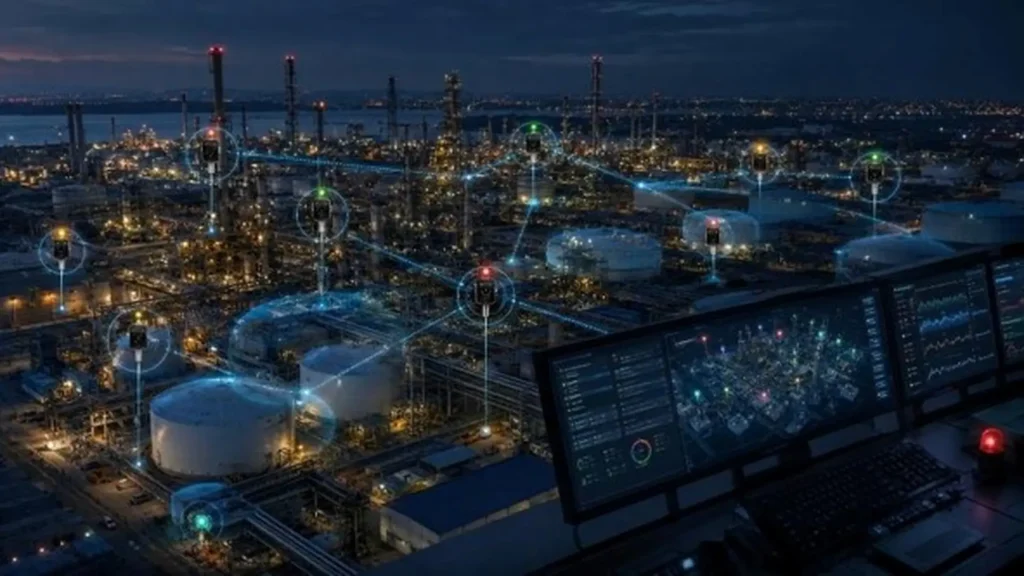
Safety technologies are selected based on exposure, consequence, and actual response capability. In advanced industrial operations, prevention already combines direct-reading sensors, connected gas detectors, RTLS/UWB, edge computer vision, drones, autonomous robotics, digital permits, digital twins, and dynamic risk analytics.
Their purpose is not to digitalize safety, but to reinforce critical barriers. Technologies deliver value when they detect a deviation, trigger a field response, and leave verifiable evidence of the decision made.
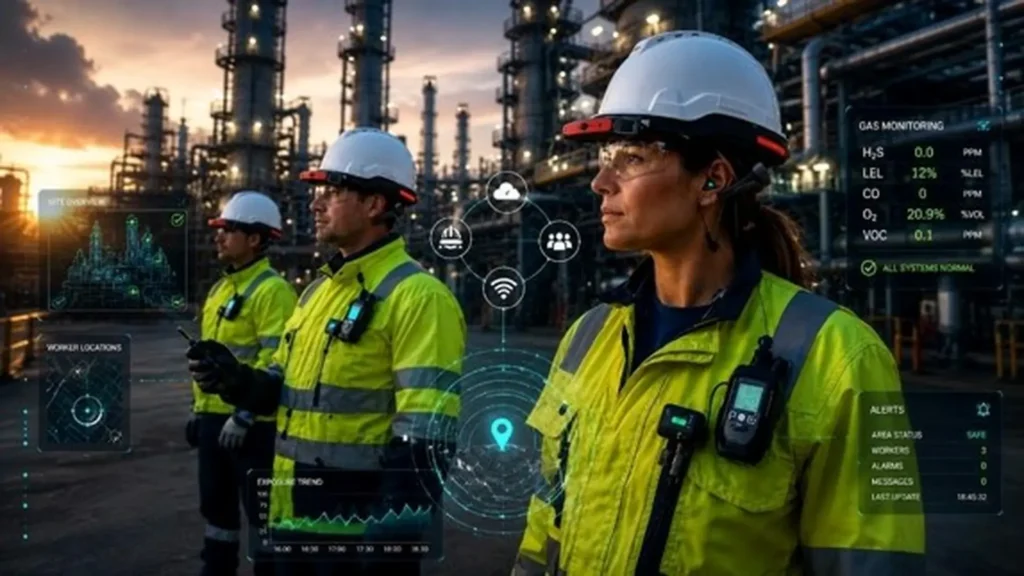
Under this context, modern solutions do not operate as isolated devices. They function as connected ecosystems linking the worker, mobile equipment, control room, work permit, alarm, supervision, and emergency response.
Direct sensors and hazardous atmospheres
Direct-reading sensors detect toxic gases, oxygen deficiency, flammability, particulate matter, noise, temperature, humidity, or radiation. They are highly relevant in confined spaces, process rooms, tanks, pits, hot work, and areas with limited ventilation.
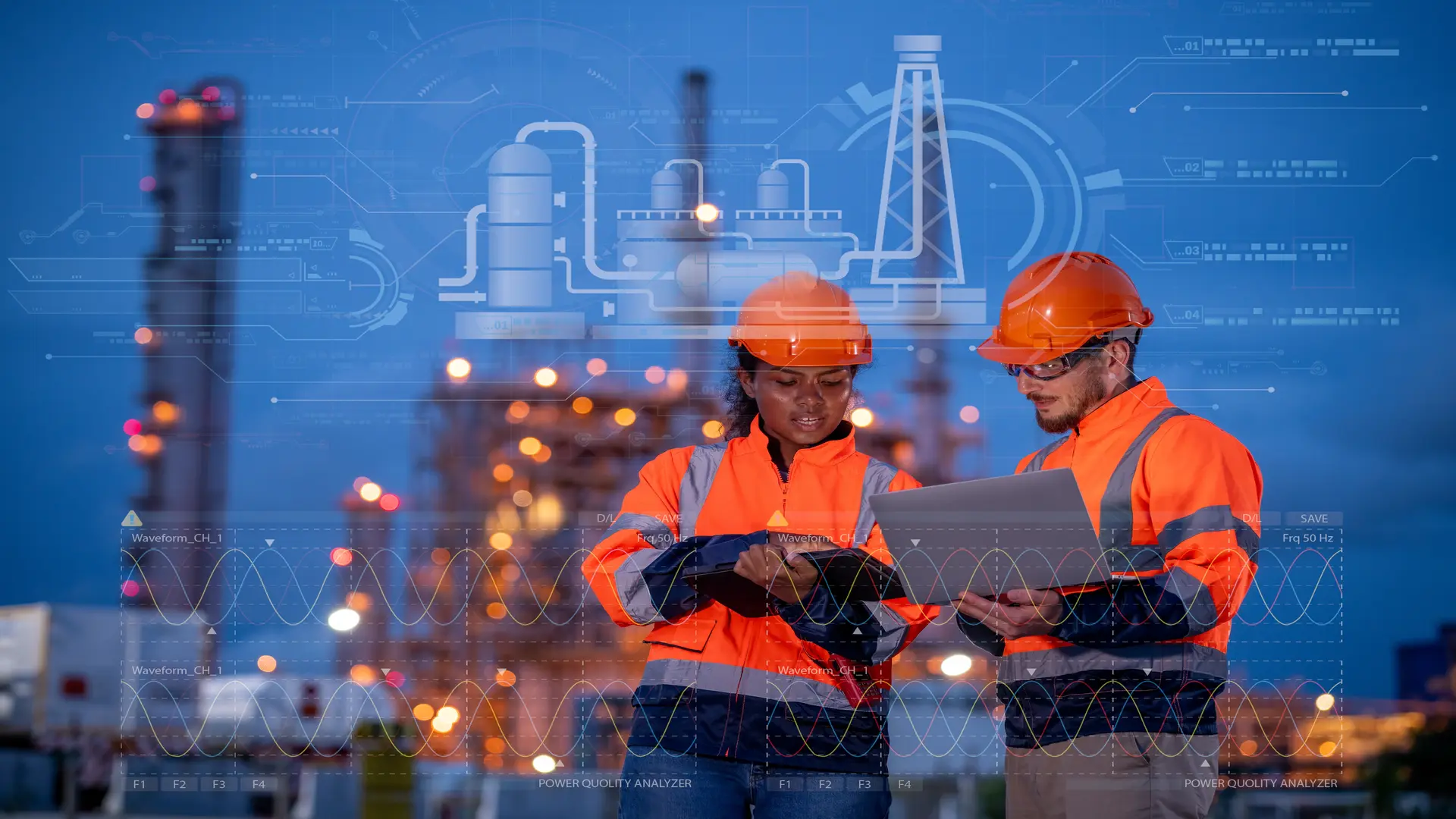
The current evolution lies in connected detection: personal detectors, area monitors, and platforms that transmit alarms, location, worker status, and environmental conditions in real time. This ensures that an H₂S, LEL, CO, VOC, or oxygen alarm does not rely solely on the individual’s reaction, but on a coordinated response from supervision, the emergency response brigade, or the control room.
Preventive value is unlocked when data triggers an action: halting entry, evacuating, ventilating, blocking a permit, or requiring a new measurement. To be reliable, they require calibration, bump testing, maintenance, alarm traceability, and designated responsible personnel. NIOSH highlights the utility of direct-reading technologies and real-time monitoring to enhance worker protection.
Wearables, fatigue and lone worker
Industrial wearables monitor falls, immobility, location, heat stress, posture, vibration, heart rate, or environmental exposure. In physically demanding jobs, they help detect signs of fatigue, overexertion, or prolonged exposure before the worker loses the ability to respond.
They are also relevant for lone workers, patrols in remote areas, plant shutdowns, tank farms, mining, terminals, night shifts, and operations with low direct supervision. When connected to 24/7 monitoring, they can trigger escalations, two-way communication, localization, and medical response.
Implementation must include privacy, informed consent, defined thresholds, and an ethical review of data use. Technology must protect the worker, not turn into punitive surveillance.
RTLS, UWB and proximity control
RTLS, UWB, RFID, industrial Bluetooth, or geofencing systems make it possible to locate people, mobile equipment, tools, and exclusion zones. In yards, mines, ports, warehouses, and terminals, they reduce the risk of run-overs, collisions, entry into restricted areas, or presence under suspended loads.
These systems can be integrated with proximity alarms, access control, digital permits, and operational maps. Their potential lies in anticipating dangerous interactions between pedestrians, forklifts, trucks, cranes, autonomous equipment, or heavy machinery.
They work most efficiently when they reinforce physical controls: segregated routes, barriers, speed limits, signage, lighting, and operational communication. The digital alert must complement the barrier, not become the only defense.
Computer vision and edge AI
Through computer vision, it is possible to detect the absence of PPE, crossing of exclusion lines, blocked routes, unsafe postures, proximity to machinery, interaction with suspended loads, or presence in blind spots. Operating on the edge allows it to generate rapid alerts without relying entirely on external connectivity.
In modern facilities, these capabilities are applied at access points, docks, logistics yards, process areas, warehouses, lifting zones, and pedestrian-equipment interaction points. The camera stops being just a record after the fact and becomes a preventive sensor.
Its application must be preventive and not punitive. Detected events should be reviewed to improve route design, signage, training, permits, and physical controls. A smart camera does not replace a physical guard, but it can reveal when that guard is removed or bypassed.
Drones, robotics and reduced direct exposure
The most effective innovation is that which avoids sending people to the initial source of danger. Drones equipped with thermal cameras, LiDAR, or advanced optics allow for the inspection of roofs, chimneys, ducts, tanks, electrical yards, corroded structures, or areas with hazardous atmospheres.
In work at heights, confined spaces, or areas with active energy, these tools reduce the need for scaffolding, physical entry, repetitive maneuvers, and direct exposure. Their use also improves process safety by detecting anomalous conditions without interrupting a high-risk operation.
Ground robots, quadrupeds, or crawlers are designed to traverse process areas, read instruments, detect leaks, capture thermal imagery, inspect tanks, or enter zones where personnel should not be routinely exposed. In highly hazardous operations, robotics is also used to reduce human entry into confined spaces, for tank cleaning, internal inspection, and patrols in hostile environments.
The application criteria must be preventive: reducing contact with hazardous energy, not just increasing productivity. The ILO points out that automation, robots, and intelligent systems can reduce dangerous exposures, though they also introduce risks that must be managed with preventive policies.
Digital permits, SIMOPS and critical barriers
Digital permits strengthen operational control by preventing the execution of activities while critical requirements remain pending and by verifying safety barriers before work begins. In high-risk activities, they must validate energy source isolation, atmospheric measurements, competent personnel authorization, field evidence, simultaneous operations analysis (SIMOPS), and the controlled closure of the permit.
SIMOPS management is one of their most important uses. A connected system can detect incompatible activities: hot work near flammables, lifting over pedestrian transit, or electrical maintenance during operational testing.
A digital permit is not just an electronic form. It is a record of who authorized, who verified, what evidence was attached, what barrier was confirmed, and what condition changed during execution.
Digital twins and process safety
In facilities with high operational complexity, digital twins integrate process, maintenance, alarm, permit, and barrier status data. Their value lies in supporting process safety through scenario monitoring, deviation analysis, and prioritization of actions.
The most advanced trend is not just visualizing assets, but calculating dynamic risk. This makes it possible to relate operational conditions, alarms, out-of-service equipment, simultaneous work, and degraded barriers to anticipate scenarios of loss of containment or exposure.
In the field, this capability helps decide whether a task should continue, stop, be replanned, or be escalated. The technology stops being a mere informational dashboard and becomes technical support for operational prevention decisions.
The use of artificial intelligence, virtual reality, and industrial simulators to train workers before exposing them to risky tasks is also growing. These tools allow workers to practice interventions in confined spaces, work at heights, or specialized machinery handling in controlled environments, reducing errors during actual execution.

Exoskeletons and advanced ergonomics
Industrial exoskeletons can support tasks involving lifting, sustained posture, overhead work, or repetitive efforts. They do not replace ergonomic redesign, but they can reduce physical load when complete elimination or automation of the task is not viable.
They must be evaluated with technical criteria: fit to the worker, duration of use, freedom of movement, entrapment risk, secondary fatigue, and user acceptance. A poorly selected ergonomic solution can shift the load to another area of the body or interfere with the task.
Ergonomic innovation also includes motion analysis, posture sensors, tool redesign, mechanical assistance, adjustable platforms, and partial automation of repetitive tasks.
Physical barriers and prevention by design
Innovation is not always digital. In most operations, the greatest preventive advancement lies in redesigning access points, installing guardrails, segregating pedestrian routes, improving platforms, protecting edges, securing ladders, incorporating guards, and eliminating pinch points.
Prevention by design aims to reduce risk before the worker relies on an alert or a decision in the field. In work at heights, a fixed platform with guardrails offers a more stable barrier than relying solely on a harness, a permit, and observation.
This approach is key in maintenance, loading and unloading, mobile equipment operation, tank inspection, roof access, and transit in industrial areas. Technology delivers value when it verifies the status of the barrier, detects failures, or triggers preventive maintenance.
Technologies by risk type
To avoid a superficial selection, each technology must be associated with a specific risk, a barrier, and an operational decision. This approach helps justify the investment and avoids solutions disconnected from actual work.
- Hazardous atmospheres: Fixed sensors, connected personal detectors, area monitors, monitored ventilation, and digital permits.
- Mobile equipment: RTLS, UWB, geofencing, cameras, proximity alarms, segregated routes, and exclusion zone control.
- Work at heights: Drones, remote inspection, guardrails, fixed platforms, verified lifelines, and artificial vision for restricted areas.
- Hazardous energy: Digital LOTO, physical lockout, zero-energy validation, authorization traceability, and integration with work permits.
- Fatigue and heat: Wearables, smart breaks, thermal monitoring, controlled hydration, and preventive removal protocols.
- Confined spaces: Continuous atmospheric monitoring, remote communication, drones, inspection robots/crawlers, planned rescue, and entry control.
- Lone worker: Connected wearables, SOS button, fall detection, two-way communication, real-time location, and automatic escalation.
Emerging risks of digitalization
Digitalization introduces risks. Uncalibrated sensors, weak connectivity, excessive alarms, incomplete data, or platforms without designated owners can create a false sense of security. In industrial safety, an alert that goes unaddressed becomes useless operational noise.
Privacy, cybersecurity, and the punitive use of data must be managed. If workers perceive that technology exists to monitor or discipline them, voluntary reporting will decrease and resistance to the system will grow.
Innovation requires governance: a defined purpose, controlled access, maintenance, data validation, and the participation of the personnel exposed to the risk.
Indicators of verifiable prevention
To measure actual prevention, proactive indicators must be incorporated alongside traditional reactive ones:
- Successfully verified critical controls.
- Permit stoppages due to unsafe conditions.
- Alarms addressed within the time limit.
- Closed corrective actions and repaired barriers.
- Reduction of repeated exposures in critical tasks.
- Decrease in unauthorized entries into restricted zones.
- Response time to lone worker alarms.
Risk management improves when each indicator answers three basic questions: What hazard was detected? What control was applied? How was its effectiveness verified?
Practical tool for selecting technology
To ensure that technology investment meets actual field needs, it is advisable to evaluate each solution using a minimal selection matrix. The goal is to confirm that the tool reinforces an existing barrier or enables control of an exposure that was previously difficult to verify.
- Critical risk to be controlled.
- Preventive barrier to be reinforced.
- Data needed to make decisions.
- Response owner.
- Maximum intervention time.
- Required evidence.
- Effectiveness indicator.
- Secondary risk created by the technology.
This matrix prevents innovation from turning into a rushed purchase of devices. The decision must link technology, risk, barrier, response, and verification.
Conclusions
Industrial safety does not improve by simply accumulating sensors, cameras, drones, or artificial intelligence software. It improves when innovation enables the anticipation of hazards, the elimination of unnecessary exposure, and the verification of critical controls within a management system focused on leadership, operations, and human factors.
The technical advancement lies in moving from statistical accident reporting to the dynamic control of precursor conditions in the field. When digital data is integrated with engineering barriers, permits, energy isolation, safe routes, environmental monitoring, lone worker protection, and process safety, risk management ceases to be a reaction to damage.
Modern prevention requires connecting each technology with a verifiable decision: stop a task, remove a person from exposure, block a permit, repair a barrier, or escalate an alarm. Only in this way does innovation become a continuous operational prevention capability.
References
- ISO 45001:2018. Occupational health and safety management systems — Requirements with guidance for use.
- ANSI/ASSP Z590.3-2021. Prevention Through Design: Guidelines for Addressing Occupational Hazards and Risks in Design and Redesign Processes.
- Revolutionizing Health and Safety: The Role of AI and Digitalization at Work. International Labour Organization, 2025.
- Direct Reading and Sensor Technologies. National Institute for Occupational Safety and Health, NIOSH.
- Connected Safety / Connected Work Platform. MSA Safety.
Frequently asked questions (FAQs)
How does innovation benefit industrial safety?
It enables the anticipation of operational deviations, validation of critical controls, reduction of direct exposure, and data-driven decision-making before an accident occurs.
Which technologies have the greatest preventive impact?
Direct-reading sensors, wearables, RTLS/UWB, drones, inspection robots, digital permits, computer vision, digital twins, and critical barrier monitoring.
How does technology help lone workers?
It enables the detection of falls, immobility, environmental exposure, loss of communication, or medical emergencies, activating location tracking, escalation, and coordinated response.
What standards guide safety innovation?
ISO 45001, ANSI/ASSP Z590.3, ISO 45003, NFPA 70E, and OSHA practices help structure management systems, controls, safe design, and preventive assessments.
What risks does digitalization introduce?
Alarm saturation, false confidence, uncalibrated sensors, cybersecurity issues, algorithmic biases, and personnel resistance if technology is perceived as punitive surveillance.
How can technology be implemented without idealizing it?
It should begin with a critical risk, a weak barrier, a required data point, clearly defined responsibilities, a controlled pilot, a response protocol, and effectiveness indicators.