Hydrogen in Germany the project continues to gain momentum with increased capacity bookings on the country’s future backbone network. Companies interested in participating in this market have reinforced their commitment to the national infrastructure. Network operators reported that, as of July 23, participants had booked nearly 6 GW input and output capacity this is approximately double the volume reported during the May update. This increase represents a significant commercial signal for a project with an estimated investment of 18.9 billion euros.
In addition to the growth in main reserves, the system registers contracts for approximately 0,6 GW intended for transport between different clusters of the network, while additional requests near to 0,5 GW they remain under evaluation. The geographical distribution of these reserves also shows a notable trend, as demand is not concentrated in a single industrial region but extends to different points along the planned infrastructure.
A market signal with a greater economic commitment
Unlike the expressions of interest used in preliminary planning stages, the mechanism implemented by the operators requires the payment of a reservation fee. This makes the applications a much more reliable indicator of the expectations of hydrogen producers, marketers, importers, and industrial consumers.
Furthermore, reservations should not be interpreted as definitive transport contracts, although they reflect the willingness of companies to commit economic resources to ensure future capacity, they still depend on the associated projects completing their development, financing and final investment decision processes.
The reservation system was opened on March 19, 2026 with the aim of allowing future users to secure capacity before the entire infrastructure is operational. Subsequently, the reserved capacity can be converted into transport contracts with terms of up to 15 years provided that the conditions established by the operators are met. This model provides greater visibility into future network usage and facilitates investment planning for both infrastructure managers and project developers.
Hydrogen in Germany strengthens its national backbone network
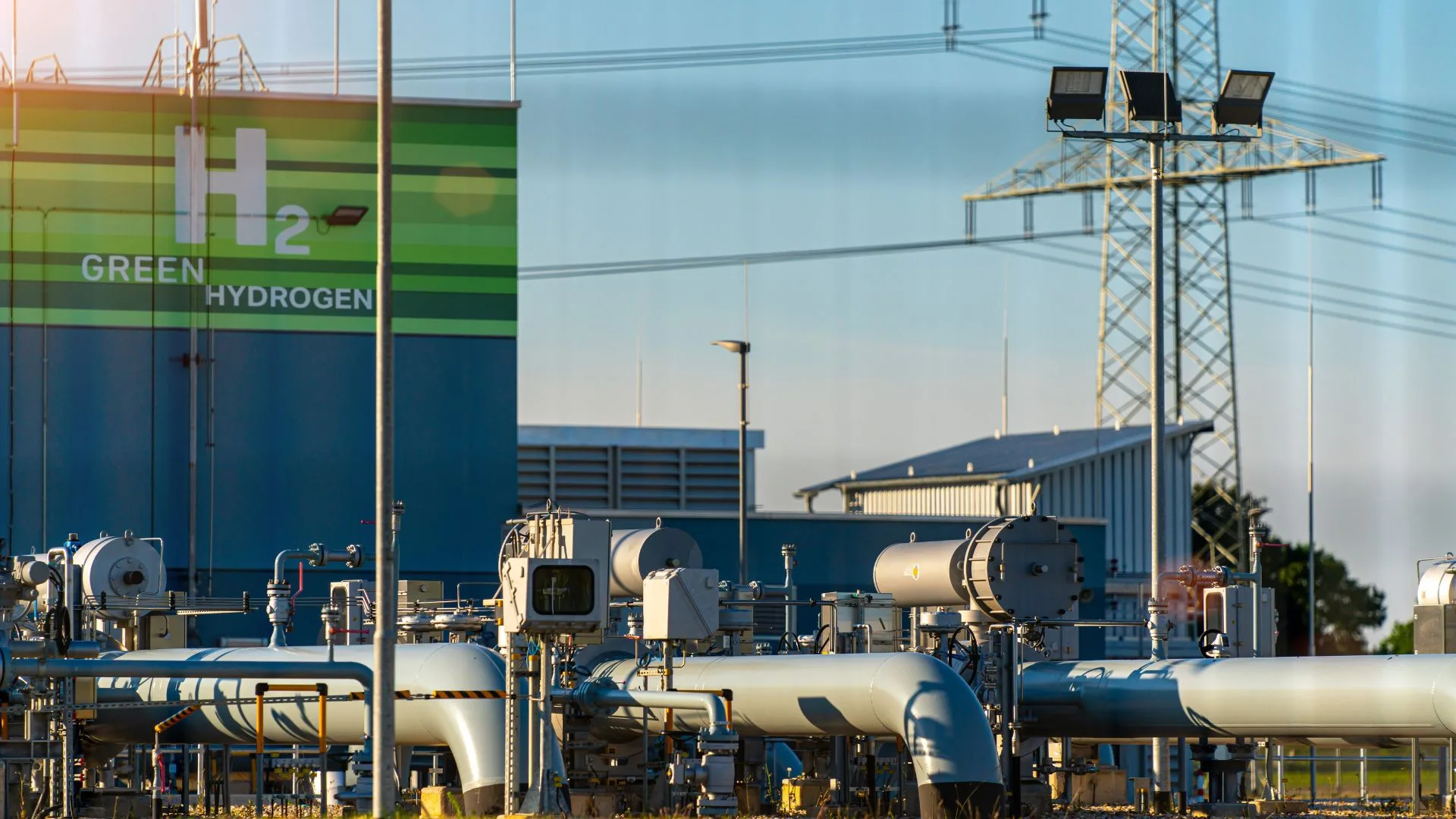
The backbone network approved by the Federal Grid Agency includes an extension of 9,040 kilometers making it one of the most ambitious hydrogen infrastructure projects in Europe. Of the total planned, around 56 % will use natural gas pipelines which will be converted to transport hydrogen, while the 44 % the remainder will correspond to new pipelines built specifically for this fuel.
This approach allows for a reduction in some development costs and accelerates the availability of corridors capable of connecting production centers, import terminals, and large industrial consumers distributed throughout Germany. Reusing existing infrastructure also aims to optimize resources and reduce construction times compared to building a network entirely from scratch.
The strategy aligns with Germany’s industrial decarbonization goals, where sectors such as steel, chemicals, and heavy manufacturing plan to progressively increase their use of hydrogen as a substitute for fossil fuels. The future network will also facilitate the transport of the fuel from domestic production facilities and import points to the country’s main industrial centers.
The growth in reserves exceeds initial figures
The previous update, published in May, already showed a positive market response shortly after the booking process began. At that time, operators indicated that business interest had exceeded initial expectations and that numerous applications were already being processed.
Data published in July shows that this trend continued during the following months, increasing to almost 6 GW this evidence shows that new companies have decided to formalize financial commitments to secure access to the future national hydrogen transport network, consolidating a positive signal for market development.
Barbara Fischer, managing director of FNB Gas, noted that both the volume and geographical distribution of reserves reflect that the infrastructure is responding to real market needs. She explained that the high demand for capacity and companies’ willingness to make advance payments represent a clear sign of the economy’s progress hydrogen in Germany. The directive added that the geographical dispersion of the reserves confirms the need for a high-performance infrastructure capable of connecting multiple industrial regions.
The figures require a technical interpretation.
Although the increase in bookings represents a favorable indicator for infrastructure development, operators emphasize that 6 GW they do not equate to installed hydrogen production capacity or the final volume of industrial consumption.
The reserves refer only to the capacity with which hydrogen can enter or leave the transport system once the network is operational. Therefore, the associated production, import, and consumption projects will still need to progress to their respective construction and commercial operation phases.
Similarly, a reservation with associated payment demonstrates a company’s intention to secure access to future infrastructure, but it does not replace a final investment decision nor does it guarantee that each project will be implemented. Regulatory, financial, and technological factors will continue to influence the development of initiatives related to the production, import, and industrial use of hydrogen.
In this context, the behavior observed during the first months of the reservation process offers an early indication of market confidence in the future hydrogen backbone network. Although regulatory, technical, and financial hurdles remain to be overcome, the increase in commercial commitments strengthens the prospects for an infrastructure destined to play a strategic role in Germany’s energy transition and the development of a hydrogen-based economy in the coming years.
Source: FCW
Photo: Shutterstock