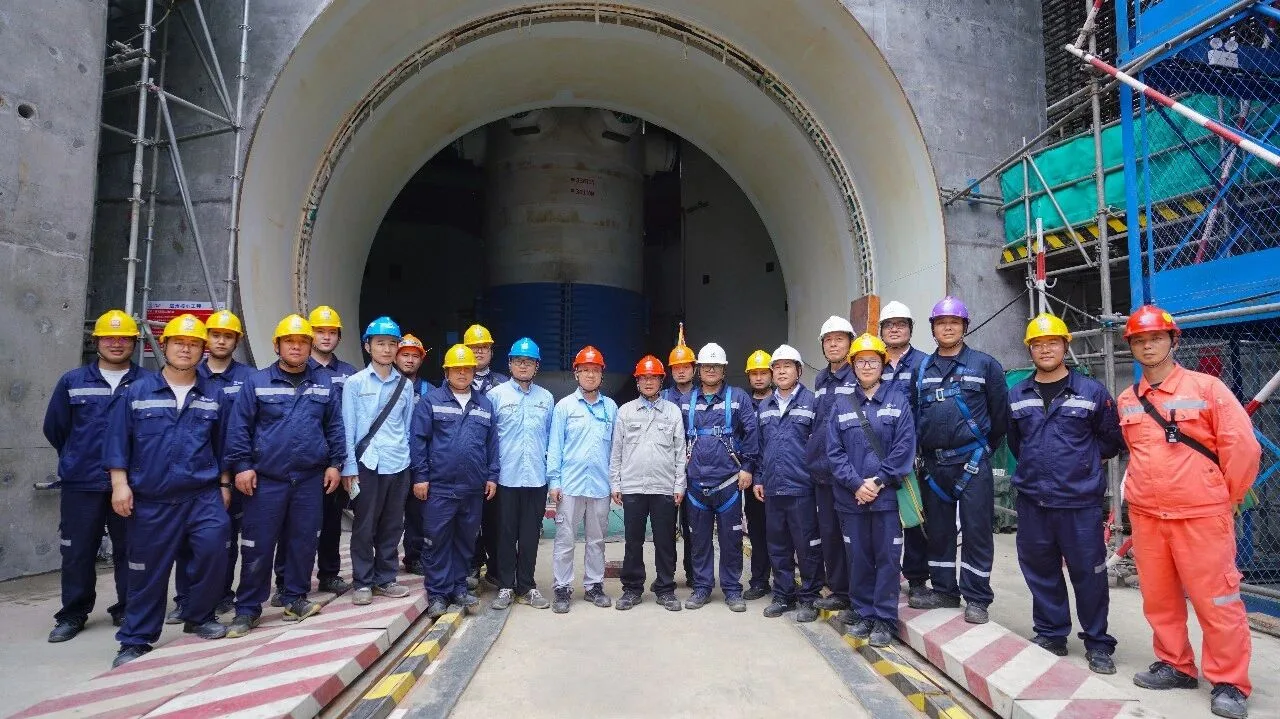
The installation of the reactor pressure vessel at Unit 3 of the Zhangzhou Nuclear Power Plant marks a significant technical milestone in China’s nuclear expansion. This component, considered the reactor’s structural core, was positioned with accuracy following a highly controlled operation.
The process was carried out under strict safety and quality protocols, ensuring operational stability from the earliest assembly phases. The precision achieved is fundamental to the facility’s long-term performance.
This progress reflects the technical maturity of China’s nuclear sector, which continues to consolidate its capabilities in highly complex projects.
Essential component ensures reactor stability
The reactor pressure vessel performs essential functions within a pressurised water nuclear power plant. It acts as a support structure for internal components and maintains the exact positioning of nuclear fuel.
In addition, it represents a key element in the cooling system by maintaining the internal pressure of the primary circuit against external conditions. This function is critical to operational safety.
Its correct installation, in addition to ensuring energy efficiency, also ensures the reactor’s structural integrity under extreme operating conditions.
Lifting innovation optimises technical standards
The assembly of the vessel, weighing approximately 316 tonnes, incorporated for the first time in this unit a combined gantry crane and ring crane method. This technique made it possible to optimise control throughout the entire manoeuvre.
Before the lift, technical teams thoroughly assessed complex variables such as installation routes, securing systems, and tilting manoeuvres. Each phase was carefully analysed and validated.
The result was a precise operation that positioned the component with millimetre-level adjustments, laying a solid foundation for the next construction stages.
Operational control ensures safe execution of the process
Throughout the manoeuvre, the construction team applied a rigorous real-time control approach. This included monitoring loads, structural alignment, and operating conditions at height.
Coordination between teams helped minimise risks and ensure the component’s integrity during the installation process. The incident-free execution reinforces the reliability of the method used.
This level of operational control is essential in nuclear projects, where margins of error are extremely small.
Zhangzhou: Project consolidates energy strategy
Zhangzhou Unit 3 is part of a broader nuclear expansion programme driven by China National Nuclear Corporation. This plan seeks to strengthen the country’s energy security.
The commitment to advanced technologies and optimised construction processes makes it possible to accelerate timelines without compromising safety or quality.
In a global context of energy transition, nuclear power continues to position itself as a stable, low-emission source, with projects such as Zhangzhou setting the pace of technological development.
Source and Photo: https://www.cnnpn.cn/article/53402.html