Doha Negotiates While Hormuz Operates with Two Routes
Delegations from the United States and Iran held indirect technical talks in Doha this Wednesday, mediated by Qatar and Pakistan, to define vessel flow through the Strait of Hormuz and advance toward a permanent ceasefire.
The talks are based on a 14-point interim agreement signed in June, but disputes persist over its interpretation, with reciprocal military attacks during the past week that have stalled progress on more complex issues, such as Iran’s nuclear program.
Iran insists on maintaining operational control of the Strait of Hormuz, through which one-fifth of global oil and LNG trade transits, and even seeks to collect passage fees. The United States, in contrast, prioritizes guaranteeing free transit. This underlying dispute already has measurable consequences on maritime operations.
The Real Risk: Two Routes, Two Authorities
While delegations were negotiating in Doha, a container vessel ran aground in shallow waters south of the Iranian island of Larak, according to Iranian state media, after navigating a route not recognized by Tehran. The Persian Gulf Strait Authority (PGSA) only validates the northern corridor, close to the Iranian coast, while the United States and the International Maritime Organization (IMO) have promoted a southern corridor, closer to Oman.
This coexistence of two nautical reference systems is not a technicality: last week, the container vessels Ever Lovely and the VLCC Tiku, the latter loaded with Qatari crude, were struck by Iranian drones while transiting precisely the southern corridor, near the Omani coast. The Revolutionary Guard has reiterated direct warnings to captains and shipping companies that deviate from the “authority route” designated by Iran.
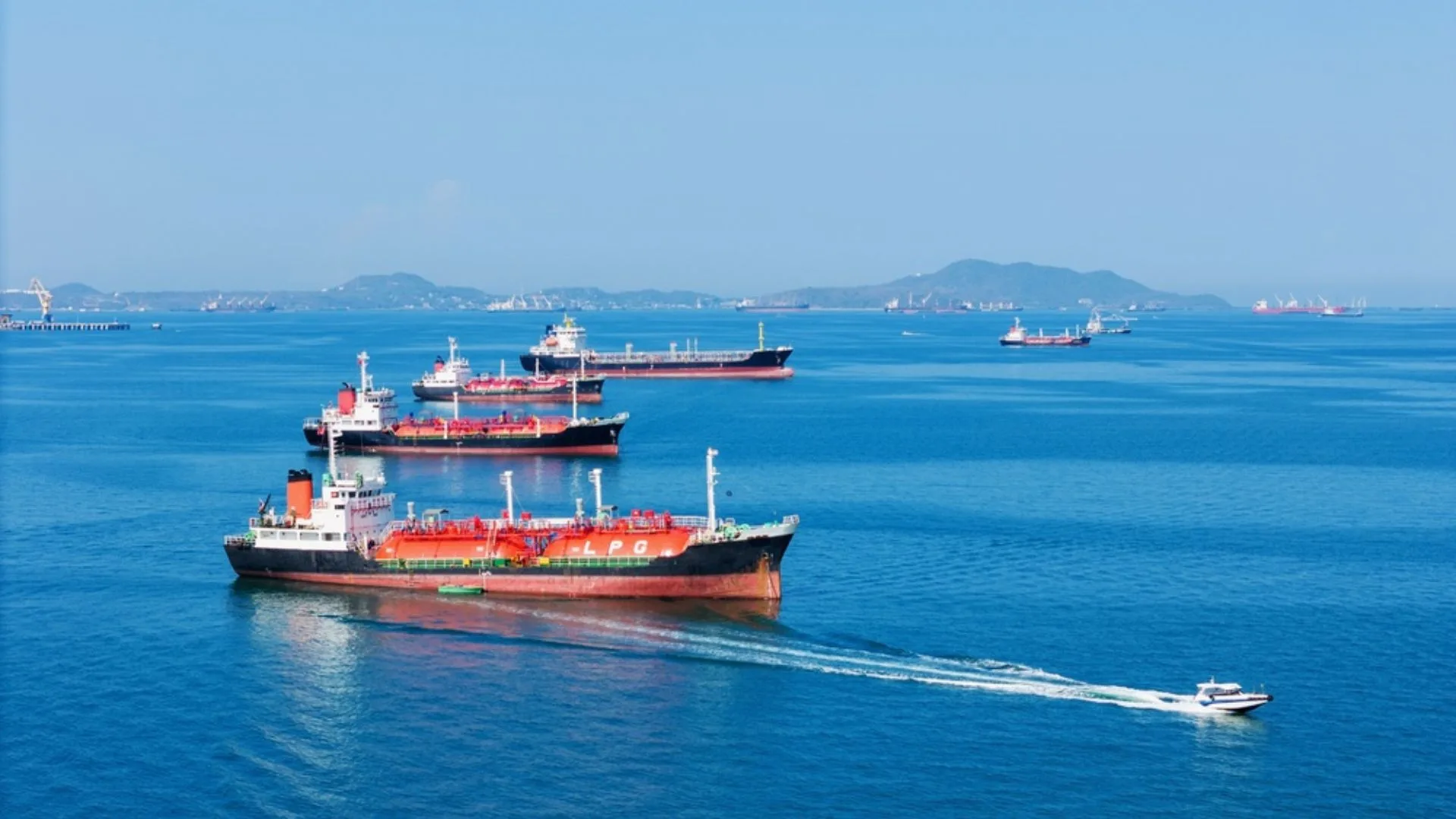
For Vandana Hari, founder of consultancy Vanda Insights, the reopening of the strait remains “partial, unpredictable, and lacking transparency.” Traffic has resumed gradually; 42 vessels were in the strait this Wednesday, with 11 transits in 24 hours, but each captain now faces a real risk decision between two navigation authorities that do not coordinate with each other, without uniform safety guarantees on either route.
Source: https://www.reuters.com/
Photo: Shutterstock