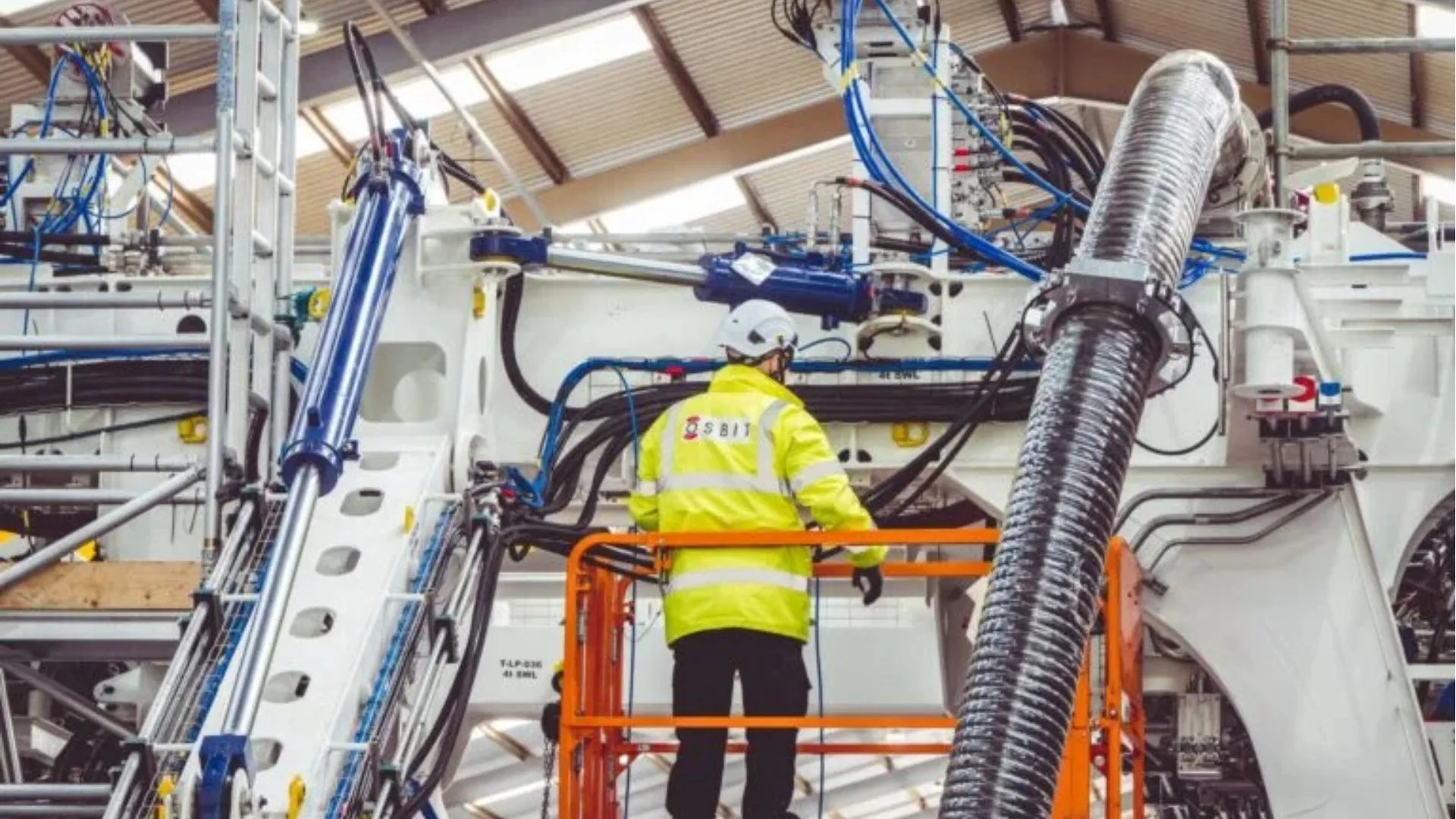
The NKT T-3600 underwater trencher it is progressing towards final assembly and has begun its first round of testing. The equipment has been developed to enhance the installation and protection capabilities of electrical cables under the seabed.
According to NKT, the machine will be able to deliver 3,600 horsepower and bury cables at depths of up to 5.5 meters these features are part of a design prepared to work under different underwater terrain conditions.
The NKT T-3600 begins its testing phase
During August 2026, NKT reported that the T-3600 was nearing completion of its assembly, the start of testing represents a new stage before the team can join the offshore operations planned by the company.
The investment in this underwater trencher was announced by NKT in June 2025 as part of expanding its cable installation capabilities.
A month later, NKT reached a four-year framework agreement with Helix Robotics Solutions, Helix Energy Solutions Group’s British robotics division has signed an agreement with the company. The agreement covers equipment installation, offshore operations, project engineering, and maintenance. The T-3600 will be deployed from a support vessel supplied by Helix.
Osbit develops the trencher and its LARS system
For its part, the British company Osbit it assumed the design and construction of the NKT T-3600, and is also in charge of the launch and recovery system known as LARS.
The team arrived at the British port of Blyth in February 2026 to continue with the outfitting and commissioning work.
Thus, the entry into the first round of testing comes after months of engineering and joint work between NKT, Osbit and Helix Energy Solutions Group.
3,600 horsepower to work under the seabed
One of the main attributes of the NKT T-3600 will be its power; the trencher will have the capacity to generate 3.600 hp during operations intended to burial of submarine cables.
Furthermore, it will be able to reach a maximum depth of 5.5 meters below the seabed, a capability intended for the installation and protection of underwater electrical infrastructure.
The machine will combine two working methods, one is with water jetting and mechanical cutting this configuration will allow operations to be adapted to a wide variety of soil conditions.
In this way, the team will be able to modify the method used according to the characteristics of the terrain encountered during underwater operations.
NKT strengthens its capabilities to install submarine cables
The addition of the T-3600 is part of the investments of NKT in electrical cable installation capabilities, its development brings together three companies with different responsibilities within the project.
NKT is promoting the integration of the tool while Osbit develops the equipment and its launch and recovery system. Helix Robotics Solutions will have responsibilities related to its installation, offshore operation, engineering, and maintenance.
With final assembly getting closer, the first round of tests will allow progress in putting into service a machine specifically designed to work on the seabed and facilitate the burial of underwater power cables.
Source: Offshore Energy
Photo: NKT via LinkedIn