TGS y Chevron they will jointly invest in technologies to improve the representation of the subsurface through eFWI machine learning and new geophysical algorithms.
The Norwegian company TGS and the American company Chevron established a strategic collaboration to develop next-generation seismic imaging technology aimed at improving the analysis and representation of the subsoil.
As part of the agreement, both companies will jointly invest in research and development within technical areas related to seismic processing, the work will focus on elastic full-waveform inversion (eFWI) and machine learning-supported workflows.
The initiative will combine TGS’s Imaging AnyWare platform with proprietary algorithms developed by Chevron. In this way, the companies aim to integrate processing power, geoscientific expertise, and new computational tools to obtain more detailed subsurface images.
eFWI and machine learning to analyze the subsurface
Full-waveform elastic inversion is one of the main technical fields included in the collaboration, this methodology uses the information contained in seismic waves to build models that allow for a more detailed characterization of subsurface properties.
In turn, machine learning-based workflows can support the processing and analysis of large volumes of geophysical data. The combination of these tools will be a key focus of joint research between TGS y Chevron.
The agreement will also allow the use of Imaging AnyWare, TGS’s platform for seismic imaging and processing, along with technology developed internally by Chevron.
Furthermore, the alliance reflects the interest of both companies in advancing methods capable of processing increasingly complex geophysical information within energy exploration projects.
Kristian Johansen, CEO of TGS, noted that the collaboration is part of the company’s strategy to expand its role as a technology partner in the field of subsurface imaging.
According to the executive, combining TGS’s platform, talent, and scale with Chevron’s geoscientific expertise can generate long-term value for both organizations.
TGS expands its seismic work off the coast of Malaysia
In parallel, TGS announced Phase 4 of its multi-client Sarawak program, located off the coast of Malaysia, this new phase will cover approximately 1,020 square kilometers.
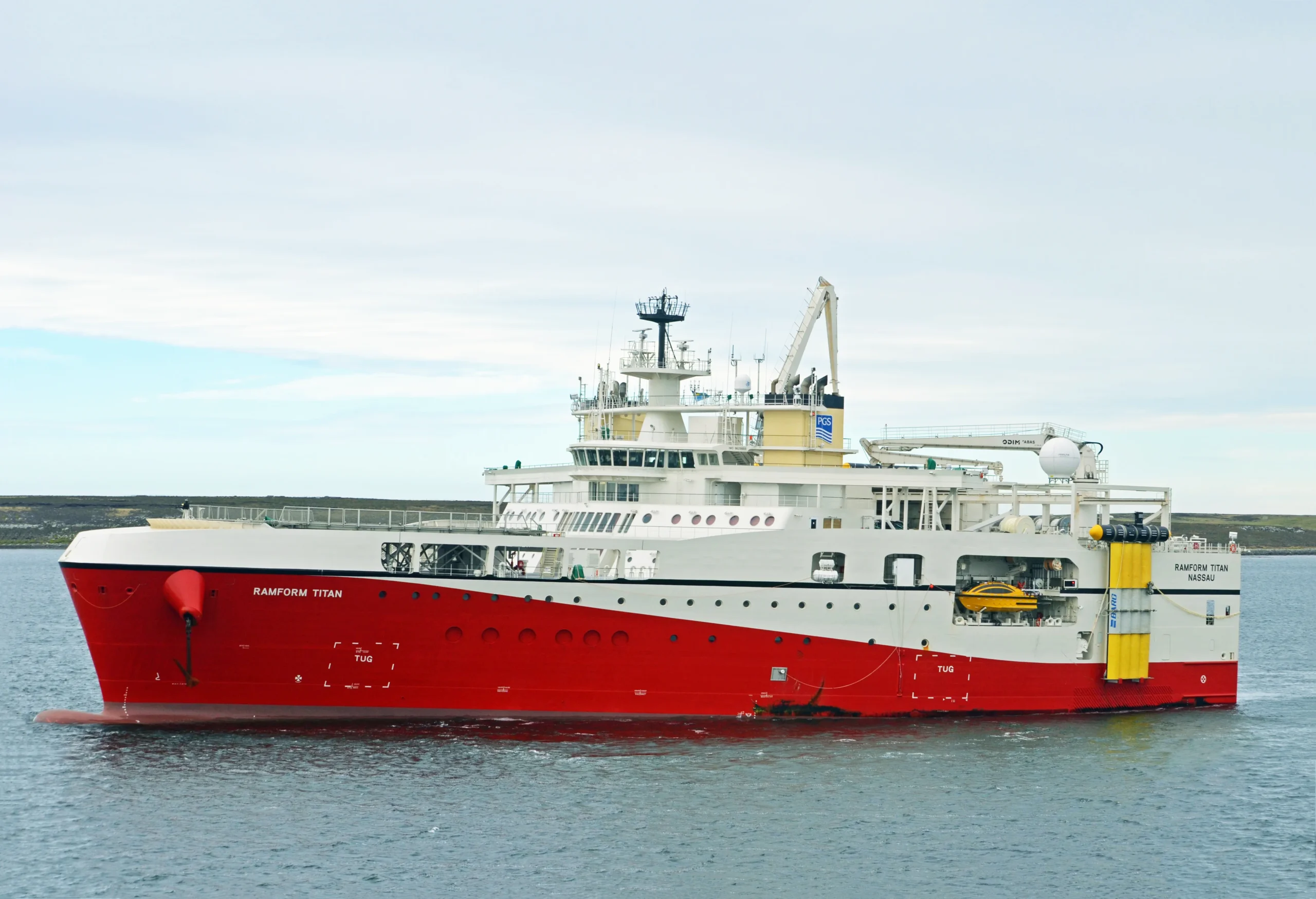
The seismic research vessel Ramform Sovereign will be deployed during the fourth quarter to acquire data. According to the published schedule, the work should be completed in December.
The operation is part of a multi-client contract that includes the acquisition and processing of up to 105,000 square kilometers of 3D seismic data in Sarawak. More than 20,000 square kilometers have already been collected during the first three phases.
The Sarawak basins hold significant oil and gas resources and have seen several discoveries in recent years. Therefore, TGS expects the new campaign to help meet the growing interest of energy companies in evaluating exploration opportunities in this region of Southeast Asia.
For the acquisition, the company plans to supply multisensor seismic data using Geostreamer technology, reinforcing its multi-client library in Malaysia.
The collaboration with Chevron and the expansion of the campaigns in Sarawak show two aspects of TGS’s technological strategy, one is to develop new tools to interpret the subsurface and expand the availability of seismic data for energy exploration.
Source: Ofshore Energy
Photo: Shutterstock