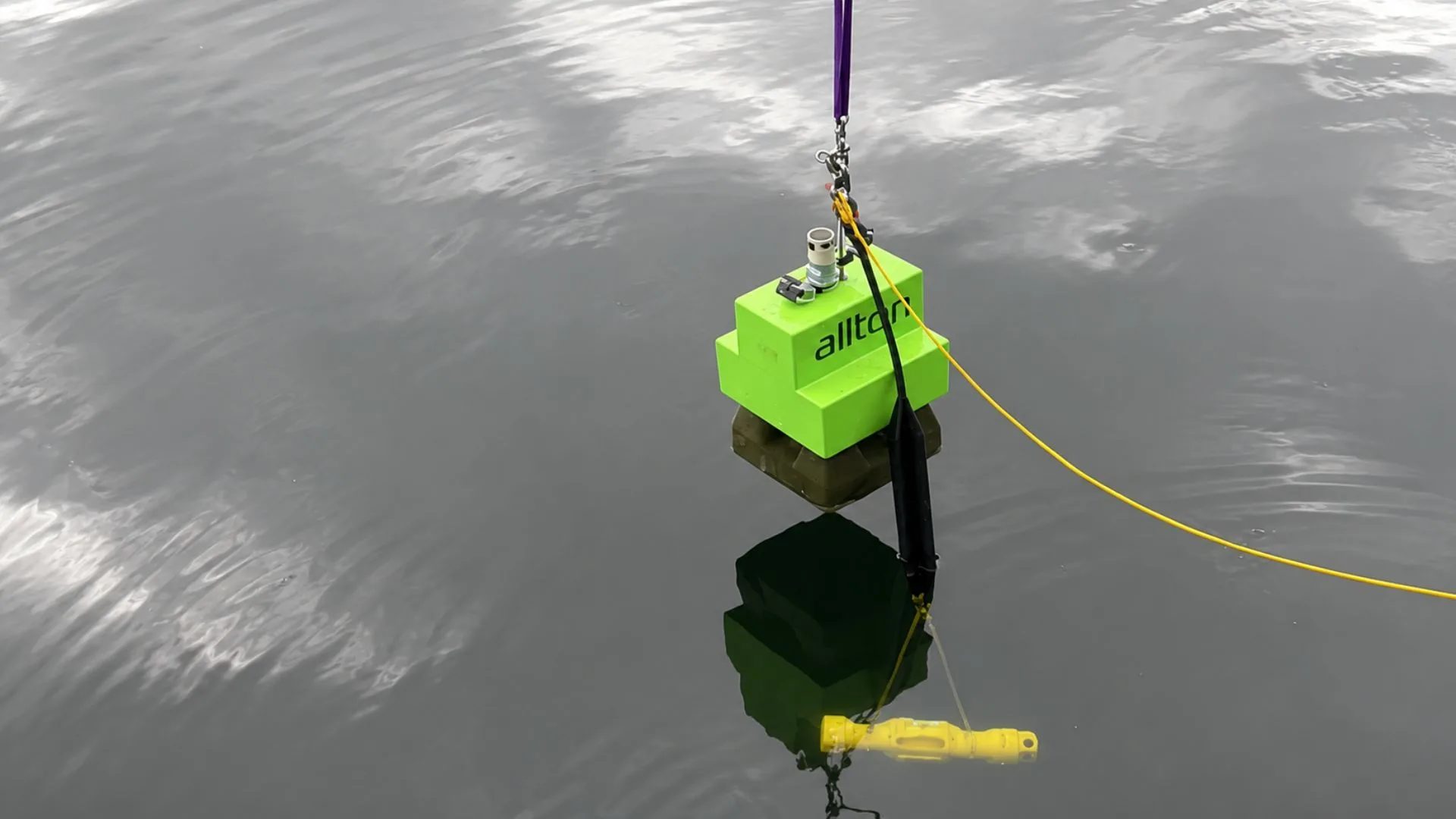
The Norwegian company TGS signed a strategic agreement with Allton to accelerate the deployment of OBN technology in deep-water exploration projects the collaboration aims to simplify the installation and retrieval of seabed nodes while reducing the costs associated with this type of seismic survey.
As part of the agreement, TGS will obtain exclusive rights and priority access to the Allton A1 units, both companies plan to use this platform to expand the availability of high-resolution seismic studies in environments where conventional solutions are often costly or complex.
The Allton A1 system aims to reduce operating costs
OBN technology uses sensors placed directly on the seabed to record seismic waves and generate detailed images of the subsurface. This data allows for the identification of geological structures and a more accurate assessment of potential hydrocarbon systems.
However, deploying and recovering the nodes can increase the cost of a campaign, they also require specialized logistics, which limits their application to certain basins and early exploration phases.
Given this scenario, the Allton A1 system was designed to make the management of seismic nodes more efficient. The proposal aims to reduce operating times and facilitate the acquisition of OBN data in projects where budget constraints had previously prevented the use of this technology.
According to TGS, combining its geophysical expertise with Allton’s deployment technology could expand the number of viable projects. The company believes that seabed nodes can be incorporated earlier in the exploration cycle when economic and logistical barriers decrease.
Higher resolution seismic data in deep water
Furthermore, the alliance focuses on shifting high-resolution seismic imaging to earlier stages of assessment. This would allow for more detailed analysis of emerging basins and border areas before undertaking major investments.
The OBN studies they offer broad coverage of seismic signals and can improve the representation of complex structures beneath the seabed. This capability is especially relevant in deep waters where the quality of geological information influences the selection of exploration targets.
Carel Hooijkaas, TGS’s executive vice president of Marine Data Acquisition, said the agreement fits with the company’s strategy to provide subsurface information using advanced acquisition technologies.
For his part, Nils Haugestad, CEO of Allton, noted that the system A1 it can offer a cost-effective option for acquiring OBN data in areas where previous costs were prohibitive.
The alliance will assess basins in several markets.
Likewise, TGS and Allton will analyze application opportunities in different basins around the world; initial commercialization could include existing markets and new regions with deep-water exploration activity.
The goal is to increase the accessibility of submarine seismic nodes without losing data quality; for operators, a reduction in costs can facilitate early assessment campaigns and improve the prioritization of prospects.
The collaboration could also strengthen TGS’s image within the offshore geophysical acquisition market the company maintains an international portfolio of seismic data and participates in reprocessing projects aimed at improving the interpretation of the subsurface.
TGS expands its seismic activity in Sierra Leone
The announcement comes after the start of the Sierra Leone 2D Vision and Mabesi 3D Vision projects both programs are being developed in conjunction with the Sierra Leone Directorate of Petroleum and aim to update the seismic information available to operators.
The work includes the reprocessing of 24,000 kilometers of 2D seismic data and 4,155 square kilometers of 3D information. The sequence uses pre-sum depth migration to improve the representation of geological structures.
The final products of Mabesi 3D Vision are planned for the first quarter of 2027, the final results of Sierra Leone 2D Vision are expected for the third quarter of the same year.
With the alliance between TGS and Allton, OBN technology gains a new avenue for commercial expansion; cost reduction and logistical simplification will be key factors in determining its adoption in border basins and deepwater projects.
Source: Offshore-energy.biz
Photo: Allton