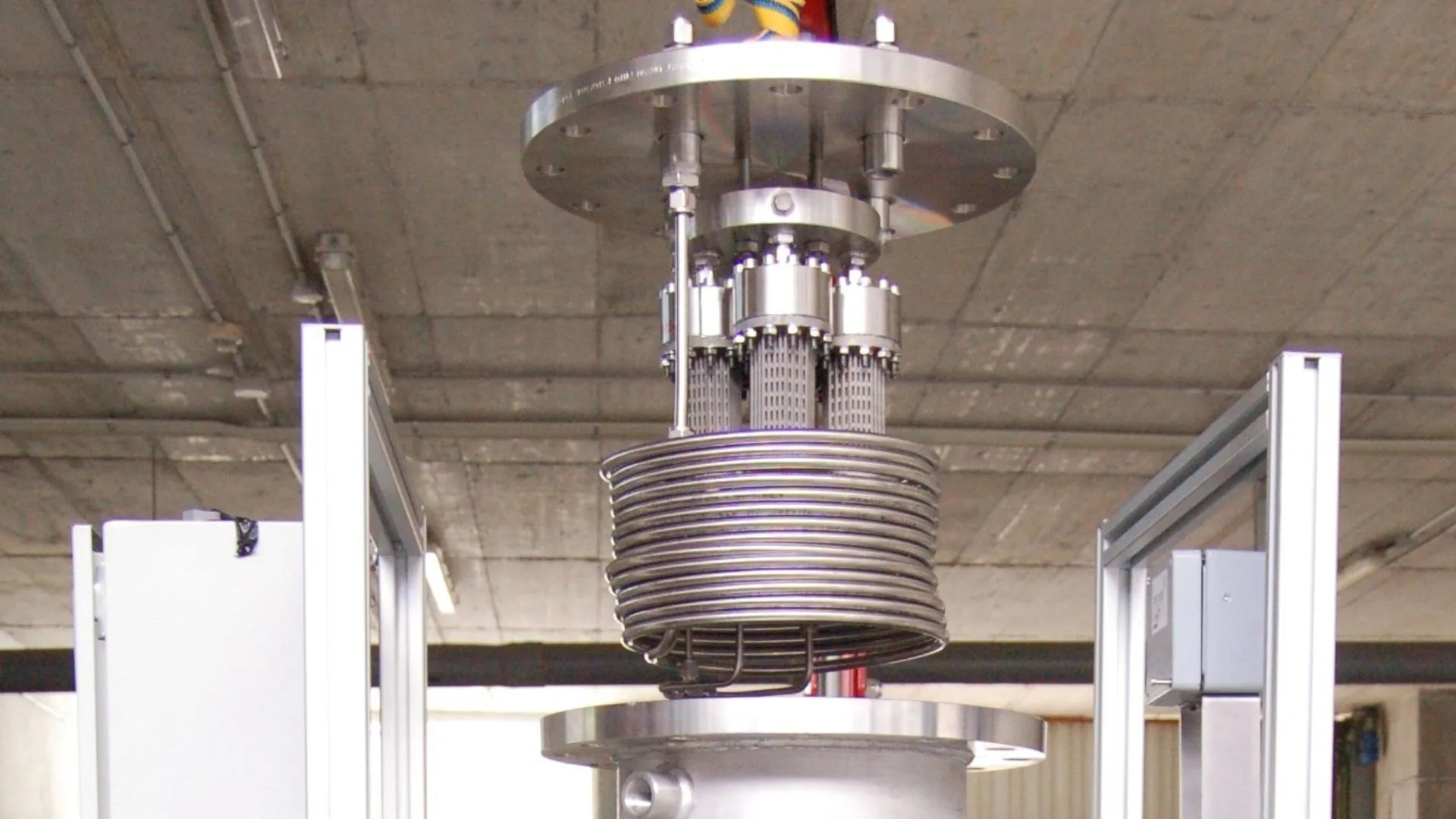
TECNALIA, Spain’s largest applied research and technological development center, has developed and patented a millichannel reactor capable of directly transforming biogas into synthetic natural gas by converting CO₂.
This system achieves methane concentrations above 95% in a single stage, improving the efficiency of the upgrading process.
In addition, the technology introduces significant improvements in CO₂ valorization, a key element in biomethane production. In this way, the process increases the energy yield of the resulting gas and strengthens its viability as a renewable alternative.
A millichannel reactor with an advanced design
The reactor is based on a millimetric architecture that intensifies the CO₂ methanation reaction present in biogas. Thanks to high heat and mass transfer coefficients, the system prevents the formation of hot spots and maintains stable operating conditions even under flow-rate variations.
Likewise, the modular design makes it possible to scale the technology through replication, facilitating its implementation in both small-capacity plants and industrial facilities. This flexibility represents an operational advantage over conventional reactors.
The solution has been validated in a pilot plant at TRL6 level, demonstrating high effectiveness and a fast dynamic response. The tests confirm near-total utilization of the feedstock and the production of a gas with sufficient quality for direct injection into the natural gas grid.
Companies such as Lointek, Repsol, Petronor, and Awaes (Tedagua) participated in the reactor’s development, supporting its applicability in real industrial environments.
Biomethane as a strategic energy vector
In parallel, biomethane and synthetic natural gas continue to consolidate as key solutions for decarbonizing sectors that are difficult to electrify, such as heavy transport or industrial heat.
Their compatibility with existing gas infrastructure enables immediate integration into the energy system. In addition, their production from agricultural, urban, or industrial waste promotes the circular economy and reduces energy dependence.
It is estimated that Spain could reach a production potential of up to 137 TWh per year of biomethane by 2030, equivalent to nearly 40% of current natural gas consumption. This scenario positions these technologies as a relevant tool to improve energy security and reduce emissions.
Finally, initiatives such as REPowerEU are accelerating the deployment of renewable gases in Europe. In this context, technological developments such as TECNALIA’s reactor help improve the competitiveness of biomethane and synthetic natural gas within the energy transition.
Source and photo: TECNALIA