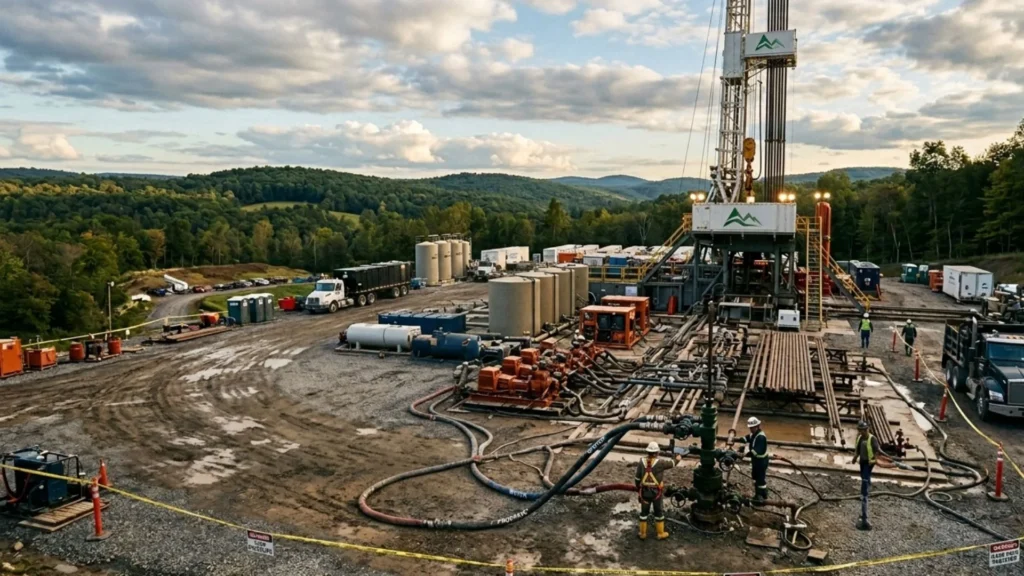
International shale gas exploration returns to the center of the global energy agenda amid the impact of the Middle East conflict. A recent Wood Mackenzie report indicates that several countries are accelerating the development of unconventional resources to diversify supply and reduce geopolitical risks.
Algeria Leads the Strategy Toward Europe
First, Algeria positions itself as a key player thanks to its proximity to the European market and its extensive shale reserves. The potential of the Lower Silurian opens opportunities for exports through existing infrastructure, although operational challenges persist in the fields.
In addition, companies such as ExxonMobil and Chevron maintain exploration partnerships seeking to unlock these resources.
On the other hand, the United Arab Emirates, Mexico, Australia, Turkey, and Indonesia are developing national strategies focused on energy independence.
In the United Arab Emirates, ADNOC advances toward final investment decisions with the goal of achieving self-sufficiency by 2030. Intense drilling activity is anticipated that could exceed 300 wells annually.
Meanwhile, Mexico drives shale gas production targets amid trade tensions with the United States, reinforcing its energy strategy.
In Australia, the Beetaloo project seeks to sustain LNG supply and serve the east coast domestic market.
Likewise, Turkey accelerates exploration in the Diyarbakır and Thrace basins through international partnerships, while Indonesia opens opportunities in the Sumatra basin with technological support from the United States.
From Permian Dominance to New Global Expansion
Over the past decade, global shale exploration lost momentum due to regulatory and technical challenges. However, the Permian Basin in the United States concentrated investments of more than $230 billion between 2012 and 2025, consolidating itself as the axis of sector growth.
Currently, growth in the U.S. shows signs of deceleration, which drives companies to seek new international opportunities.
Unlike the past, companies now prioritize higher-quality assets. According to Wood Mackenzie, the number of projects evaluated decreased from more than 100 to approximately 20, reflecting a more efficient strategy.
Companies better understand regulatory and supply chain risks.
explained Robert Clarke, Vice President of Upstream Research.
Cases such as Vaca Muerta in Argentina and Jafurah in Saudi Arabia demonstrate that shale projects outside North America can achieve industrial scale. Both developments could exceed 2.5 million barrels of oil equivalent per day in the next decade.
However, success depends on competitive fiscal frameworks, agile regulations, and alignment with national energy security objectives.
The New Global Shale Gas Cycle
Finally, the report highlights the emergence of a new phase known as “global shale 2.0.” This scenario is supported by technological advances, reduced competition for capital, and growing pressure to guarantee energy supply.
In this context, countries that manage to integrate clear energy policies with appropriate incentives will attract investment and international expertise.
Source: Wood Mackenzie
Photo: generated with AI