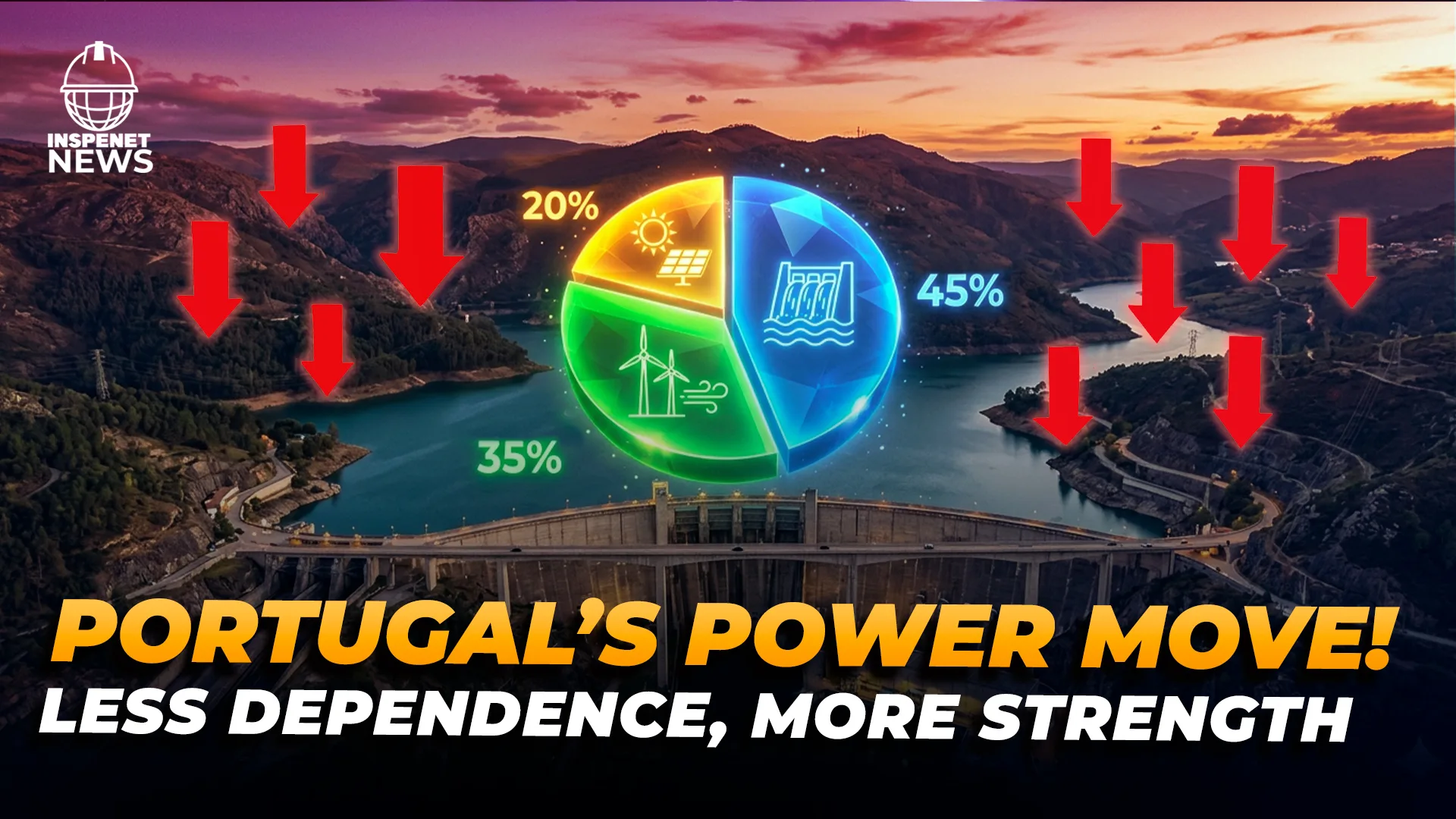
Portugal accelerates electrification and strengthens its security
Portugal is making progress in transforming its energy system with an increasingly strong commitment to electrification and renewable energy . The International Energy Agency (IEA) highlighted that the country already has one of the lowest carbon-intensive electricity mixes among its members thanks to the growth of solar photovoltaic energy and the sustained contribution of hydroelectric and wind power.
Furthermore, the organization believes this process can become a cornerstone for strengthening national energy security and reducing dependence on energy imports. The new report also points out that the challenge now lies in adapting the electrical infrastructure to meet increased demand and accelerating electrification in sectors such as transportation, industry, and buildings.
The energy transition is gaining speed in Portugal
Over the past few years, Portugal has significantly increased its renewable energy generation capacity. The growth in solar power has allowed the country to reduce emissions and lessen its exposure to the volatility of international energy markets.
According to the IEA, this progress positions Portugal as having one of the cleanest electricity systems in Europe. However, the agency warns that the energy transition will require more coordinated implementation to avoid grid bottlenecks and ensure that new renewable capacity can be integrated efficiently.
Mary Burce Warlick, deputy executive director of the IEA, stated that electricity will play a central role in both the country's energy security and economic development as the decarbonization of the Portuguese economy progresses.
The electricity grid becomes the next big challenge
As the share of solar and wind energy increases, so does the need to strengthen Portugal's electricity grid . The report highlights that increased investment in transmission and distribution will be necessary to meet the rising demand for electricity.
The IEA also considers it a priority to improve coordination between energy operators and to develop more flexible systems capable of balancing renewable generation in real time.
The document also recommends promoting energy storage technologies and demand response mechanisms to ensure stability in the electricity supply.
Transportation continues to lead emissions
Despite the progress in renewable energy, transport remains the main source of emissions in Portugal. The IEA attributes this to an aging vehicle fleet with low energy efficiency.
Although electric vehicle sales grew significantly in 2025, their presence within the total vehicle fleet remains small. Therefore, the organization recommends accelerating the deployment of charging infrastructure and expanding incentives for used electric vehicles.
Furthermore, the report proposes strengthening rail transport and public mobility policies to reduce fossil fuel consumption.
The industry is looking to take advantage of low-emission electricity
In the Portuguese industrial sector, emissions have remained virtually stable in recent years. Given this situation, the IEA believes a clearer industrial strategy is needed to leverage the availability of low-emission electricity to develop new value chains.
The report argues that greater industrial electrification could improve the country's competitiveness and attract investments linked to clean technologies.
On the other hand, the construction sector is considering accelerating energy efficiency reforms to reduce household costs and decrease overall energy consumption.
Portugal maintains its climate goal for 2045
Portugal maintains ambitious energy targets within its National Energy and Climate Plan, with goals set for 2030 and a roadmap aimed at achieving climate neutrality by 2045.
The IEA concludes that the country already has a solid foundation thanks to renewable development, although it warns that the success of electrification will depend on the ability to modernize energy infrastructure and sustain long-term investments.
At the same time, the report notes that the energy transition still faces significant social challenges, including the persistence of energy poverty among some of the Portuguese population despite the growth of renewable energy.

News of additional interest
Rolls-Royce bets on hybrid mining trucks
Rolls-Royce Power Systems is developing a hybrid propulsion system for mining haul trucks with the aim of reducing fuel consumption and emissions in open-pit mining operations. The company plans to begin trials at a mine in 2026 with a vehicle equipped with MTU technology. The system combines 4000 Series diesel engines with electric propulsion and batteries capable of storing energy generated during descents for reuse on ascents.
According to the company, the technology could reduce fuel consumption and CO₂ emissions by up to 30% compared to traditional systems. The project also features a modular design to adapt to different types of mines and existing vehicles. Rolls-Royce noted that the sector faces intense pressure to reduce emissions while demand for critical minerals needed for clean energy, electromobility, and data centers increases.
BW Offshore secures revenue with FPSO extension
BW Offshore announced a modification to the contract for the BW Catcher floating platform , extending its operations until the end of 2030. The new agreement replaces the previous annual renewal scheme and will provide greater financial predictability for the company. The company estimates that the changes will add approximately $490 million to its operating cash flow portfolio starting in 2026.
The upgrade will also allow BW Offshore to better prepare for the future relocation of the unit to new projects. The FPSO Catcher was designed to operate in demanding conditions, and the company believes it retains significant value in the current offshore market. As part of the agreement, a 10% adjustment will be applied to certain operating fees, and a cap linked to the price of oil will be incorporated into the payment structure starting in 2028.
La Pereda accelerates its shift towards biomass
HUNOSA is making progress in the transformation of the La Pereda thermal power plant in Asturias, converting it into a biomass-fired electricity generation plant. The project involves an investment of €55 million and is expected to begin operations in mid-2027. After completing dismantling and adaptation work in key areas of the facility, the company has already begun the construction phase with new equipment and technologies specializing in renewable fuels.
The future plant will use locally sourced biomass and recovered solid fuel, with the aim of creating at least 200 jobs related to the forestry sector and sustainable resource management. HUNOSA also highlighted that the project will contribute to forest management and fire prevention in the region. Furthermore, the plant will incorporate modern gas treatment systems currently used in other European facilities focused on the circular economy and cleaner energy generation.
Bowdun makes progress in bringing wind power to the North Sea
Thistle Wind Partners has submitted its application to the Scottish Government for authorization to develop its Bowdun offshore wind farm . The project envisions a 1 GW renewable energy capacity, enough to power more than 1.2 million homes. With this step, the project officially enters the full assessment phase, along with the onshore components that were submitted months ago.
The company estimates that the construction of the wind farm will generate more than 700 jobs in Scotland over five years and will subsequently maintain around 60 permanent positions related to operations and maintenance. Bowdun also aims to strengthen the local supply chain and increase the industrial participation of northeast Scotland in the growth of the offshore wind sector. The project is part of the ScotWind strategy, launched to expand the country's renewable energy capacity.