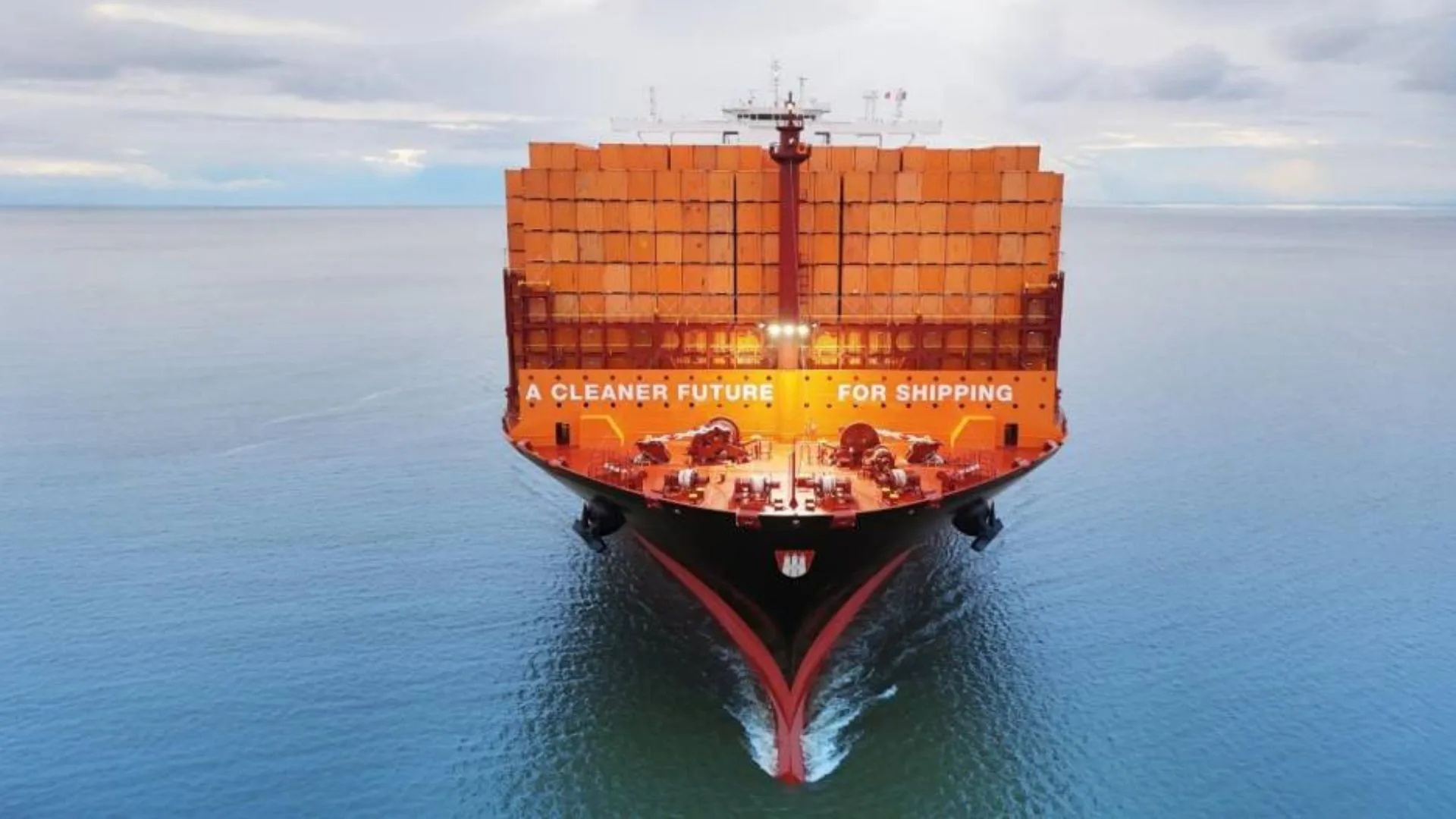
Hapag-Lloyd and Kuehne+Nagel took a further step in their logistics decarbonization strategy by expanding their collaboration through sustainable shipping solutions based on alternative marine fuels.
The initiative envisions Kuehne+Nagel utilizing Hapag-Lloyd’s Ship Green program to reduce the carbon footprint associated with its maritime operations between East Asia and Northern Europe. The agreement will be in effect from April to December 2026 and will cover approximately 3,300 TEUs transported on this trade route.
According to the companies, the use of certified biofuels derived from waste will prevent approximately 2,979 tons of CO₂e emissions during the entire life cycle of the fuel used.
Biofuels and emissions reduction Scope 3
The alliance seeks to accelerate the adoption of sustainable fuels within container shipping, a sector facing increasing regulatory and environmental demands.
Danny Smolders, Hapag-Lloyd’s Managing Director of Global Sales, noted that the Ship Green program offers a scalable alternative for customers to reduce their Scope 3 emissions in the short term.
For his part, Paolo Montrone, Director of Global Maritime Logistics at Kuehne+Nagel, stressed that the decarbonization of the shipping sector requires operational transparency, verifiable data, and commercially viable solutions to promote the use of alternative fuels.
Likewise, both companies indicated that this type of agreement makes it easier for customers to advance their corporate climate goals without depending exclusively on the physical availability of fuel on specific routes.
Book and claim model for sustainable logistics
The agreement uses a chain-of-custody mechanism known as book and claim. This system allows verified emission reductions to be assigned to customers even if the biofuel is not physically used on the same loading trip.
Under this model, the emission reductions generated within the fleet operated by Hapag-Lloyd are transferred exclusively to Kuehne+Nagel through certified records.
The approach has become an increasingly used tool within sustainable maritime logistics due to its ability to scale up the use of alternative fuels without immediately altering the entire global operational infrastructure.
Climate targets for the shipping sector
The cooperation also aligns with both companies’ climate neutrality goals; Hapag-Lloyd projects to achieve net-zero operations by 2045, while Kuehne+Nagel maintains its objective of eliminating net emissions across its entire value chain by 2050.
Currently, the maritime industry is increasing its investments in low-emission solutions due to international regulatory pressure and the growing demand for sustainable logistics chains.
With a fleet of more than 300 container ships and operations in more than 140 countries, Hapag-Lloyd continues to expand programs linked to the use of sustainable fuels and maritime energy efficiency.
Kuehne+Nagel, for its part, maintains a relevant image within global logistics thanks to its network of more than 1,300 operating centers and its strategy focused on supply chain services with less environmental impact.
Source and photo: Hapag-lloyd