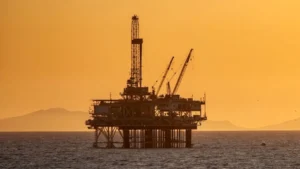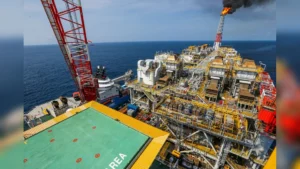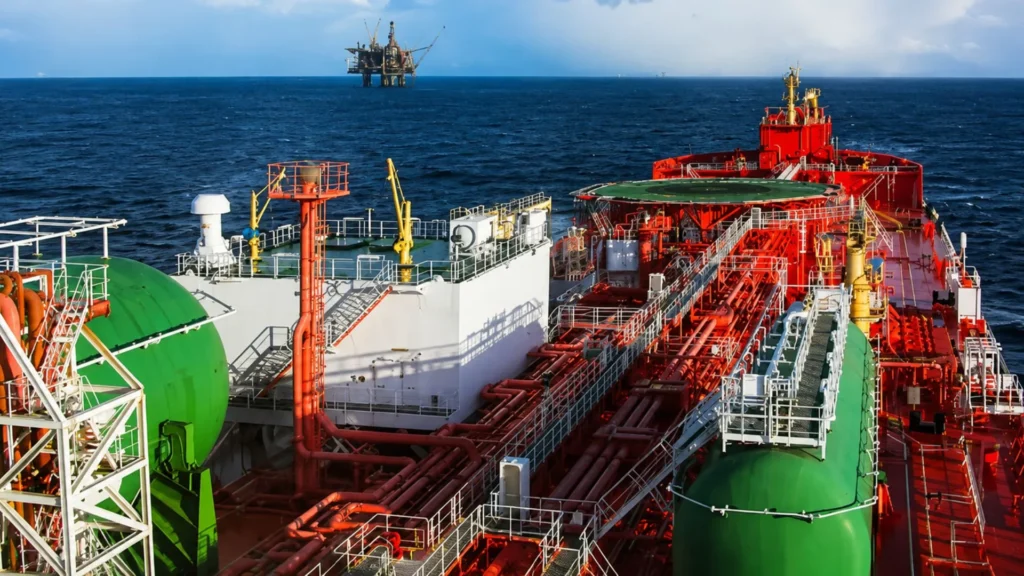
The Gullfaks offshore oil field reached a new operational milestone after completing the shipment of its 5,000th oil cargo from the Norwegian continental shelf to Europe. This operation confirms the continued viability of one of the North Sea’s most iconic oil fields and reinforces Norway’s role as a strategic energy supplier to the European continent.
According to Equinor, the field operator, this result is a consequence of decades of investments aimed at extending the useful life of the field through operational improvements, recovery optimization and use of existing infrastructure.
Gunnar Egge, production manager at Gullfaks, highlighted that reaching 5,000 oil cargoes from Gullfaks is the result of a long-term effort to continue developing the field.
A deposit that exceeded all expectations
When Gullfaks began production in 1986, it was estimated that the field would remain active until 2007; however, almost twenty years after that projected date, the complex continues to send weekly shipments of crude oil to the international market.
To date, the field has produced approximately 2.8 billion barrels of oil equivalent, nearly double the original estimates. It also serves as an export hub for other offshore developments in the region, such as Snorre and Visund, along with several associated subsea projects.
Likewise, Gullfaks remains the seventh largest oil and gas field in Norway in terms of original reserves.
Light crude oil for fuels and petrochemicals
The crude oil extracted in Gullfaks stands out for being light and low in sulfur, characteristics that facilitate its refining to obtain products of high commercial value.
Among the derivatives made with this oil are gasoline, diesel, aviation fuel, LPG and naphtha intended for the petrochemical industry.
Deliveries are mainly made to refineries located in Sweden, the United Kingdom and Poland; the 5,000th shipment was specifically sent to the St1 refinery in Gothenburg, a facility responsible for producing fuels that are subsequently distributed to more than 1,100 service stations in Finland, Sweden and Norway.
Specialized tankers support offshore logistics
Oil is transported using shuttle tankers or specialized tankers capable of loading crude directly from offshore platforms using dynamic positioning systems.
These vessels have an approximate capacity to transport 800,000 barrels of oil and are part of the logistics chain that connects the Norwegian continental shelf with European customers.
Heidi Aakre, Equinor’s director of marine transport, emphasized that operational reliability depends on continuous collaboration between maritime operators, shipping companies, and offshore specialists.
One of the vessels used in these operations is the Eagle Balder, built in 2020 and operated by OSM Thome for the company AET. The vessel runs on dual fuel compatible with LNG and features technology to capture and reuse volatile organic compounds during crude oil transport.
Offshore energy supported by offshore wind power
Although Gullfaks remains a major oil producer in the North Sea, some of its operations already incorporate electricity supplied from the Hywind Tampen floating wind farm.
This energy integration allows for a partial reduction of emissions associated with offshore operations and represents one of the most visible examples of electrification applied to oil platforms in Norway.
The field’s production peaked in 1994; during the last year, Gullfaks and its associated underwater facilities produced more than 17 million barrels of oil, maintaining its relevance within the European energy system.
Source and photo: Equinor