
Table of Contents
- What coke drums are and why they are critical?
- How coke drums operate in a delayed coking unit?
- The most critical damage mechanisms coke drums
- What an effective inspection program must detect
- Inspection methods
- Critical inspection areas
- How often a coke drum should be inspected?
- How to determine whether a coke drum can continue operating?
- Critical risks during coke drum inspection
- Conclusions
- References
- Frequently Asked Questions (FAQs)
- What is the difference between bulging and temporary thermal deformation in a coke drum?
- Why do the upper sections of the drum usually experience greater damage?
- What information does historical bulging monitoring provide?
- When does a crack in a coke drum require immediate FFS evaluation?
- Why do visual inspections remain important in highly instrumented equipment?
- What operational mistakes accelerate coke drum deterioration?
- What advantages does the integration of AUT, PAUT, and 3D laser scanning offer?
Coke drums represent some of the most critical assets in refineries operating delayed coking units (DCU), where severe thermal cycling and continuous operation create highly demanding integrity conditions. Their continuous operation under extreme temperature and pressure conditions, combined with repeated thermal cycles, makes them highly susceptible to progressive thermomechanical fatigue damage. An undetected failure in these assets can lead to unplanned shutdowns, major safety risks, and significant operational losses for the refinery.
This coke drum inspection guide is intended to provide field inspectors and integrity engineers with a structured technical framework for understanding, assessing, and managing the condition of this equipment throughout its service life.
What coke drums are and why they are critical?
A coke drum is a large pressure vessel fabricated from low-alloy steel, typically Cr-Mo grades such as 1.25Cr-0.5Mo or 2.25Cr-1Mo, whose primary function is to receive and contain heavy vacuum residues (Vacuum Residue – VR) from the bottom of the vacuum tower during the delayed coking process.
These vessels are characterized by their considerable dimensions, with diameters ranging from 6 to 9 meters (20 to 30 feet) and heights between 24 and 30 meters (80 to 100 feet). They are typically designed to operate at pressures between 2 and 4 barg, with process temperatures exceeding 480 °C at the feed inlet.
The most specific reference standard for the technical management of these assets is API 934-C (Materials and Fabrication of 1¼Cr-½Mo Steel Heavy Wall Pressure Vessels), complemented by API 579-1/ASME FFS-1 for Fitness-For-Service (FFS) evaluations.
How coke drums operate in a delayed coking unit?
A delayed coking unit operates with a minimum of two coke drums in parallel. While one drum is in the active filling phase, the other undergoes cooling, hydraulic coke cutting, and preparation for the next cycle. This cyclic operation, known as the coking cycle, typically lasts between 16 and 24 hours depending on the unit design and the type of feedstock being processed.
Operational cycle phases
- Preheating: High-temperature steam is introduced to condition the drum walls before receiving the vacuum residue feed.
- Filling (On-Stream): The vacuum residue feed enters at temperatures exceeding 480 °C. During this delayed coking process, petroleum coke progressively deposits inside the drum over a period of 8 to 12 hours, forming the solid carbonaceous residue characteristic of these refining units.
- Steam Stripping: Steam is injected to purge residual hydrocarbons before the water cooling phase.
- Water Quench: Cold water is introduced to reduce the temperature of the coke mass and the drum walls to approximately 90 °C over a period of 4 to 6 hours.
- Decoking: A high-pressure hydraulic cutting system is used to remove the solidified coke from inside the drum.
This cycle is continuously repeated throughout the operational life of the asset, accumulating thousands of thermal cycles over 20 to 30 years of service.
The most critical damage mechanisms coke drums
Damage mechanisms in coke drums are a direct consequence of operation under severe thermal cycling conditions and exposure to corrosive environments. Understanding these mechanisms is the fundamental starting point for any effective inspection program.
In practice, many of the earliest signs of damage in coke drums are not initially identified through measurement, but rather through subtle changes in equipment behavior that can be visually perceived in the field and later require validation through coke drum inspection techniques.
Thermomechanical fatigue in coke drums
This is the dominant damage mechanism and the primary cause of deterioration in these assets. Cyclic temperature fluctuations generate differential expansions and contractions that induce cumulative fatigue stresses in the base material, welds, and Heat Affected Zone (HAZ). At the macroscopic level, this mechanism manifests itself as permanent plastic deformation (bulging) and cracking.
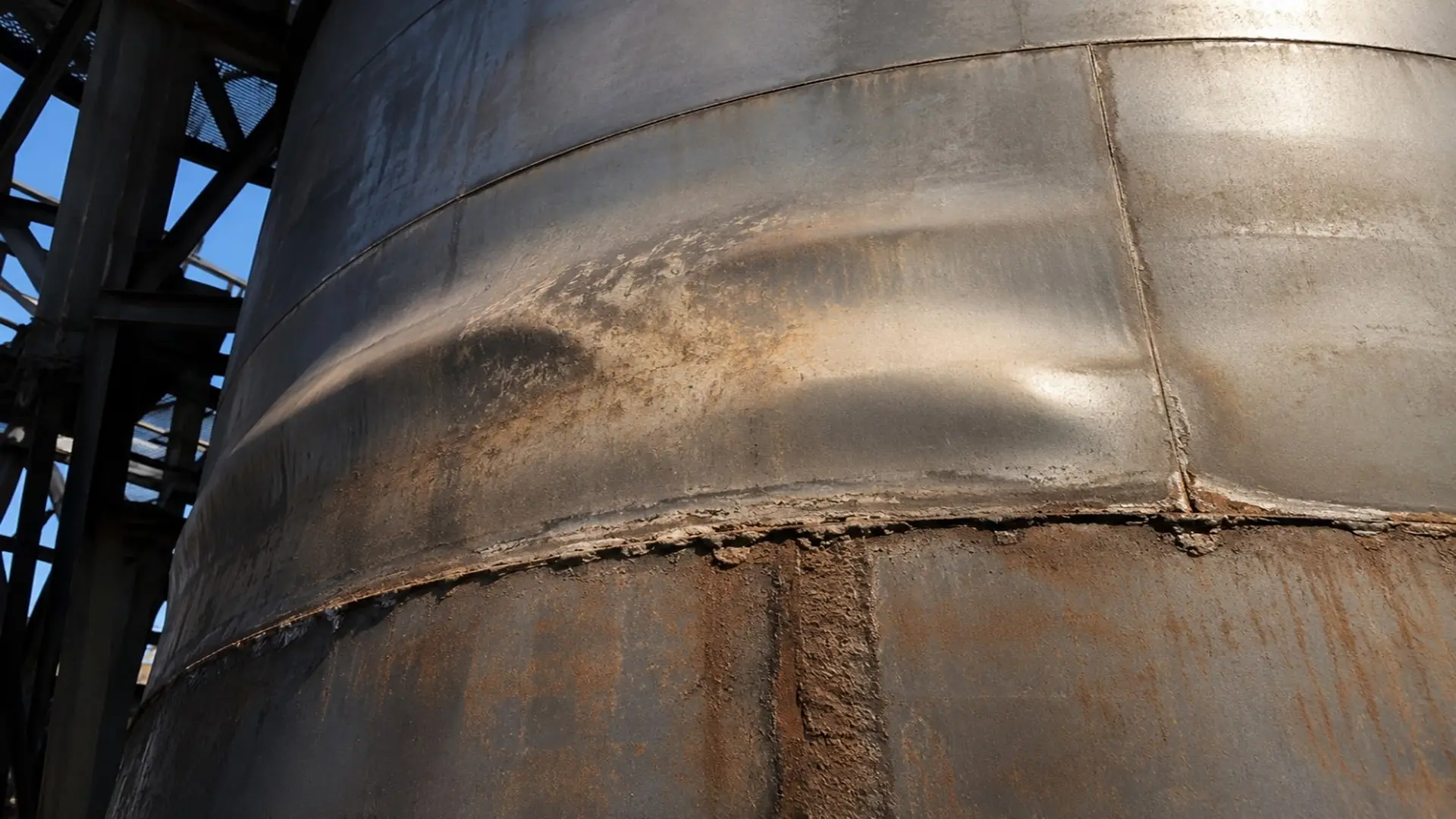
Bulging: Progressive drum deformation
Bulging consists of the permanent outward deformation of the drum wall caused by plastic flow of the material under cyclic thermal stresses. It occurs more frequently in the shell courses of the cylindrical body, particularly in the upper sections where temperatures and thermal gradients are more severe. Periodic 3D laser scanning of bulging allows correlation between deformation progression and the number of accumulated operational cycles.
Cracking in welds and the HAZ
Circumferential and longitudinal welds, as well as the junctions between the cylindrical shell and the heads, are areas of high stress concentration. Cracking in the HAZ is particularly critical in aged Cr-Mo steels where temper embrittlement may occur. Cracks may propagate subsurface or through-wall, representing a potential risk of catastrophic failure. In field conditions, the greatest challenge is often not detecting a crack, but determining whether its growth rate represents an immediate operational risk.
Skirt cracking
The junction between the drum and its support skirt is an area of geometric discontinuity and high thermal stress concentration. Cracks in this region may initiate at the attachment weld or in the adjacent shell area, and their propagation can compromise both the structural stability and the structural integrity of the equipment.
Corrosion and erosion in critical internal areas
Corrosion-related wall thinning (general or localized) may occur in specific areas exposed to acidic condensates during the cooling phase. Erosion caused by coke particle flow can also contribute to thickness loss in internal areas, particularly around nozzles and connections.
High Temperature Hydrogen Attack (HTHA)
High-Temperature Hydrogen Attack (HTHA) is an internal damage mechanism associated with hydrogen diffusion into the material under elevated temperature and pressure conditions. Under these conditions, hydrogen reacts with carbon in the steel, causing decarburization, formation of internal voids, and progressive microfissuring that may not always present visible surface indications.
This mechanism is particularly critical because it can develop silently over long periods, gradually reducing the mechanical strength of the material until failure conditions are reached. Its assessment is based on the Nelson Curves from API RP 941, which establish operating limits according to material type, temperature, and hydrogen partial pressure.
From an integrity standpoint, HTHA requires an inspection approach based on advanced volumetric techniques and proper correlation with actual operating conditions, since early detection in the field represents a significant challenge.
What an effective inspection program must detect
- An effective coke drum inspection program must achieve the following strategic objectives:
- Early damage detection: Identify cracks, deformations, and thickness loss before they reach critical levels that could compromise equipment integrity.
- Remaining life assessment: Estimate the number of additional cycles the drum can safely operate, supporting decisions related to continued operation, repair, or replacement.
- Support for FFS evaluations: Provide quantitative data on the size and depth of discontinuities for assessment under API 579 criteria.
- Inspection interval optimization: Establish risk based inspection frequencies (Risk Based Inspection – RBI) in accordance with API 580/581 methodologies.
- Regulatory compliance: Ensure compliance with the requirements of regulatory authorities and applicable industry standards.
Inspection methods
The selection of NDT (Non-Destructive Testing) methods must be aligned with the expected damage mechanisms, the critical areas of the asset, and the available access conditions. In advanced integrity programs, the evaluation and repair of coke drums requires the integration of multiple inspection technologies to correlate deformation, cracking, and structural degradation under real operating conditions. The following sections describe the most relevant techniques used for coke drum inspection.
Automated Ultrasonic Testing (AUT)
AUT is the primary technique used for internal coke drum inspection. It is performed during refinery shutdowns using robotic scanners that systematically scan circumferential welds, longitudinal welds, and the support skirt area.
- Enables detection and sizing of surface and subsurface cracks in welds and the HAZ.
- Generates complete digital records that can be compared between inspections to evaluate damage progression.
- TOFD (Time of Flight Diffraction) technology provides high sensitivity for crack detection regardless of flaw orientation.
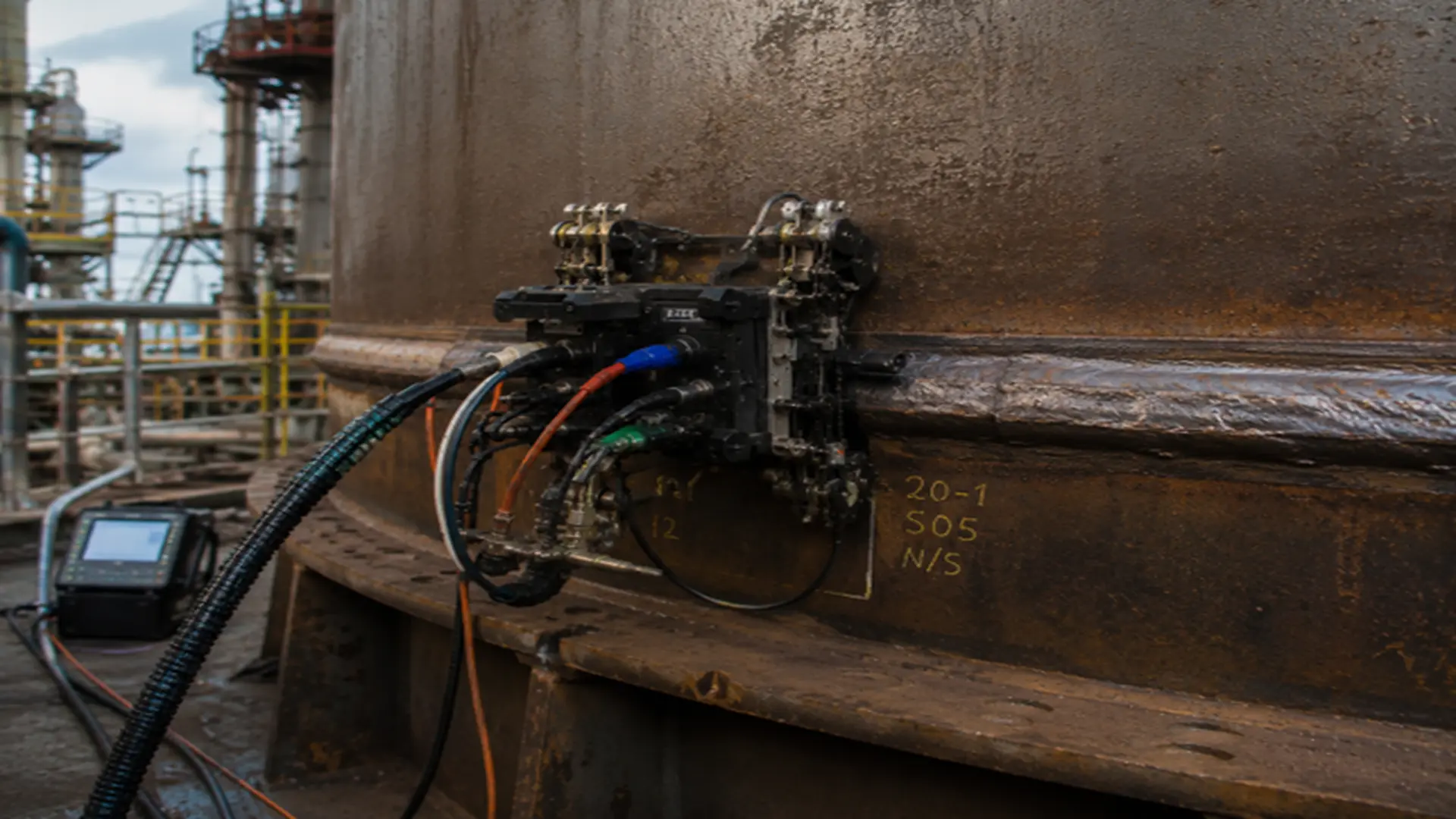
Automated ultrasonic inspection applied to industrial coke drums.
Phased Array Ultrasonic Testing (PAUT)
PAUT complements or replaces conventional UT for the inspection of complex weld geometries. It allows the generation of multiple ultrasonic beams from a single transducer through electronic control, providing greater coverage, faster inspection speeds, and high-resolution sectorial imaging (S-scan) capabilities for accurate flaw sizing.
Ultrasonic Thickness Mapping (UT Mapping)
Thickness mapping on the cylindrical shell and nozzle areas allows detection of localized wall loss caused by corrosion or erosion. In practice, it is commonly combined with 3D scanning to correlate thickness distribution with areas exhibiting the highest deformation levels (bulging).
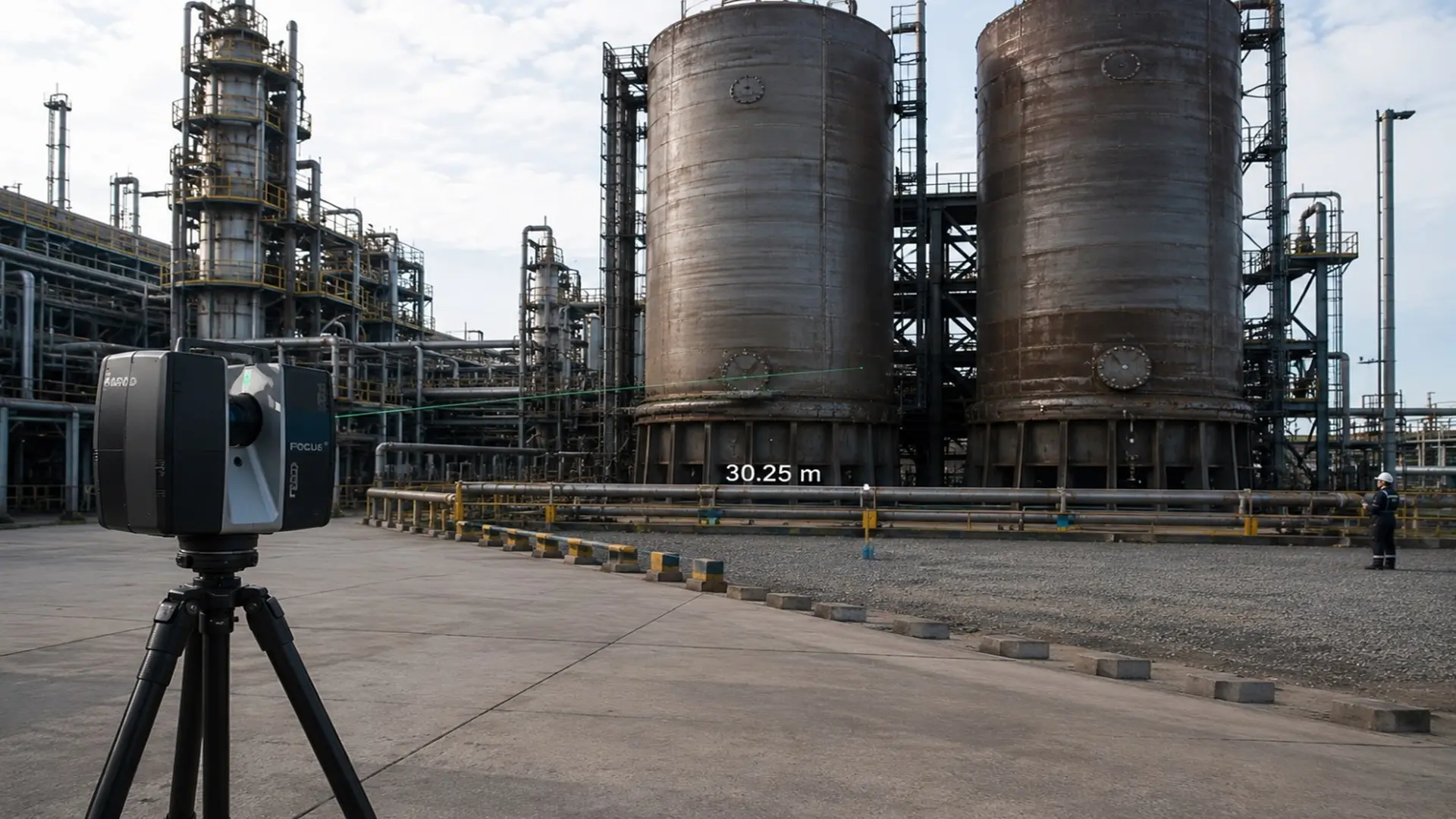
3D Laser Scanning
3D laser scanning is essential for the quantification of bulging. By comparing successive scans, it is possible to determine the progression rate of plastic deformation and correlate it with accumulated operational cycles. In specialized coke drum inspection programs, laser profile inspection, such as the advanced dimensional assessment approaches implemented by organizations like CIA Inspection, can support the identification of geometric distortion and bulging trends before these conditions evolve into higher-risk structural concerns. This tool provides the quantitative foundation for Fitness-For-Service evaluations under API 579 Level 3 assessments.
Magnetic Particle Testing (MT) and Liquid Penetrant Testing (PT)
These surface inspection techniques are widely used for examining accessible welds, skirt attachment areas, nozzles, and repaired zones. MT is preferred for ferromagnetic materials such as Cr-Mo steels, while PT is useful in areas where magnetic field application is not practical or effective.
Infrared Thermography
Infrared thermography performed from the external surface of the drum during operation allows identification of abnormal thermal gradient areas that may be associated with localized thickness variations, irregular coke deposition, or damage to the internal refractory lining (in refractory-lined drums). It is a rapid screening tool that does not require equipment shutdown.
Acoustic Emission (AE)
Acoustic emission has been used in some coke drum operational monitoring programs as a complementary technique to identify activity associated with discontinuity propagation under service conditions.
Through sensors installed on the external surface of the drum, it is possible to detect acoustic events generated by energy release in areas subjected to cyclic stresses. However, due to the high operational complexity of these assets —characterized by severe thermal transients, vibration, turbulence, and elevated levels of structural noise— reliable interpretation of acoustic signals can represent a significant challenge.
Additionally, this technique alone does not allow accurate sizing of discontinuities or full characterization of the severity of detected damage. For this reason, its results must be correlated with conventional volumetric inspection techniques such as AUT or PAUT, as well as with the operational and damage history of the equipment.
In practice, and according to various technical criteria shared by inspection and mechanical integrity specialists in recent years, acoustic emission is generally considered primarily as a complementary monitoring tool between scheduled shutdowns, rather than a primary method for integrity assessment in critical coke drums.
From my experience and considering the complex operational conditions present in these assets, I would personally place acoustic emission among the last techniques to be considered, prioritizing conventional volumetric methods such as AUT or PAUT to validate the actual condition of the equipment.
Critical inspection areas
Operational experience and damage studies reported throughout the industry indicate that the following areas should receive priority attention in any inspection program:
- Circumferential welds located in the upper shell courses of the cylindrical body (areas with high thermal exposure).
- Welded junction between the cylindrical shell and the support skirt (skirt-to-shell junction).
- Upper and lower heads and their attachment welds to the shell.
- Feed inlet nozzles, vapor outlet nozzles, cooling water inlet nozzles, and their associated attachment welds.
- Areas previously repaired with welded patches or weld overlays from earlier inspections.
How often a coke drum should be inspected?
Inspection frequency should be determined through a Risk Based Inspection (RBI) analysis in accordance with API 580/581 methodologies, considering variables such as the number of accumulated cycles, history of previous damage, bulging progression rate, operating temperature, and the degree of material microstructural degradation.
As a general industry reference, a complete internal inspection using AUT is recommended during each major turnaround, typically every 3 to 5 years, combined with continuous monitoring through acoustic emission during operational cycles. 3D laser scanning should be performed at least during every major shutdown to evaluate bulging progression.
However, in many refineries, actual inspection frequency is ultimately adjusted more by perceived operational risk than by the theoretical intervals established within RBI programs.
The accumulated results from each inspection should be integrated into an integrity database that enables trend analysis and remaining life modeling for the asset.
How to determine whether a coke drum can continue operating?
When discontinuities detected during inspection —such as cracks, volumetric indications, or deformations— exceed the acceptance criteria established by the original construction code (ASME Section VIII), a Fitness-For-Service (FFS) assessment must be performed in accordance with API 579-1/ASME FFS-1. This evaluation can be conducted through three progressive levels of analysis:
- Level 1: Conservative assessment based on simplified formulas and tabulated criteria. Suitable as an initial screening approach.
- Level 2: More detailed analysis using semi-conservative assessment procedures. Requires more accurate inspection data.
- Level 3: Advanced assessment using finite element analysis (FEA), fracture mechanics, or fatigue models. Applicable to complex discontinuities or equipment with a significant damage history.
Under real operating conditions, the decision to continue operating or shut down a coke drum rarely depends on a single finding, but rather on the correlation between accumulated damage, degradation rate, and the operational criticality of the asset.
The results of the FFS assessment will determine whether the equipment can continue operating without intervention, requires repair before restart, or must be removed from service.
Critical risks during coke drum inspection
Internal inspection of coke drums requires strict compliance with safe work procedures, since these are confined spaces that have contained hydrocarbons and high-temperature coke. Among the most critical considerations are:
- Issuance of Confined Space Entry permits, including ventilation procedures, atmospheric monitoring, and rescue systems.
- Verification of internal surface temperature prior to entry (maximum allowable temperature according to applicable regulations, typically below 49 °C).
- Use of appropriate personal protective equipment (PPE), including supplied-air respirators, heat-resistant clothing, and safety helmets.
- Compliance with LOTO (Lockout/Tagout) procedures for isolation of hazardous energy sources before performing any internal inspection activities.
Conclusions
Coke drums are critical assets whose integrity management requires a structured, multidisciplinary, and technically driven approach based on a deep understanding of their damage mechanisms. The combination of advanced inspection techniques —AUT, PAUT, TOFD, 3D laser scanning, and acoustic emission— together with quantitative Fitness-For-Service evaluations and RBI programs, enables inspection and integrity organizations to make informed decisions regarding the condition and remaining life of these assets.
The implementation of this practical guide, supported by API 934-C and API 579 standards, provides inspectors and integrity engineers with the foundation required to develop effective, safe, and industry-aligned inspection programs for the refining sector
References
- API Standard 934-C: Materials and Fabrication of 1¼Cr-½Mo Steel Heavy Wall Pressure Vessels. American Petroleum Institute.
- API 579-1/ASME FFS-1: Fitness-For-Service. American Petroleum Institute / American Society of Mechanical Engineers.
- API RP 580: Risk Based Inspection. American Petroleum Institute.
- API RP 581: Risk Based Inspection Methodology. American Petroleum Institute.
- ASME Boiler and Pressure Vessel Code, Section VIII, Division 1 and 2.
- Inspenet Knowledge Base: Integridad Mecánica en Activos de Proceso. www.inspenet.com
Frequently Asked Questions (FAQs)
What is the difference between bulging and temporary thermal deformation in a coke drum?
Temporary thermal deformation occurs during temperature fluctuations and disappears once operating conditions stabilize. Bulging, on the other hand, corresponds to permanent plastic deformation of the material caused by the accumulation of thermomechanical stresses over multiple operational cycles. Its progression is generally considered an indicator of accumulated structural degradation.
Why do the upper sections of the drum usually experience greater damage?
The upper shell courses of the drum are subjected to more severe thermal gradients and fluctuations during filling and cooling stages. This generates higher stress concentrations, promoting mechanisms such as thermomechanical fatigue, progressive deformation, and weld cracking.
What information does historical bulging monitoring provide?
Historical monitoring through 3D laser scanning makes it possible to identify deformation trends and damage progression rates. Rather than evaluating an isolated deformation event, comparative analysis between inspection campaigns helps determine whether the drum’s behavior remains stable or is entering an accelerated degradation stage.
When does a crack in a coke drum require immediate FFS evaluation?
Generally, when the discontinuity: Shows active growth. Is located in areas of high stress concentration. Affects critical welds. Exceeds acceptance criteria established by applicable codes. In these situations, a Fitness-For-Service (FFS) assessment determines whether the equipment can continue operating safely or requires immediate repair.
Why do visual inspections remain important in highly instrumented equipment?
Although advanced NDT techniques generate high-value quantitative data, visual inspection remains essential for identifying operational changes, visible deformations, thermal anomalies, and surface conditions that often serve as the starting point for more specialized evaluations.
What operational mistakes accelerate coke drum deterioration?
Among the most common factors are:
Uncontrolled rapid cooling.
Irregular thermal distribution.
Severe variations in operational cycles.
Excessive coke accumulation.
Delayed detection of deformation or cracking.
The combination of these factors can significantly a ccelerate cumulative fatigue damage in the equipment.
What advantages does the integration of AUT, PAUT, and 3D laser scanning offer?
The combination of these technologies enables simultaneous evaluation of:
Cracking. Thickness loss. Geometric deformation. Structural evolution of the drum. This provides a much more comprehensive understanding of the asset’s mechanical condition and improves decision-making within RBI programs and FFS evaluations.