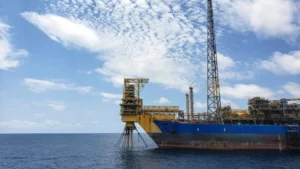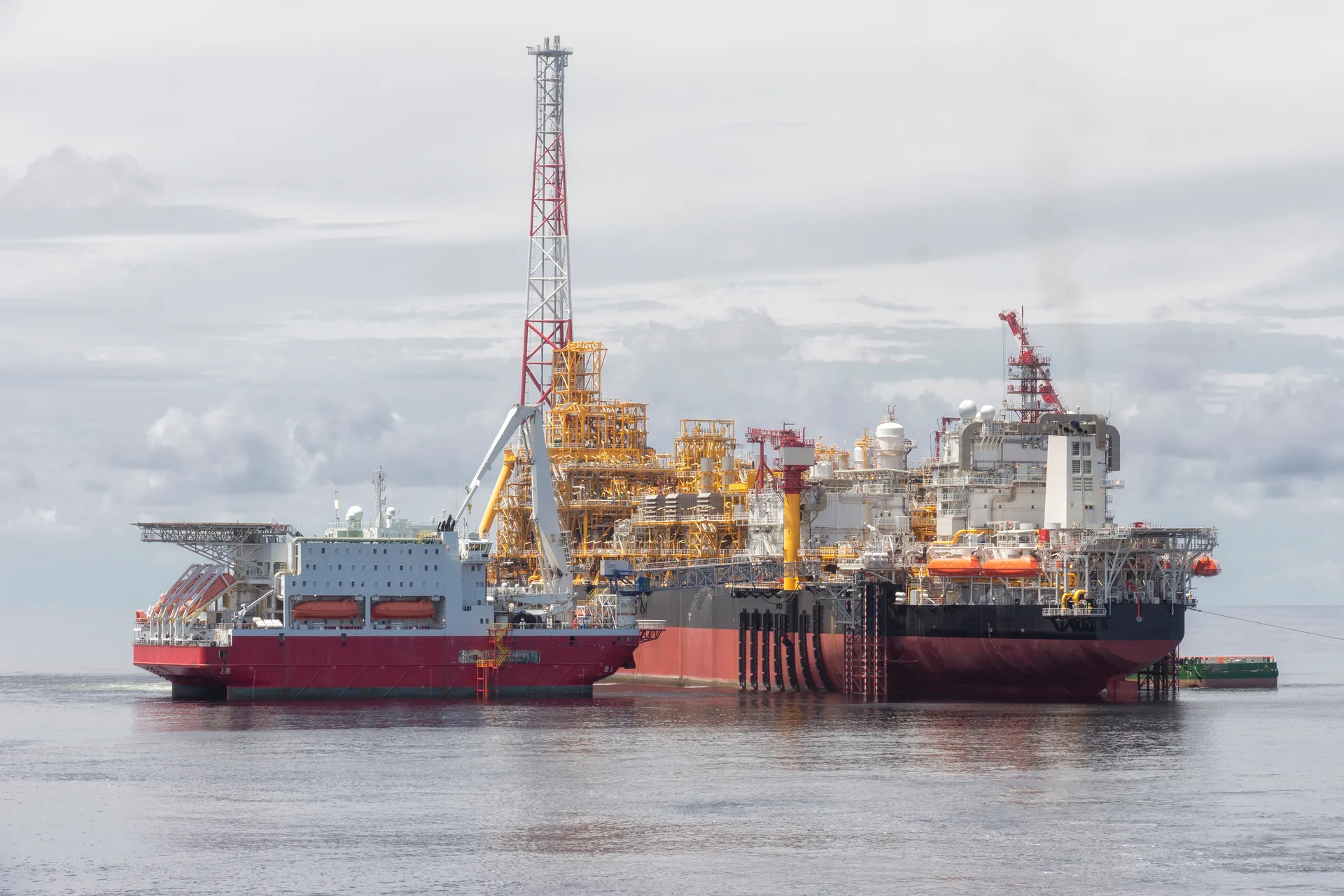
The Baleine offshore development continues to incorporate the engineering components necessary for its next stage of execution. TechnipFMC announced the award of a contract by Eni to design and manufacture the flexible pipes and risers that will connect the subsea wells to the new floating production, storage, and offloading (FPSO) unit planned for Baleine Phase 3, off the coast of Ivory Coast.
The contract, classified by the company as “significant,” covers the supply of the flexible infrastructure that will operate at depths near 1,200 meters, where pressure, temperature, and dynamic load conditions require solutions specifically designed for deepwater operations.
Subsea infrastructure is the link between the reservoir and production
In a modern offshore development, production does not depend solely on the wells or the FPSO. Both require a subsea network capable of continuously transporting hydrocarbons from the seabed to the surface processing facilities.
Within that architecture, flowlines carry oil and gas between the wells and the gathering systems, while risers establish the vertical connection between the seabed and the floating production unit.
Flexible risers address one of the greatest challenges of deep offshore
At depths close to 1,200 meters, rigid pipes are not always the most suitable solution for absorbing the dynamic loads generated by a floating facility.
Flexible risers are designed with multiple metallic and polymeric layers that allow them to withstand high internal pressures, resist bending fatigue, and adapt to the relative movements between the seabed and the floating platform without compromising the continuity of hydrocarbon transport.
Baleine continues to incorporate the systems that will make its expansion possible
The contract award to TechnipFMC represents a new step forward within the accelerated development strategy for Baleine Phase 3.
In recent weeks, the construction of a new FPSO intended to expand the field’s production capacity was also announced. With the addition of the subsea infrastructure, the project continues to integrate the various systems necessary to connect the producing wells with the processing and storage facilities.
Technological integration defines major subsea projects
Deepwater developments require the coordination of multiple engineering disciplines, from reservoir characterization and well design to subsea systems, floating units, controls, installation, and operation.
Each of these elements must function as part of a highly integrated system capable of ensuring continuous production for decades in environments of high operational complexity.
The participation of specialized companies like TechnipFMC responds precisely to the need to provide technologies designed to operate under conditions where reliability and mechanical integrity are determining factors for the project’s success.
Source: https://www.technipfmc.com/
Photo: Shutterstock