Industrial assets: the future of risk-based management
During API Summit 2026, held in San Antonio, one of the ideas that gained the most traction among industry specialists was the need to transform how companies manage their industrial assets. Moving away from traditional models based on maintenance schedules and periodic inspections, the industry is shifting towards strategies supported by data, risk analysis, and digital tools capable of improving decision-making.
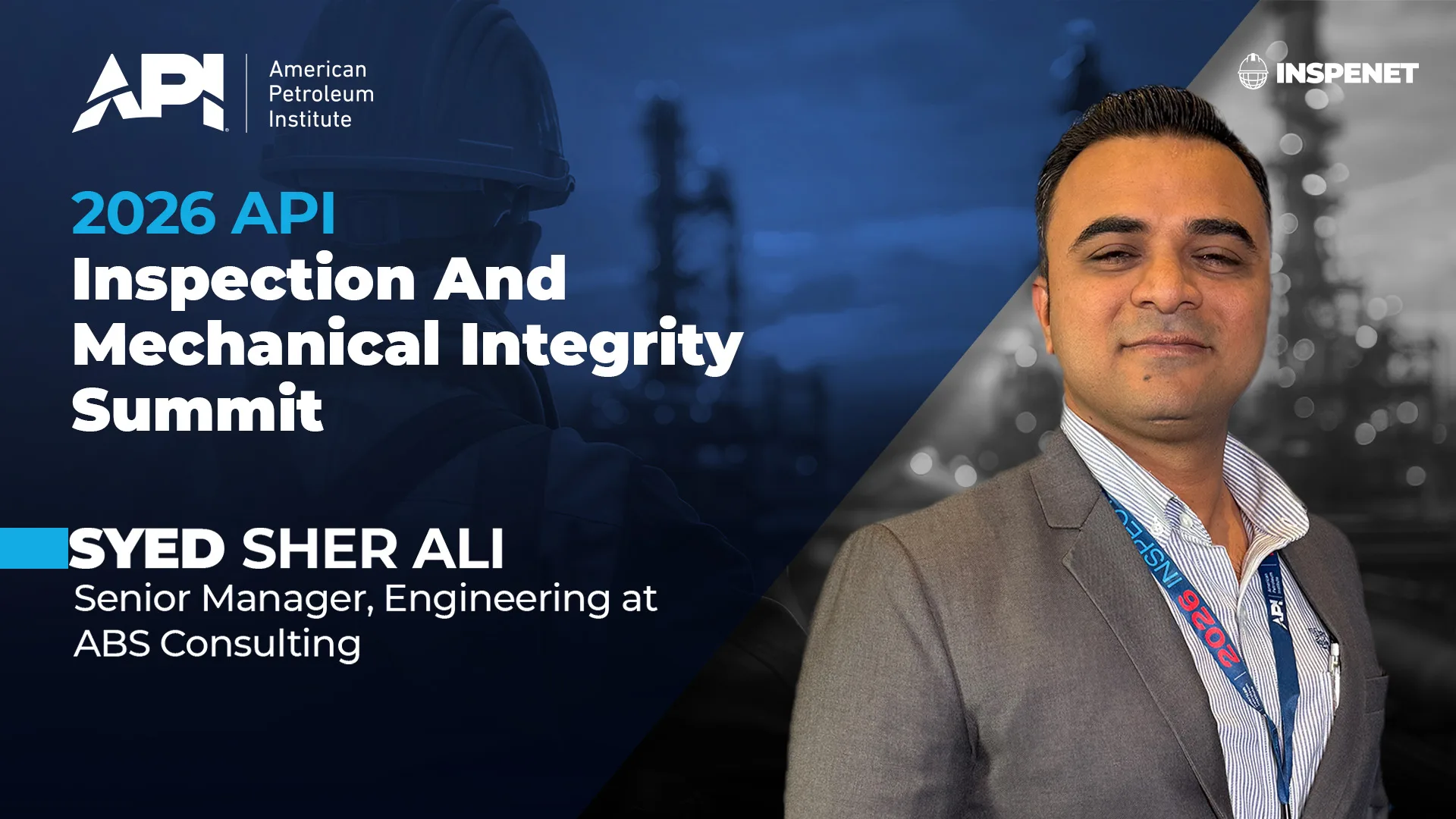
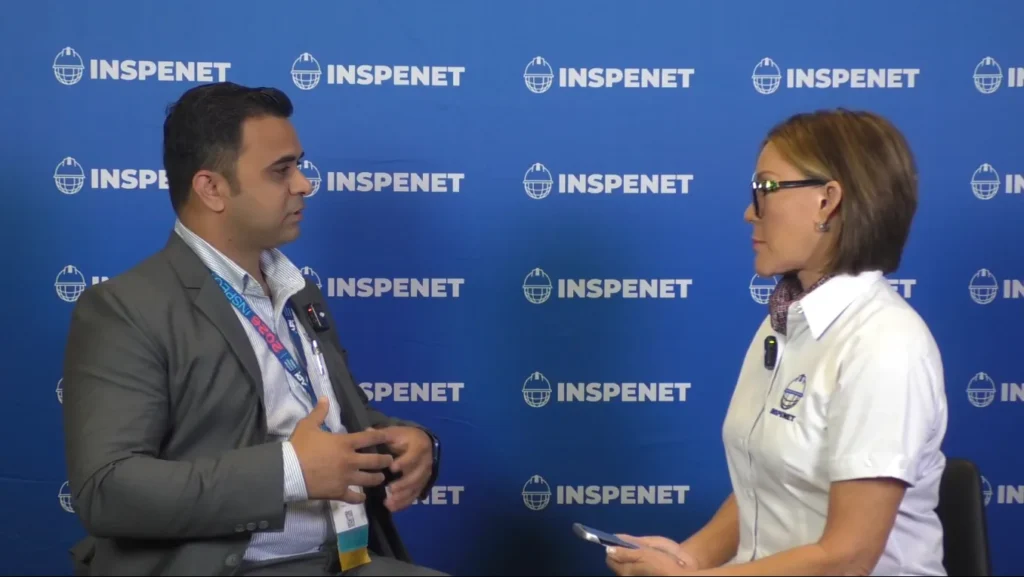
In this context, Syed Sher Ali, Senior Manager, Engineering at ABS Consulting , explained how the company is helping operators in different industries integrate disciplines that have historically worked independently. The goal is to have a comprehensive view that allows for resource optimization, increased facility reliability, and the support of every technical decision with objective information.
Industrial assets are moving towards risk management
For decades, many organizations have managed their inspection programs based on time-based criteria. Under this model, equipment was required to be inspected after a predetermined period, regardless of its actual condition or the level of risk it presented.
However, this approach is beginning to give way to more dynamic methodologies, as Sher Ali explained: risk-based analysis allows for the evaluation of the current state of each asset, the identification of its degradation mechanisms, and the establishment of inspection strategies tailored to its specific needs.
This methodology avoids allocating the same level of resources to all equipment equally. Instead, it focuses efforts on those assets that actually present a higher probability of deterioration or a greater potential impact on operations.
From ABS Consulting's perspective, this evolution allows for improved utilization of available resources while increasing the reliability of the facilities throughout their life cycle.
A comprehensive approach to better decision making
One of the industry's main challenges continues to be the fragmentation between different technical areas. Process safety, mechanical integrity, cybersecurity, asset management, and digital transformation often operate through independent teams, each with its own procedures and objectives.
Sher Ali explained that this separation limits the ability to obtain a complete view of operational risk. Therefore, ABS Consulting works with an approach that brings all these disciplines together within a single risk-based decision-making framework.
The methodology begins with the joint participation of specialists from different areas to identify the common factors that affect operations. This information is then integrated to develop strategies supported by a shared technical assessment.
This model encourages all parties involved to participate from the beginning of the process and facilitates that the decisions adopted have the consensus of the different teams responsible for the operation.
Likewise, integration allows for a better understanding of the relationship between the physical condition of assets, operational risks, process safety, and the digital systems that are now part of any modern industrial facility.
Data quality makes all the difference
Sher Ali noted that the quality of a decision depends directly on the quality of the available data. Based on this premise, ABS Consulting has developed its own tools capable of collecting, organizing, and processing large volumes of technical information before initiating any study.
These platforms allow you to review hundreds or even thousands of documents simultaneously to verify data consistency, detect discrepancies, and ensure that the information used during the analysis is consistent across different document sources.
The result is a much more efficient process that reduces review times and decreases the possibility of incorrect data affecting the final conclusions.
Furthermore, these tools can be adapted to the particular needs of each client; instead of using generic models, the information is processed according to the specific characteristics of each facility and the study to be carried out.
In this way, engineers have a much more solid documentary basis to support recommendations related to inspections, maintenance or risk management.
Artificial intelligence to accelerate engineering work
Digitization is also changing the way professionals analyze technical information.
During the interview, Sher Ali explained that ABS Consulting incorporates different internally developed artificial intelligence models to automate tasks that traditionally required a large number of hours of manual work.
One of the most representative examples is the automatic analysis of P&ID diagrams. These tools make it possible to identify equipment, instruments, labels, operating conditions, and other technical data present in the documentation of a facility.
The next step, according to the executive, involves connecting multiple diagrams within the same system to automatically track the path of lines, equipment, and processes between different documents.
This capability allows for a significant reduction in the time spent processing information and improves the consistency of the results obtained.
Another key aspect is the protection of customer information. Sher Ali pointed out that the artificial intelligence used by the company operates within a private environment, preventing processed data from being sent to public platforms. This feature is especially relevant for organizations that manage critical information related to their operations.
Far from replacing technical judgment, these tools seek to provide engineers with more complete and organized information to support decisions with a higher level of confidence.
The future of industrial assets will be supported by data
For Sher Ali, the transformation that the sector is experiencing is just beginning.
Increasingly, operators are replacing inspection models based solely on time intervals with strategies based on up-to-date information about the actual condition of the equipment.
As he explained, this change is already allowing for the extension of certain inspection intervals when data shows that the risk remains within acceptable levels. At the same time, it facilitates earlier intervention on assets whose condition requires priority action.
This approach allows resources to be directed towards the points where they generate the greatest value for the operation.
Likewise, the interviewee believes that the profile of professionals will continue to evolve. The ability to interpret large volumes of information, validate data quality, and translate that knowledge into technical decisions will become increasingly important in engineering projects.
In this scenario, the combination of technical expertise, data analysis, and artificial intelligence outlines a new way of managing industrial assets, where every decision can be based on objective and up-to-date information instead of relying solely on temporal or historical criteria.
The shift towards risk-based models reflects a trend that is already beginning to solidify in various industry segments. As digitalization continues to advance, organizations have new tools at their disposal to improve the integrity of their facilities, optimize inspections, and strengthen the reliability of their operations throughout the entire asset lifecycle.
For more content about API Summit 2026, visit our LinkedIn profile.
Source: Inspenet.