GE Vernova demonstrates how AI anticipates failures in industrial assets
During API Summit 2026, GE Vernova showcased how artificial intelligence is beginning to transform industrial asset management . Far from proposing a scenario where technology replaces professionals, the company championed a model based on collaboration between engineers and intelligent systems to improve data quality, identify assets with recurring failures, and reduce the time needed to make critical decisions. In this context, Ernesto Varela Torres, Senior Consultant for Asset Performance Management (APM) Services at GE Vernova , explained how the company is incorporating AI assistants into its Asset Performance Management (APM) solutions to deliver faster and more reliable analysis.
Data quality makes all the difference
One of the main messages conveyed by Ernesto Varela was that any strategy based on artificial intelligence depends on a solid foundation of information. In the industrial sector, having incomplete, outdated, or poorly structured data can lead to incorrect diagnoses and directly affect asset managemen.
As he explained, the primary role of AI is precisely to locate these deficiencies. Therefore, before identifying a problematic asset, the system analyzes the quality of the available information, detects inconsistencies, and helps standardize records from different sources. This process allows for the construction of a much more reliable data environment upon which the analytical models are subsequently run.
For GE Vernova, this phase represents one of the greatest benefits of artificial intelligence applied to industrial maintenance. A properly trained model can review thousands of records in a very short time and perform tasks that previously required weeks of manual work.
AI identifies critical assets before they fail
Within the oil, gas and energy sector there is a widely used concept to refer to equipment that has repetitive failures and generates a high operational and economic impact: the so-called bad actors.
Ernesto Varela explained that these assets typically increase both operating expenses (OpEx) and capital expenditures (CapEx). Detecting them early allows for prioritizing actions, reducing risks, and improving facility availability.
In this scenario, artificial intelligence provides additional analytical capabilities. Once the data has been normalized, the system can calculate indicators such as mean time between failures, mean time to repair, frequency of incidents, and the cost associated with each asset. With this information, it becomes much easier to prioritize and focus resources where they have the greatest impact on the business.
Furthermore, Varela emphasized that not all organizations apply the same criteria to define when an asset becomes critical. Each company establishes its own risk acceptance levels, so AI models must be adapted to each operating environment.
A specialized AI for each process
One of the most interesting aspects addressed during the interview was the need to abandon the idea of a generic artificial intelligence.
Based on GE Vernova's experience, each process requires specialized agents with specific roles. One model might be dedicated exclusively to reviewing data quality, while another focuses on calculating reliability indicators, and a third validates the results before they reach the responsible engineer.
This architecture allows for combining different models depending on the complexity of each task. In this way, the company can automate specific processes while maintaining a high level of control over the final result.
The expert emphasized that AI only delivers reliable results when it has been properly trained and supervised by experts with in-depth business knowledge. Otherwise, erroneous responses or the well-known "hallucinations" of language models may occur.
The basis consists of training the AI, testing it, and continuously validating its results before using it in a real-world environment.
He pointed this out during the conversation.
The engineer remains the key player
The increasing adoption of smart tools is often accompanied by debate about the potential replacement of professionals. However, GE Vernova's perspective is different.
According to Ernesto Varela, artificial intelligence eliminates much of the repetitive work associated with document review and the initial analysis of large volumes of information. As a result, engineers can dedicate significantly more time to interpreting results, validating recommendations, and making decisions with greater confidence.
This approach significantly reduces the time needed to complete certain processes. Activities that previously might have required a week of work can now be resolved in just a few hours or a day, leaving the remaining time for technical review by the specialist.
From the company's perspective, automation increases productivity without eliminating the need for human knowledge. The engineer's expertise remains essential for validating any recommendations generated by intelligent systems.
GE Vernova incorporates AI into asset management
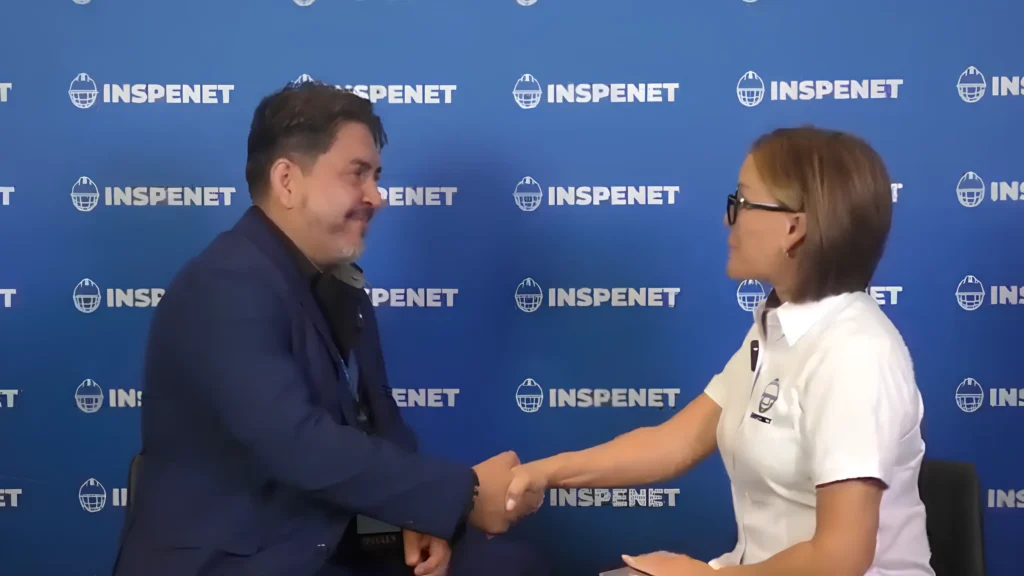
During the interview, the company's technology strategy was also discussed. Ernesto Varela explained that GE Vernova works with its engineering teams to incorporate artificial intelligence assistants into its Asset Performance Management solutions.
The development of these capabilities is carried out with particular attention to aspects such as cybersecurity, data protection, and the specific requirements of each client. The company designs the assistants following specific instructions and limiting their access only to authorized information, in order to guarantee accurate and secure analysis.
One of the most advanced developments is an assistant focused on fault elimination and reliability improvement processes. This system analyzes available information while respecting the access levels established by each organization and provides recommendations that help reliability analysts accelerate decision-making.
The goal is not only to automate tasks, but to provide more consistent information so that technical decisions can be made in less time and with greater documentary support.
Full support throughout the entire project
In addition to developing technology, GE Vernova maintains a comprehensive support model for the implementation of its digital solutions.
Ernesto Varela, from the implementation services team, explained that the teams work alongside the client from the initial design phase through system launch. The process begins with requirements gathering, continues with configuration and various validation phases, and concludes with support during user adoption of the solution.
This approach allows the tools to be adapted to the real use cases of each organization and makes it easier for the solutions to provide value from the earliest stages of use.
A company with a global vision of the energy future
The incorporation of artificial intelligence is part of a much broader strategy; GE Vernova was created with the purpose of contributing to the evolution of electrical systems through technologies capable of responding to the new needs of the energy sector.
The company encompasses businesses related to power generation, grids, electrification, industrial software, and technology services. According to the company's corporate information, its technology base contributes to generating approximately a quarter of the world's electricity thanks to an extensive fleet of gas turbines and wind turbines installed in various markets.
GE Vernova is also collaborating with organizations developing data centers designed to support the growth of AI-based applications. For the company, this evolution represents an opportunity to further develop digital solutions aimed at improving the management of industrial assets.
The next step in industrial artificial intelligence
Ernesto Varela's intervention made it clear that the evolution of artificial intelligence within the energy sector will depend less on the technology itself and more on how companies manage to integrate it into their daily processes.
GE Vernova 's perspective, success hinges on gradual progress, building models tailored to each need, and maintaining constant oversight from experienced professionals. Following this philosophy, the company aims to transform artificial intelligence into a tool that enables better decision-making, reduces analysis time, and increases the reliability of industrial assets without sacrificing the technical expertise that the human element continues to provide.
For more content about API Summit 2026 , visit our LinkedIn profile.
Source: Inspenet.