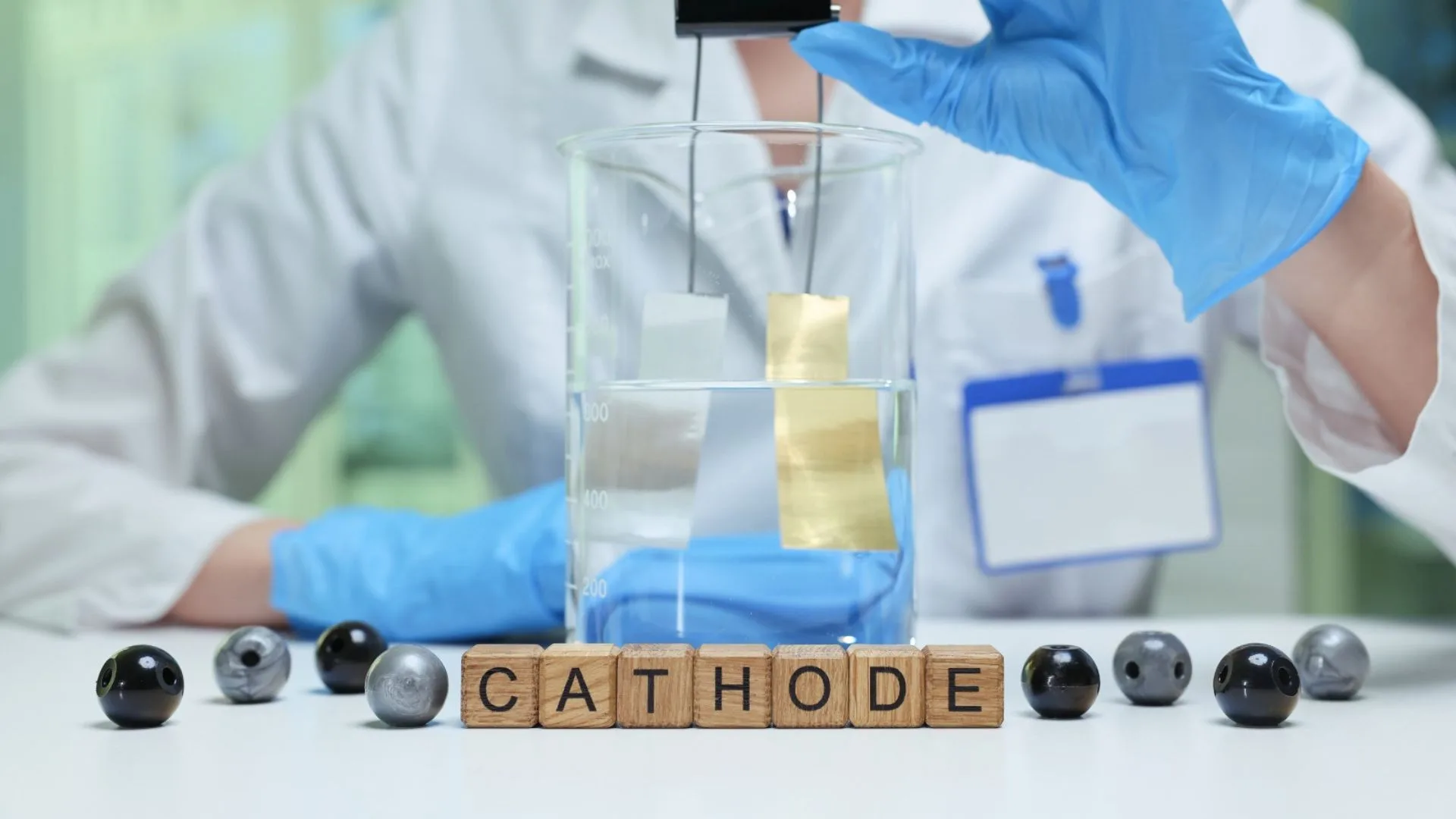
Battery lifespan it is the focus of a new investigation developed by a team from the Hanyang University ERICA researchers in South Korea identified a previously unknown degradation mechanism in batteries with nickel-rich, cobalt-free cathodes. The finding demonstrates that exposure of precursor materials to air during storage can trigger chemical changes that accelerate cell deterioration during charge and discharge cycles.
How a defect affects Battery lifespan
The study, led by Professor Jin Ho Bang and doctoral candidate JinHa Shim, was published in the journal Energy & Environmental Science the researchers determined that the manganese used to stabilize high-nickel cathodes can oxidize when the precursor materials remain exposed to air before the manufacturing process.
As a result, surface regions with Jahn-Teller distortions form, which promote undesirable chemical reactions within the battery. These alterations increase the degradation of the active material and progressively reduce its capacity, energy storage during the operation.
The problem originates in the manufacturing stage
According to the research findings, this degradation mechanism promotes electrolyte decomposition, the dissolution of transition metals, and various reactions with the graphite anode. Although these changes occur before battery assembly, their effects persist throughout the battery’s operational life and impact both the stability and performance of the system.
The authors highlight that this behavior had gone virtually unnoticed because the industry’s attention has focused mainly on optimizing the composition of cathodes and increasing energy density, leaving the impact of storing precursor materials in the background.
A simple strategy to improve performance
As part of their work, the researchers developed an alternative to reduce this problem without significantly altering existing industrial processes. The proposal involves slightly increasing the excess lithium during cathode synthesis, which helps stabilize the material’s surface structure.
The tests carried out showed that this modification allowed more than 90% of the battery’s capacity to be preserved after aging tests, improving its stability without the need to incorporate additional coatings or more complex manufacturing treatments.
Impact on electric vehicles and energy storage
The discovery offers new perspectives for the development of high energy density batteries intended for electric vehicles the industry is seeking to progressively reduce its use of cobalt due to its high cost and the challenges associated with its supply chain, therefore the rich cathodes in nickel they represent one of the main alternatives for future generations of batteries.
Furthermore, the results could contribute to the design of more reliable energy storage systems for stationary applications, where greater battery stability is essential to facilitate integration of renewable sources like the solar and wind energy.
Research opens new opportunities for the industry
The researchers conclude that controlling the storage and handling conditions of precursor materials can be a determining factor in extending battery life without completely redesigning their architecture. This approach could become a benchmark for manufacturers seeking to develop longer-lasting, more efficient, and more competitive batteries for electric mobility and next-generation energy storage.
Source: PR Newswire
Photo: Shutterstock