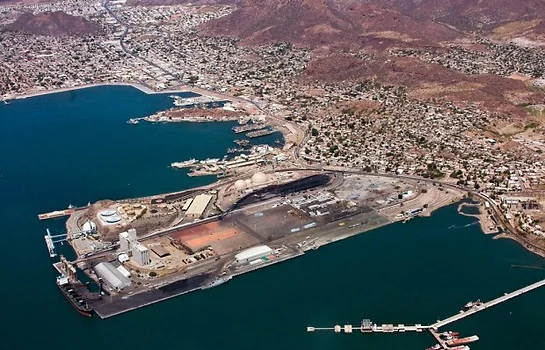
Technip Energies was selected as extended project management consultant (ePMC) for the Amigo LNG project, a future export terminal located in Guaymas, Sonora, on Mexico’s west coast. The project is developed by Amigo LNG, a joint venture of Texas-based Epcilon LNG and Singapore-based LNG Alliance.
The scope assigned to Technip Energies includes overall project management, engineering interfaces, construction management, and independent oversight during development. The company will also act as technical and integration partner among the various contractors, executing entities, and project participants.
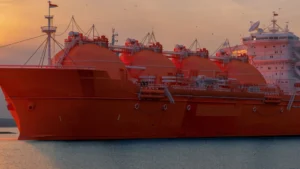
The technical dimension is especially relevant because the scheme is not limited to a conventional onshore plant. The facility contemplates a liquefaction capacity of 6 million tonnes per annum (Mtpa) through two floating process barges: one dedicated to gas pretreatment and another to liquefaction. Technip Energies will oversee the integration of both units.
A floating architecture to process and export LNG
The configuration introduces an interesting functional separation. The gas must be conditioned before entering the liquefaction process, while the second barge concentrates the transformation of natural gas into LNG. Coordination between both units requires controlling process interfaces, utilities, instrumentation, power, fluid transfer, and safety systems.
This infrastructure is complemented by the marine export system. Amigo LNG contemplates a four-position jetty capable of simultaneously receiving two LNG carriers and two floating storage units (FSU), plus berthing, mooring, services, and export facilities.
The difference between the figures of 6 and 7.8 Mtpa also reveals how the project should be read technically. The 6 Mtpa identifies the liquefaction facility capacity included in the announced ePMC scope, while the 7.8 Mtpa represents the export capacity planned for the complex.
The marine infrastructure, therefore, forms part of a larger architecture than the process unit directly supervised by Technip Energies.
The real challenge lies in integrating the interfaces
In FLNG projects, the difficulty does not reside solely in building the process equipment. Integration between floating units introduces mechanical, electrical, control, piping, safety, and marine operations interfaces that must function within a system also subject to movements and environmental conditions.
That is why the ePMC role acquires special importance. Technip Energies does not appear simply as an engineering provider for a given unit: its announced responsibility includes coordinating engineering and construction interfaces and exercising independent oversight over development. It is precisely at those interfaces where design deviations, conflicts between contractors, and execution delays can accumulate.
The project had already advanced through specific contracts. In 2025, Amigo LNG awarded Drydocks World the EPC for the FLNG facility, while COMSA Marine received the EPC contract for the marine facilities. The new contract with Technip Energies adds an integration layer over an execution chain involving different specialists.
LNG contracts secure part of the demand
The infrastructure also has long-term commercial commitments. Amigo LNG has 20-year LNG sale and purchase agreements, including contracts with Gunvor for 0.85 Mtpa and International Resources for 1 Mtpa.
These agreements are relevant because they link highly complex infrastructure with buyers that provide visibility over part of future volumes. The project, moreover, fits into an export strategy from Mexico’s Pacific coast toward international markets.
For Technip Energies, the assignment arrives at a time of strong activity in LNG. The company reported in July 2026 an order backlog of €25,035 million, while continuing to expand its activity in LNG, offshore, and other energy infrastructure projects.
SOURCE and PHOTO: https://www.offshore-energy.biz/