Table of Contents
- Crusoe will use the funding to expand its AI infrastructure
- More than 6 GW of contracted capacity
- From cryptocurrencies to the neocloud business
- AI factories are gaining importance in Crusoe's strategy
- Global investment in computing power for AI is growing
- Data centers, chips, and energy support the expansion
- The expansion of AI also opens up debates about its risks
Crusoe raised US$3.9 billion in a new funding round that raised its post-investment valuation to US$30.9 billion. The operation reinforces the growing importance of the infrastructure needed to respond to the rapid growth of workloads associated with artificial intelligence.
The US company is increasing its capacity as technology companies, model developers and service providers require greater computing resources; this demand is mobilizing large-scale investments in data centers, semiconductors, processing systems and specialized cloud services.
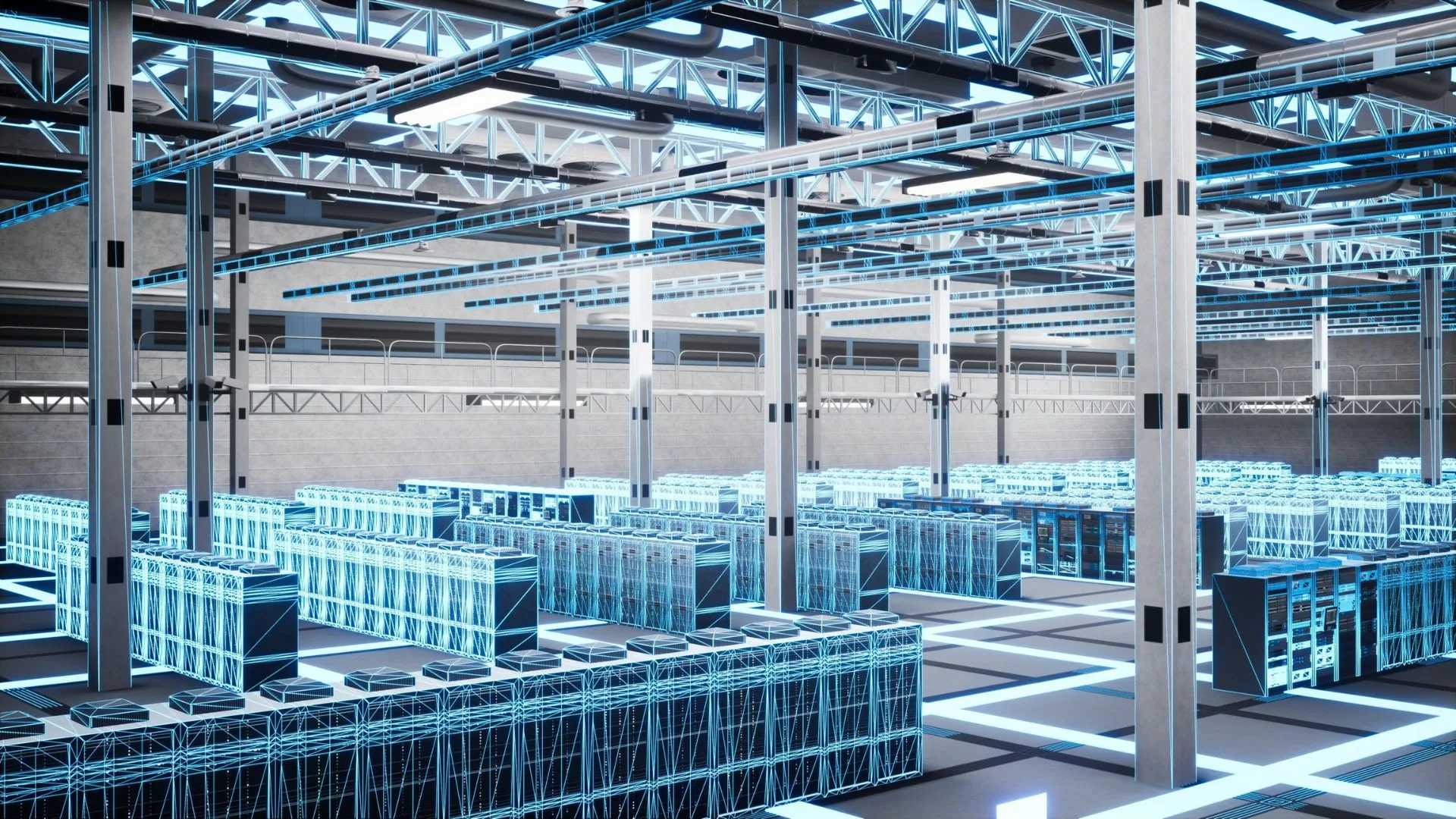
Unlike conventional cloud computing and storage services, AI infrastructure must support much more intensive workloads; training and operating advanced models requires large sets of accelerators and servers working in a coordinated manner within facilities capable of providing continuous power, connectivity, and cooling.
Crusoe will use the funding to expand its AI infrastructure
Specifically, the Series F round was co-led by Atreides Management, Mubadala Capital, and Valor Equity Partners. The round also received support from new and existing investors, including Founders Fund, Nvidia, and the Qatar Investment Authority (QIA). The presence of these groups demonstrates the growing financial interest in the infrastructure associated with artificial intelligence; having sufficient computing power has become a key element for deploying models and applications that require significant processing resources.
Crusoe will use the new capital to expand its current programs and support the construction of its own factories IA. These facilities will allow for an increase in resources allocated to processing workloads related to artificial intelligence.
The strategy places physical infrastructure at the center of the company’s growth; servers, accelerators, high-speed networks, power supply, and thermal management systems are among the essential resources for maintaining operational centers specializing in this type of computing.
The increased capacity will also allow us to serve projects that require a processing scale that is difficult to cover using conventional facilities, especially when it comes to training or running large models.
More than 6 GW of contracted capacity
In addition to the capital raised, Crusoe reported that it has over US$140 billion in total contracted value and more than 6 gigawatts (GW) of contracted capacity, of which approximately 1 GW is already operational. These figures illustrate another dimension of artificial intelligence’s growth: its increasing relationship with energy infrastructure.
The data centers high-performance computing requires large amounts of electricity to power servers, accelerators, and communications equipment, this demand is compounded by the energy needed for cooling, auxiliary systems, and other components designed to ensure the continuous operation of the facilities. For this reason, the expansion of AI is strengthening the link between computing power and energy availability. For infrastructure operators, securing sufficient power has become a key factor when planning new developments.
In the case of Crusoe, the more than 6 GW of contracted capacity provides a reference point for the scale of the planned projects. At the same time, the difference between that capacity and the approximately 1 GW currently operational reveals that a significant portion of the expansion is still under development.
From cryptocurrencies to the neocloud business
On the other hand, Crusoe’s trajectory has changed significantly since its inception, the company began operations in 2018 in the cryptocurrency sector, but subsequently redirected a significant portion of its activity towards building infrastructure for artificial intelligence. This evolution led Crusoe to position itself within the group of providers known as neoclouds companies that offer specialized cloud services and data centers specifically designed to support AI workloads.
The growth of this segment responds to a specific need with training models and running advanced applications can require access to large amounts of computing power for extended periods. As a result, having GPUs and other accelerators within facilities capable of operating at scale has become a strategic asset. Neoclouds seek to meet this demand through specialized infrastructure, focusing on providing processing resources tailored to AI developers and companies, in contrast to the broader approach of traditional cloud providers.
Its growth, however, depends on several critical resources; the availability of chips, electricity, land, and data centers can determine how much an operator can expand and what volume of capacity it can ultimately offer its customers.
AI factories are gaining importance in Crusoe’s strategy
Another key element in Crusoe’s expansion plans is the construction of what are known as AI factories, these facilities house large amounts of computing infrastructure dedicated to training models and running AI applications, artificial intelligence the concept reflects how data centers are evolving to meet increasingly intensive workloads. Higher processing density necessitates the design of specific power supply systems, high-capacity networks, and thermal management systems capable of stable operation.
For Crusoe, allocating part of the $3.9 billion raised to this type of facility means expanding its capacity to participate in larger-scale projects. Building an AI factory also requires coordination across multiple industries. It’s not enough to simply have servers or semiconductors. These developments need electrical infrastructure, suitable land, cooling systems, communications networks, and specialized equipment capable of operating in an integrated manner.
Therefore, the race to increase artificial intelligence capacity is no longer limited to software development, physical infrastructure is playing an increasingly important role as models grow in size and the resources needed to train and operate them increase.
Global investment in computing power for AI is growing
Meanwhile, other projects are also mobilizing large amounts of capital to finance computer infrastructure and semiconductors. As a reference to the scale that investment in the sector is reaching, Crux AI, linked to Blackstone and Alphabet, obtained a loan of US$22 billion earmarked for chips, along with an initial equity investment of US$5 billion provided by Blackstone.
These figures reflect the volume of financial resources being allocated to expanding computing capacity, the availability of advanced accelerators and facilities prepared to operate them has become a central component of artificial intelligence system development. At the same time, the growth in demand necessitates planning new infrastructure years in advance, before becoming operational, a data center must go through several stages, including construction, connection to the electrical grid, equipment installation, testing, and commissioning.
This means that a portion of the investments announced today is earmarked for future processing needs, the rate at which demand continues to grow will determine how much of that capacity will ultimately be used by developers, businesses, and AI service providers.
Data centers, chips, and energy support the expansion
In this scenario, competition within the technology sector is also shifting towards physical resources. Having advanced models represents only one part of the ecosystem, since running them at scale depends on a considerably broader infrastructure chain. Semiconductors provide the computing power, while data centers house the equipment needed for operation, in turn, networks enable the transfer of large volumes of information, and the power supply keeps the entire system running.
This relationship explains why the expansion of artificial intelligence is generating investments in sectors that were traditionally less involved in software development. The growth in computing power can create new needs for electricity generation, transmission, and cooling. As processing density increases, these factors have a greater influence on the location of new data centers and the power they can ultimately achieve.
For operators like Crusoe, managing these variables will be crucial to transforming contracted capacity into infrastructure that is actually available to their customers.
The expansion of AI also opens up debates about its risks
At the same time, the rapid pace of advancement in artificial intelligence continues to generate debate within the technology industry. Senior executives and industry specialists have raised concerns about the potential for misuse of advanced systems and the need for closer examination of certain developments. These discussions are taking place as investment in expanding IT infrastructure continues to rise.
The scenario reflects two parallel dynamics: on the one hand, companies and investors are allocating billions of dollars to build new data centers and increase processing capacity; on the other, various stakeholders continue to analyze the risks and implications of developing increasingly capable systems.
The evolution of both trends will influence the future of the industry. However, the need for data centers, semiconductors, and energy capacity is already generating large-scale projects in different markets.
Crusoe’s Series F funding round is part of that process. With an additional US$3.9 billion, a valuation of US$30.9 billion, and more than 6 GW of contracted capacity, the company is preparing an expansion focused on providing the physical resources needed for an artificial intelligence industry that demands ever-increasing computing power.
Source: Reuters
Photo: Shutterstock