Table of Contents
MODEC and Eld Energy completed the technical feasibility and proof of concept phase within the American Bureau of Shipping (ABS) New Technology Qualification program. This progress confirms the operational viability and safety of solid oxide fuel cell (SOFC) systems on floating production, storage, and offloading platforms. Similarly, the evaluation ensures the equipment meets the standards required for highly complex marine environments.
Progress in the SOFC cell qualification process
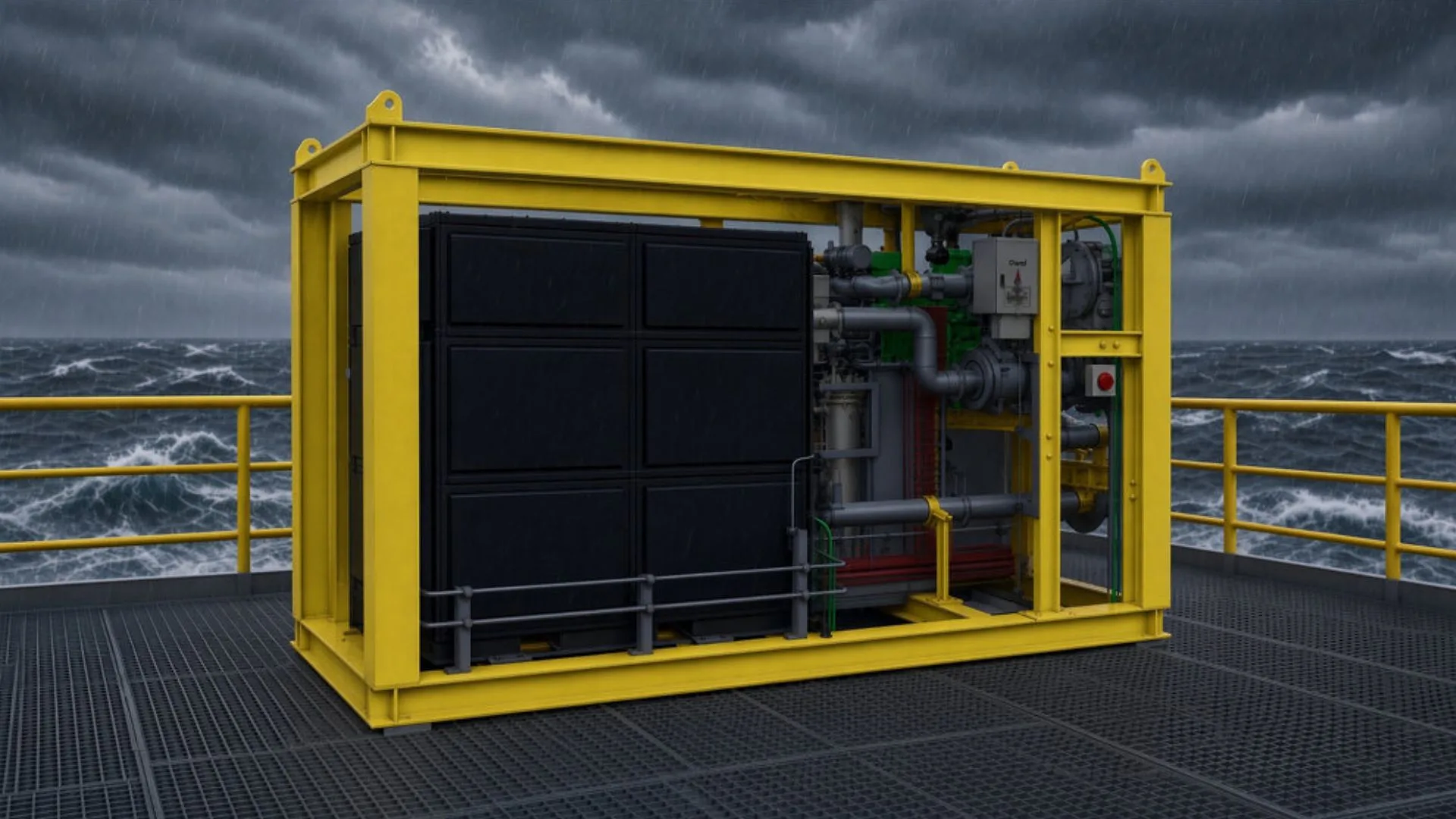
The pilot test will use a 40-kilowatt Eld power module installed on an operational vessel. The unit will run on gas produced directly on the platform and low-emission alternative fuels to monitor performance in offshore conditions.
Additionally, data collected during the tests will serve as the basis for the subsequent development of 120-kilowatt modules. The long-term plan projects integration with carbon capture systems to reach multi-megawatt capacities. Overall system efficiency is expected to reach 70% by reusing hydrogen-rich gas generated within the process itself.
Technical preparation required exhaustive operational risk assessments such as HAZID, HAZOP, and FMEA analyses. These independent reviews coordinated by the certification body validated risk management prior to final offshore deployment.
Consequently, this initiative aligns directly with the strategic objectives of MODEC’s Vision 2034. The organization seeks to provide advanced decarbonization solutions for offshore production without compromising the operational availability of the platforms.
Furthermore, early collaboration between developers and the classification society facilitated the definition of regulatory criteria for these emerging technologies. This joint effort brings the commercial use of fuel cells closer to standard adoption in the global offshore industry.
Source and photo: MODEC