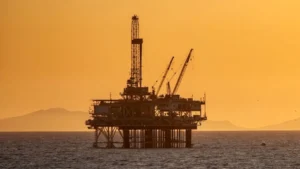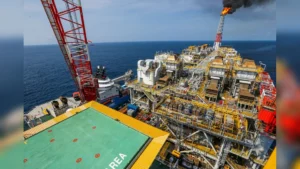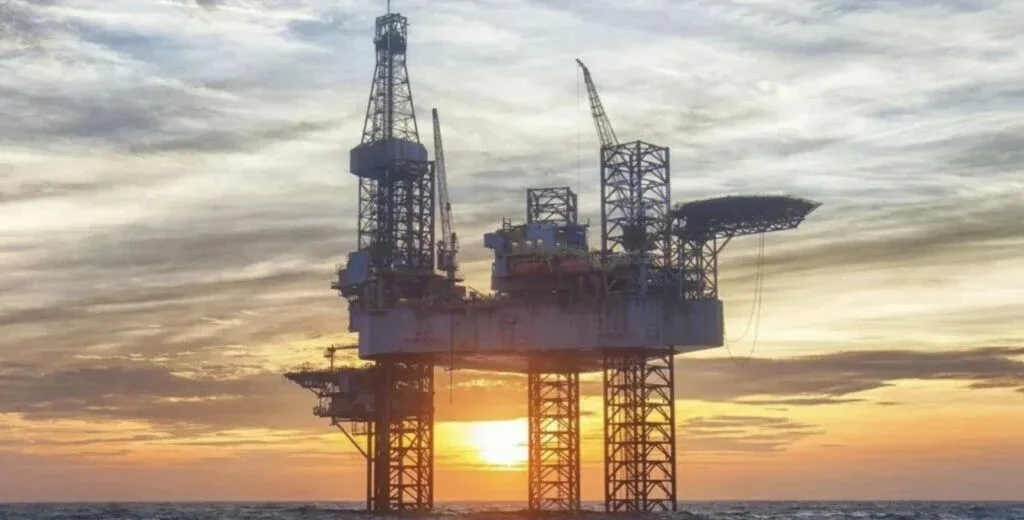
Sunda Energy, a hydrocarbon exploration and appraisal company with operations focused on Asia-Pacific and listed on the London AIM market, submitted an application for a Petroleum Exploration Permit (PEP) for an offshore block of approximately 645 km² located in the Taranaki Basin, off the west coast of New Zealand’s North Island.
The requested area includes the Awakino gas condensate field, discovered by drilling in 1985, but which never progressed to a commercial development phase. The application is part of the strategy announced by the company following the conditional acquisition of Matahio Energy NZ, with which it seeks to consolidate an integrated portfolio of gas exploration, development, and production assets in the country.
The New Zealand Petroleum and Minerals Agency (NZPAM) accepted Sunda Energy’s application for inclusion in the competitive open market process, initiating a three-month period during which other operators may submit bids before the regulatory authority makes a decision on the permit award.
Seismic reprocessing seeks to extract value from data acquired decades ago
Sunda Energy’s proposed work program initially involves the reinterpretation of geological information and data obtained from historical wells. Subsequently, within a maximum period of 36 months, the company plans to reprocess approximately 450 km² of three-dimensional (3D) seismic data with the aim of redefining the reservoir geometry and evaluating new exploration opportunities.
From an exploration engineering perspective, seismic reprocessing represents a highly cost-effective alternative to acquiring new geophysical surveys. Advances in depth migration algorithms, seismic inversion, anisotropy correction, and high-performance computing processing allow for subsurface imaging with significantly higher resolution than was available when the data was originally acquired.
In numerous international projects, the re-evaluation of historical seismic data has made it possible to identify previously uninterpreted structural compartments, improve the characterization of stratigraphic traps, and reduce uncertainty before drilling new exploratory wells.
The Taranaki Basin: strategic for gas supply
The Taranaki Basin is New Zealand’s main oil and gas producing province. For several decades, it has concentrated most of the national natural gas production, supplying power generation, industries, and residential consumers.
The renewed interest in previously discovered assets responds to the need to increase domestic gas supply in a context of natural decline of some mature fields and a government policy aimed at strengthening energy security through the utilization of national resources.
In this scenario, projects like Sunda Energy’s Awakino present a significant technical advantage over completely new explorations, as they have geological information obtained during previous campaigns, reducing some of the exploratory uncertainty and allowing investments to focus on updating the reservoir model.
Source and photo: https://www.offshore-energy.biz/