Encomara takes its Squid system to coastal trials in Scotland
Encomara is preparing coastal trials of Squid in Scotland; the connection system for floating wind energy seeks to simplify the installation of turbines and reduce the time of operations carried out offshore.
Encomara's Squid system weighs approximately 40 tons and has been under development for over five years. Its design allows mooring lines, electrical cables, and underwater connectors to be ready before a turbine reaches its final position.
In this way, Encomara seeks to reduce some of the complexity associated with deploying floating offshore wind turbines . The tests will take place at the Ardersier energy transition facility in Scotland.
Encomara takes the Squid system to coastal trials in Scotland
Currently, Squid is in Ardersier to complete a new stage of evaluation; according to information provided by the company, the coastal trials are scheduled to be completed during August 2026.
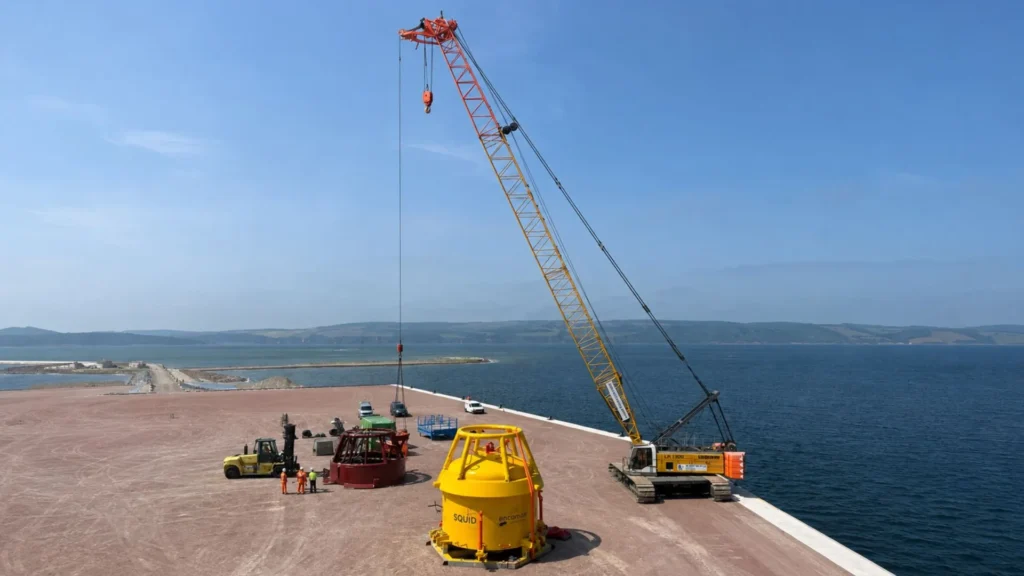
The equipment was transported by road from Huntly through Keith and Buckie, then loaded onto a vessel to complete the sea journey to the port of Ardersier, located about 22.5 kilometers east of Inverness in the Moray Firth.
Furthermore, the tests represent the first floating wind energy project of its kind developed at the new Ardersier energy transition facility, owned by Haventus.
How does Encomara's Squid system work?
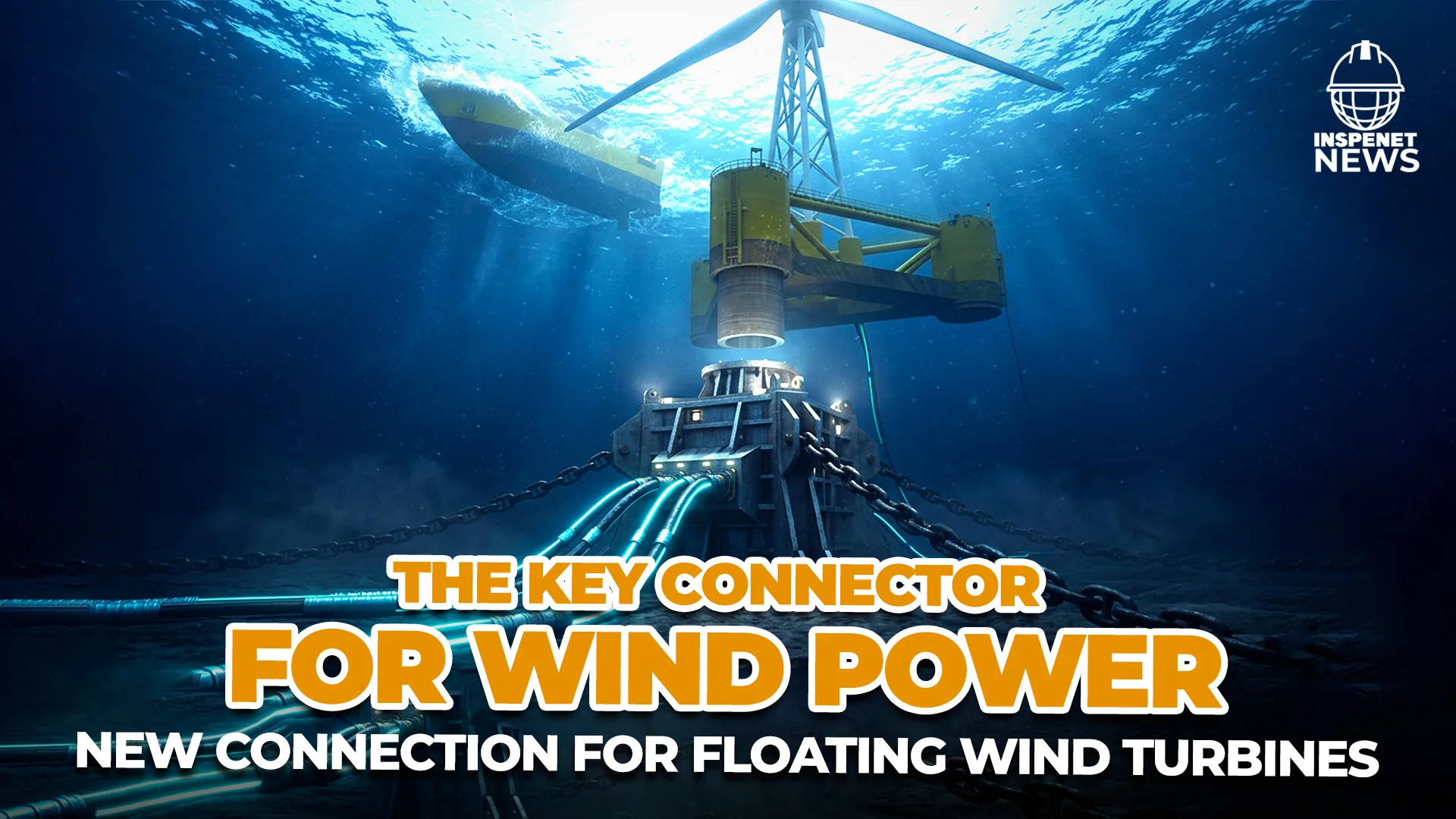
Essentially, Squid functions as an interface for the mooring systems and electrical cables required by a floating turbine. Its design allows these elements to be prepared before the wind turbines arrive at the site.
Encomara explains that Squid integrates power cables, connectors, mooring lines, and other marine interfaces. The system remains suspended underwater, keeping the cables and mooring lines ready for later connection to the floating structure.
Furthermore, the company maintains that this approach allows for the pre-installation of marine and submarine infrastructure before turbine deployment. The aim is to shorten connection times and reduce exposure to periods of adverse weather conditions.
On the other hand, the system is designed to work with different floating structure designs. This feature broadens its potential application within offshore wind projects that use various turbine configurations.
Squid seeks to reduce offshore operations
One of the central aspects of the technology is the possibility of reducing the work that needs to be completed around each turbine once it is located at sea.
With the mooring lines and cables already installed, the turbine's arrival can focus on the operations necessary to connect it to the system . This reduces the number of consecutive tasks that depend on vessels and suitable weather windows.
Encomara also points out that a faster connection can reduce vessel operating days, fuel consumption, and the time teams spend working offshore.
Thus, the proposal addresses one of the challenges of the growth of floating wind energy : installing a greater number of units without increasing the complexity of maritime operations in the same proportion.
Encomara estimates a reduction of up to 15% in the LCoE
On an economic level, the estimates provided by Encomara indicate that Squid could reduce the levelized cost of energy (LCoE) by up to 15%.
The forecast takes into account savings related to the pre-installation of moorings and cables, faster connections at sea, lower costs associated with vessels, and a reduction in lost production time.
Meanwhile, other models previously released by the company estimated that Squid could reduce installation times by up to 50%. These studies were supported by Scottish Enterprise and industry developers, according to information published in June.
Reducing construction time becomes especially important as floating offshore wind projects grow in size. Installing more turbines in a single season can impact both the construction schedule and when a wind farm begins generating electricity.
The tests aim to bring Squid up to TRL 8
Next, Encomara expects that Ardersier's tests will allow the system to reach Technology Maturity Level 8 or TRL 8.
This process comes after the American Bureau of Shipping awarded the system a product design evaluation in June 2026. ABS conducted a technical review against classification requirements and criteria applicable to floating wind energy .
The assessment followed up on a previously granted approval in principle. According to ABS, Squid adapts concepts used for years in other floating offshore operations to meet the needs of floating wind turbines .
Therefore, the coastal tests will allow us to verify the performance of the equipment under conditions closer to its intended use before moving towards a possible commercial application.
Squid facilitates turbine maintenance and towing
Another aspect of Encomara's Squid system becomes apparent after installation. Its design allows a turbine to be disconnected for towing to port when certain operations are required, and then reconnected afterward.
This possibility could reduce the need to carry out certain interventions directly offshore. Encomara proposes that the system maintains the moorings and cables in a controlled configuration while the turbine remains out of position.
Furthermore, ABS points out that the disconnectable design can be used in repair scenarios during a unit's lifespan. This would reduce risks when a temporary disconnection is necessary.
This approach is relevant for floating offshore wind because project costs don't end with installation. Maintenance operations and turbine downtime also affect its economic performance.
Encomara plans to create 130 jobs with the Squid system
As the testing phase progresses, Encomara anticipates an increase in demand if floating wind power moves to a larger-scale commercial deployment.
According to the information provided for the project, the company estimates that around 130 jobs could be created by 2030 between manufacturing and project execution at Aurora Energy Services' facilities in Huntly and Inverness.
Aurora Energy Services is directly involved in the manufacturing of Squid. The company acquired Encomara in 2025, according to information published about the system's development.
Thus, Squid's future will be linked both to the outcome of the tests and to the pace at which developers bring new floating wind turbine projects towards construction.
Ardersier joins the development of floating offshore wind power
Finally, the tests place the Ardersier facility in the next phase of system evaluation. The site will allow for coastal trials before Encomara moves on to later stages of commercialization.
The planned schedule already included demonstrations at Aurora Energy Services' facilities in Huntly during July and water tests in Ardersier during August 2026.
Now, the performance of Encomara's Squid system during these trials will serve to measure the extent to which its proposal can be applied to commercial floating wind energy projects. If the results support the company's estimates, the pre-installation of moorings and cables could become a way to reduce time, maritime operations, and costs during the deployment and maintenance of future offshore wind farms.
News of additional interest
Noble secures 670 days of work in the North Sea
Noble Corporation has secured a contract with ConocoPhillips Skandinavia to operate the Noble Interceptor jack-up rig off the coast of Norway. Work is scheduled to begin in the third quarter of 2027 and last approximately 670 days. The rig was built in 2014 and can drill to depths of up to 40,000 feet.
The Noble Interceptor will be responsible for plugging and abandoning wells in Greater Ekofisk, a major energy zone located about 300 kilometers southwest of Stavanger. This area includes Ekofisk and other fields such as Eldfisk, Embla, Tor, and Tommeliten A. This activity coincides with ConocoPhillips' plans to extend the utilization of the Ekofisk infrastructure and develop new resources in fields that have already produced.
ADNOC Gas accelerates its expansion with US$28 billion
ADNOC Gas closed the second quarter of 2026 with a net profit of US$665 million, exceeding its forecast of between US$400 million and US$600 million. The company achieved this result despite external challenges during the period and raised its EBITDA growth target to 60% by 2030 compared to 2023 levels.
The company plans to invest approximately US$28 billion between 2026 and 2030 to expand its business. As part of this plan, it awarded contracts worth US$8.2 billion for phases 2 and 3 of its rich gas development project. These phases will increase gas processing at Habshan and natural gas liquids recovery at Ruwais. With these phases and the first stage, the total investment in the project reaches US$13.2 billion.
Oil spill threatens nature reserve in Oman
An oil spill off the coast of Oman has created a slick of approximately 390 square kilometers near the Hallaniyat Islands, a nature reserve teeming with coral, fish, birds, and whales. The oil originated from the Caroline Bezengi, a 274-meter tanker carrying nearly one million barrels of Russian crude oil to Asia. The vessel reported problems off the coast of Yemen on June 8 and subsequently ran aground.
The oil slick is located about seven kilometers off the coast and extends northeast of the islands. Omani authorities maintain they are working to contain the spill and that nearby desalination plants and tourist resorts are not at risk. However, Greenpeace estimated the affected area to be nearly 600 square kilometers using satellite imagery. Experts have also expressed concern about the lack of visible signs of efforts to stabilize the tanker and remove the remaining crude oil.
Flex Seal boosts sales with real-time data
Flex Seal extended its partnership with Datavations for several years to improve its performance in physical stores and guide new product development. After three years of working together, the brand will have access to broader data coverage from major retailers. This will allow it to compare sales, prices, and inventory in greater detail and detect market changes.
The company uses sales data by product and store to negotiate shelf space, expand its distribution, and support its discussions with retailers. The data also allows it to identify high-growth categories and well-performing price ranges. This enables Flex Seal to decide which products to develop and avoid allocating resources to segments with limited opportunities.