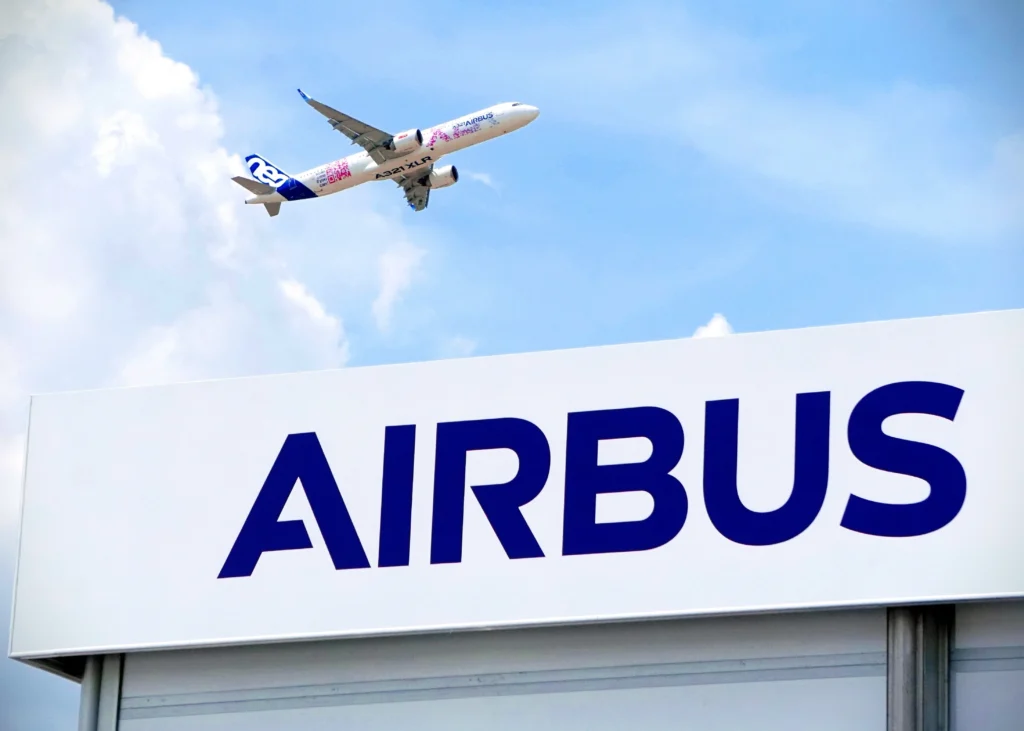
French unions have launched protests against Airbus after the company announced an increase in in-person work days for some of its administrative staff. The measure raises the minimum weekly attendance requirement from three to four days and has sparked a confrontation with several labor organizations in France.
Airbus tightens its hybrid work policy
The decision comes after Airbus Chief Executive Guillaume Faury sent a letter to employees requesting a greater presence at the facilities to strengthen collaboration, improve the quality of work and accelerate the pace of execution of industrial programs.
The company is facing intense pressure to meet its annual target of delivering 870 commercial aircraft. It also continues to encounter supply chain challenges, particularly regarding engine availability, a factor that has hampered production in recent months.
The unions reject the change
The General Confederation of Labor (CGT) called a one-day strike and demonstration outside Airbus’s offices in Blagnac, near Toulouse. According to the union, more than 100 employees participated in the protest to express their disagreement with the new in-person work policy.
Although the protests did not affect production, the union requested an official meeting with Guillaume Faury to address the conflict during the coming week.
For its part, the French Democratic Confederation of Labour (CFDT) announced a new demonstration for June 30 and is considering possible legal action. The union believes the company is incorrectly implementing the teleworking agreement signed in 2024.
Meanwhile, Force Ouvrière (FO), the largest union representing workers at Airbus France, called for a suspension of any changes until the European Works Council meeting scheduled for July 7. The union stated that management had reiterated that the hybrid work agreement remains in effect until 2028.
Airbus advocates for greater on-site collaboration
The company explained that the increased physical presence responds to the needs of an unprecedented phase of industrial growth in a complex economic and geopolitical environment.
A spokesperson noted that flexibility remains part of Airbus’ corporate culture, but indicated that increasing collaboration between teams is a priority to respond to increased production and meet commitments to its customers.
The measure primarily affects engineers and other administrative staff who were working part of their day in a hybrid format. However, most production staff and technicians already work on-site due to the nature of their work.
Upcoming negotiations
The coming weeks will be crucial in determining how the labor dispute will unfold. In addition to the new protests announced by the unions, the planned meetings between management and workers’ representatives could define the future of the hybrid work policy within the European aircraft manufacturer and its impact on work organization during a crucial period for increasing aircraft production.
Source: Reuters
Photo: Shutterstock