Level III NDT technicians: modern mechanical integrity now depends less on isolated inspection and more on a complete chain of technical decisions. It is no secret that when an NDT Level III technician is not present at the plant, that chain weakens, for example: procedures with weaknesses in their substantiation, results that are difficult to defend, and longer response times that can affect asset reliability.
However, the industry is no longer condemned to wait for the expert at the door. Remote collaboration is making it possible to validate inspections in real time, with a blend of expert supervision between digital traceability and operational discipline. And the best part is that this is supported by organizations like Baker Hughes and ABS, through documents from 2022. The challenge, of course, is doing it right, without turning distance into improvisation.
The role of level III
As well known, Level III is the technical authority that approves procedures, defines acceptance criteria, oversees programs, interprets requirements, and ensures that NDT practice is consistent with the code and the reality of the asset (ASNT, 2024; Henchar, 2022). Beyond seeing them as an endorsed “signer”, they are the person who turns inspection data into reliable decisions for mechanical integrity.
The certification of these advisors by ASNT describes that Level IIIs participate in procedure writing, process design, documentation auditing, equipment oversight, and the management of internal certification programs (ASNT, 2024). Being an authorized and certified voice, their absence not only delays a review: it can leave an inspection without sufficient technical validation.
The real shortage
But today there is, more than yesterday, a weakness for plant work. The shortage of Level III is felt in practice because internal experts cannot be sustained for every situation at a given moment during the execution of work in the plant or workshop. The path to Level III requires time, broad experience, and the development of technical and soft skills, so it is not a quick solution for industrial demand (Henchar, 2022).
ASNT also makes it clear that Level III often becomes the company’s “go-to person,” with high expectations and broad responsibilities (ASNT, 2024). When the talent supply does not match that load, organizations end up sharing specialists, hiring external support, or, in extreme cases, adopting remote schemes. And that is not a trend; it is a response to a structural restriction.
What should the expert verify?
It is important to clarify that validating an inspection is not just looking at a report. A competent Level III must verify that the chosen method is appropriate, that the equipment is calibrated, that the applied technique corresponds to the damage sought, and that the results are interpreted with consistent criteria (HSE, n.d.; Henchar, 2022).
It is important to review whether the procedure adequately covers the scope, surface preparation, documentation, and the acceptance or rejection of indications. If this fails at any stage of quality control and assurance, expensive errors appear: false readings, unnecessary repeats, or, worse yet, the acceptance of defects out of specifications. Technical review is therefore a defense against customer complacency, which in this case is the industry as such.
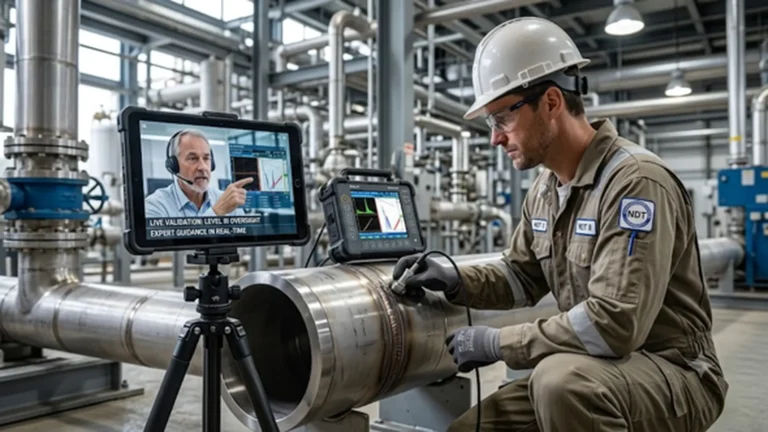
However, due to the shortage of Level IIIs in the industry, remote collaboration is now an option changing how Level III intervenes. Baker Hughes describes real-time assistance tools allowing two-way chat, screen sharing, guided steps, and expert consultation during inspection, not after it (Baker Hughes, n.d.). Along the same lines, platforms like Ooga Technologies have incorporated remote digital inspection systems connecting field personnel with NDT Level III experts to validate data, review evidence, and support decision-making without demanding constant physical presence (Ooga Technologies, 2025; Ooga Technologies, n.d.).
That model reduces manual errors which are generally human errors, also improves process traceability, and finally accelerates decisions on complex indications. ABS, for its part, recognizes remote inspection technologies as alternative access means that can reduce risks regarding operational intrusiveness and preparation times, provided they are used with due qualification and control (ABS, 2022). In other words, Level III no longer needs to be physically on-site to provide judgment.
What does the process gain?
It unquestionably gains execution time, continuity, and a second layer of technical defense. If a field NDT Level II technician or inspector finds a doubtful indication, they can escalate it to the remote Level III immediately, share the evidence, review acceptance or rejection criteria, and decide whether to repeat, correct, or accept it under documented criteria (Baker Hughes, n.d.; Henchar, 2022); which prevents the asset from sitting idle waiting for an expert who might be in another city or facility.
ABS highlights that remote technologies also reduce the need for access to hazardous areas, improving safety for inspectors and supervisors. In any case, well-implemented remote collaboration turns the shortage of these specialists into a more efficient support network with better productivity because it allows Level III to handle other cases.
But we must be clear on this matter: Distance has a cost, and this is worth saying without romanticizing technology. A remote Level III does not see the component with the same sensory depth as an on-site expert: they do not perceive the actual state of the environment, meaning the weather conditions at the moment or the degree of difficulty of access or work to be executed. They also ignore the ergonomics of the assembly or certain details of the physical context.
Remote inspection depends heavily on connection quality, camera angle, local inspector discipline, and procedure clarity. If the audiovisual flow is poor or field personnel do not know how to show what matters, validation degrades. Thus, remote collaboration works, yes, but only when the site also plays with rigor, in other words, when conditions exist for the evaluation to be as precise as possible.
Program management
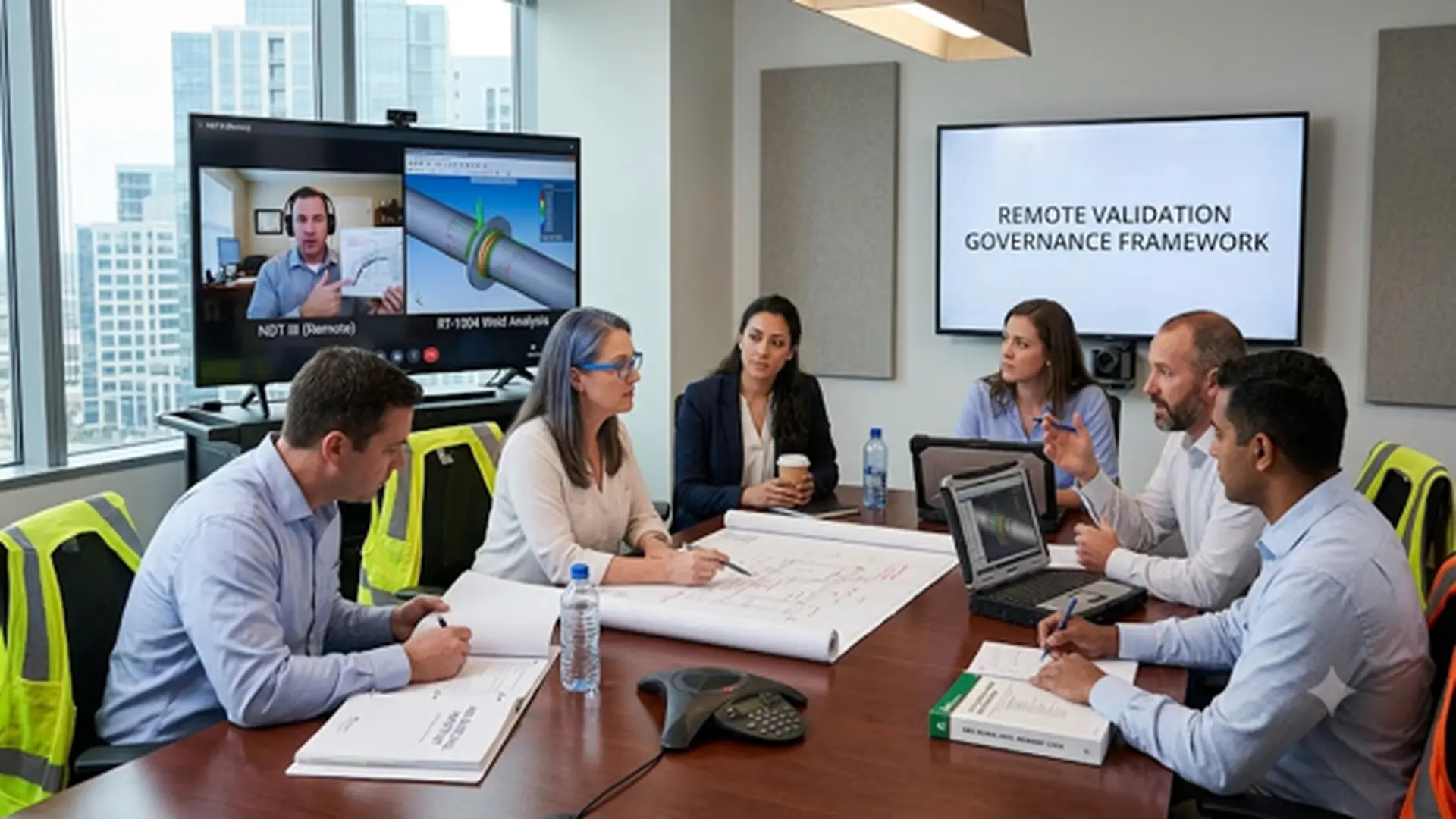
The response is not about “sending an expert via video call,” but redesigning the program so that remote work has formal validity. ABS recommends considering training, vendor qualification, data management, risk analysis, and operational limitations within the use of remote technologies. On the other hand, Henchar also recalls that Level III must operate within a written practice with clear responsibilities, audits, document review, and consistency with internal and client requirements (Henchar, 2022). Therefore, the company needs rules to decide which inspections can be validated remotely, which require physical presence, and in which cases remote control only serves as pre-evaluation. In this way, good governance prevents dangerous improvisations.
The most consolidated idea of this approach is that validation is not postponed until the end of the shift. A remote Level III can review images, configurations, and acceptance criteria while the inspection is still underway, allowing errors to be corrected before they turn into costly reworks or document discrepancies. That improves data quality from the root, because it forces the field team to work with greater discipline and the specialist to intervene while context still remains, rather than when only a final report is left. In inspection, arriving late is almost always more expensive than intervening early.
Distributed experts
Remote collaboration is also changing the classic idea of centralized technical authority. If previously one relied on a single person or a small group of specialists, a model of distributed experts can now be built, where the same Level III supports multiple sites, methods, or campaigns without sacrificing traceability. A good example of this is carried out by Ooga Technologies, aligning with this logic by connecting data, personnel, and technical supervision on a digital platform oriented toward collaborative inspection. In practice, this allows knowledge to stop being trapped in an office and become a shared operational resource.
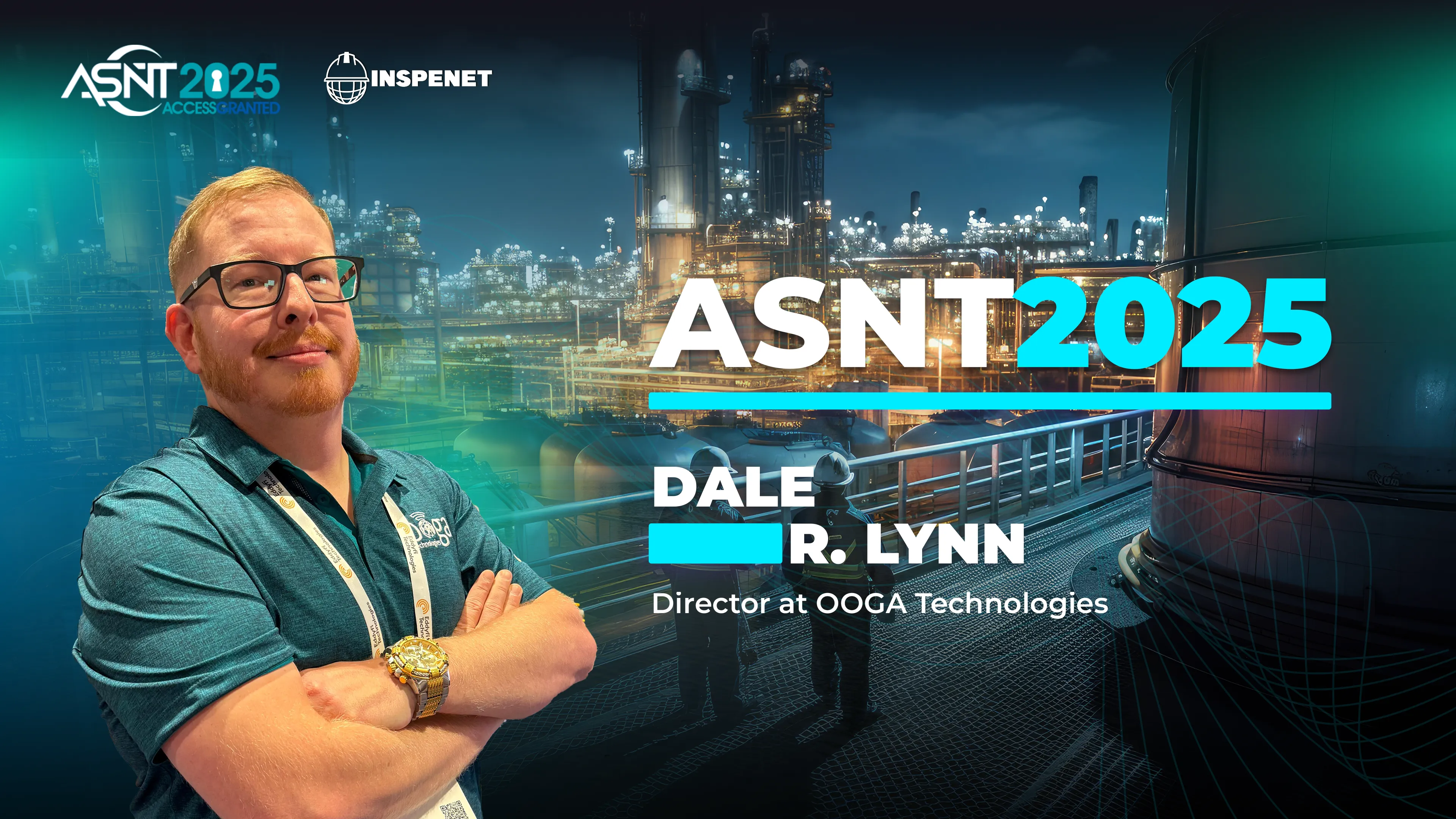
Watch Inspenet’s interview with Dale Lynn, product support technician at OOGA Technologies
However, technology alone does not solve the lack of competence. A remote system can be excellent, provided procedures are correctly followed for a good evaluation. In this sense, the greatest gain of remote validation lies not only in saving time, but in forcing the organization to streamline its method. Each inspection becomes more visible, more auditable, and harder to justify if poorly done.
Conclusions
In coming years, we will likely see a coexistence between traditional inspection, remote assistance, and partial automation of analysis. Level III will remain the authorized, qualified, and certified figure for technical quality, but will have more powerful tools to do it remotely. ASNT, Henchar, Baker Hughes, ABS, and platforms like Ooga Technologies agree on this essential point.
The industry of the future will not be the one with the most screens and controls, but the one with the best decisions. In that scenario, the shortage of specialists will cease to be a threat and will become, at least in part, an opportunity to redesign how technical knowledge is governed.
For the engineer the message is that distance is no longer an excuse to lower the standard. Used well, remote collaboration can keep mechanical integrity firm even when talent is scarce.
References
- ABS. (2022). Guidance notes on the use of remote inspection technologies. American Bureau of Shipping. https://ww2.eagle.org/content/dam/eagle/rules-and-guides/current/other/242-gn-remote-inspection-tech-dec-2022/rit-gn-dec22.pdf
- ASNT. (2024). Compare ASNT certifications in nondestructive testing. American Society for Nondestructive Testing. https://www.asnt.org/certification/
- Baker Hughes. (n.d.). Remote collaboration in NDT. Waygate Technologies. https://www.bakerhughes.com/waygate-technologies/blog/remote-collaboration-ndt
- Henchar, R. (2022, March 11). Possible pathways from NDT Level II to NDT Level III. ASNT Pulse. https://www.asnt.org/standards-publications/blog/possible-pathways-from-ndt-level-ii-to-ndt-level-iii
- HSE. (n.d.). Inspection/Non destructive testing. Health and Safety Executive. https://www.hse.gov.uk/comah/sragtech/techmeasndt.htm
- Ooga Technologies. (2025). Remote digital inspection system. https://www.oogatechnologies.com/remote-digital-inspection-system/