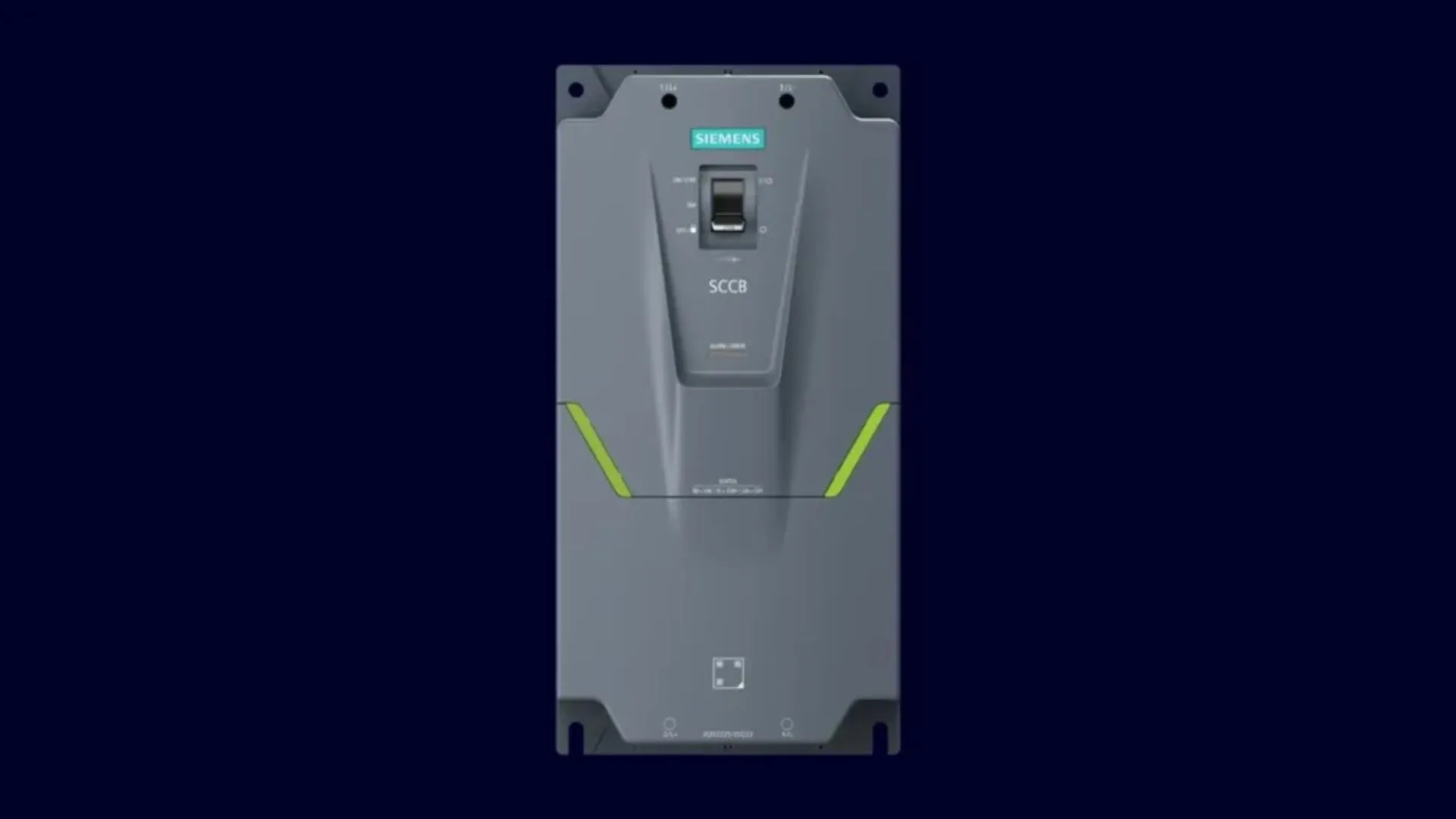
The companies Infineon Technologies and Siemens formalized a collaboration aimed at improving electrical protection in infrastructure. Under this agreement, Infineon will supply power modules based on silicon carbide (SiC) for integration into Siemens’ new SENTRON 3QD2 line of semiconductor circuit breakers. This technical cooperation seeks to optimize power density and raise reliability levels in data centers, industrial production plants, and battery energy storage systems.
The response of SENTRON 3QD2 technology with the grid
The increase in electrification of automated factories and data centers dedicated to artificial intelligence raises the risk of unforeseen electrical failures. In this scenario, the implementation of advanced semiconductors helps mitigate grid vulnerabilities through more sustainable power distribution systems. The integration of Siemens’ design with microelectronic technology directly addresses the operational safety and continuity requirements in high-demand environments.
On the one hand, electromechanical circuit breakers rely on moving components, which places their response time on the millisecond scale. On the other hand, the Siemens SENTRON 3QD2 device uses intelligent protection algorithms and solid-state components to interrupt excessive electrical current. This mechanism speeds up disconnection to the microsecond range, a speed that is up to one thousand times faster than conventional equipment.
Indeed, ultra-fast response capability is a critical factor in the safe deployment of direct current networks. Timely interruption prevents prolonged production stoppages, massive data losses, and damage to computing hardware in the event of short circuits or overloads. In this way, the solid-state architecture provides a substantial increase in the availability of the energy system.
Technical specifications and presentation at PCIM Europe 2026
Likewise, the use of direct current applications minimizes overall energy consumption and reduces the use of manufacturing materials. The integration of integrated batteries also facilitates the damping of electrical power peaks, a key factor in the decarbonization goals of today’s industrial infrastructure.
With regard to the components used, the advancement is based on integrating Infineon’s 62 mm, 1200 V CoolSiC MOSFET module into Siemens’ protection ecosystem. This technical synergy facilitates the adoption of resilient electrical infrastructures that comply with international performance standards.
Finally, both corporations will present an operational demonstration of the SENTRON 3QD2 semiconductor circuit breaker at the PCIM Europe 2026 trade fair, held in the city of Nuremberg from June 9 to 11. The exhibit will take place in Infineon’s exhibition area, located in Hall 7.
Source and photo: Siemens