The Shell Loran project took a decisive step on June 11, 2026, when Venezuela granted Shell a license for the first phase of exploration and exploitation of the Loran offshore gas field, with estimated reserves of 7 TCF (trillion cubic feet) in Venezuelan waters. The signing took place at the Miraflores Palace in the presence of President Delcy Rodríguez and U.S. Interior Secretary Doug Burgum. Five Shell Venezuela agreements were signed, including service orders for onshore fields in Monagas and measures to reduce gas flaring, according to Seeking Alpha.
The Loran field is part of the Loran-Manatee cross-border system, with total estimated reserves of 10 TCF distributed between Venezuela (7 TCF) and Trinidad and Tobago (2.7 TCF). Integrated with the Dragon field—4.2 TCF under Shell license since 2023—the combined potential amounts to 11.2 TCF. Shell expects to start production in 2027 through infrastructure connected to Trinidad, where the gas would be processed in liquefied natural gas (LNG) plants.
Shell Loran and the Geopolitical Signal of the Agreement
“We are taking a historic step by signing this license for phase one of the Loran field development plan,” Rodríguez declared during the ceremony broadcast on state television. Hydrocarbons Minister Paula Henao specified that the first service orders will materialize “in the short term.” The progress operates under OFAC licenses from the U.S. Treasury, which authorized Shell in Venezuelan fields near the maritime border with Trinidad, according to MercoPress.
The signing was made possible following the reform of the Hydrocarbons Law approved in January 2026, which facilitates foreign private investment. Shell had closed offices in Venezuela years ago; today it leads PDVSA’s portfolio of strategic partners for offshore gas. BP signed separate agreements in April to participate in Loran and the Cocuina-Manakin field. The energy security of Trinidad and Tobago—which needs gas for its LNG and petrochemical plants—is the immediate driver of the project.
EPC, Offshore Integrity, and Final Investment Decision
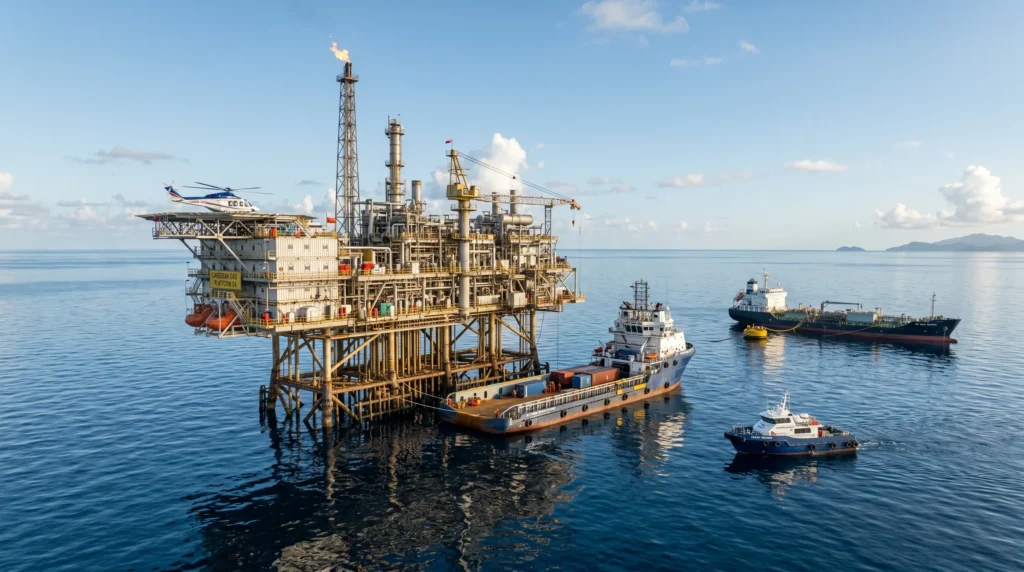
Loran requires the laying of subsea pipelines from Venezuelan wells to Shell’s Hibiscus platform in Trinidad, with a capacity of 1,000 million cubic feet per day. Subsea EPC contracts, seabed inspection campaigns, and offshore mechanical integrity programs will be the components in highest demand. The final investment decision (FID) could be announced before the end of 2026 if fiscal frameworks are consolidated.
Prior to the June agreement, Shell and Chevron executed an asset swap: Chevron relinquished its position in Loran and strengthened its presence in the Orinoco Belt. This move left Shell with operational control of the entire Loran-Manatee chain. The EIA classifies Venezuela as a producer with underutilized offshore gas potential; Shell Loran’s progress, if it reaches FID, would be the largest entry of private capital into the Venezuelan upstream in more than a decade.
The Venezuelan offshore inspection and maintenance sector, which has operated at reduced capacity over the last decade, will be directly impacted by the reactivation of subsea infrastructure. Technical certification, structural integrity inspections, and preventive maintenance programs aligned with international standards will be required in all phases of the Shell Loran project.
Sources: Reuters / Merco Press