Table of Contents
Shell chemical assets in the United States are entering a decisive stage as the company reorganizes its portfolio and several potential buyers assess the opportunity. ExxonMobil is among the interested parties in a potential transaction that could reach a valuation of nearly $8 billion, although the proposals reported so far are non-binding and no sale has been agreed.
The process is still at a preliminary stage. Potential buyers have reportedly submitted non-binding indicative offers, some covering the entire business and others targeting only certain assets. Therefore, there is currently no guarantee that the process will result in a sale or that ExxonMobil will ultimately emerge as the buyer.
In addition to ExxonMobil, interested parties reportedly include LyondellBasell, Apollo Global Management, and the chemicals division of Kuwait Petroleum Corporation, according to information initially published by the Financial Times and subsequently reported by other media outlets.
Shell chemical assets include strategic U.S. facilities
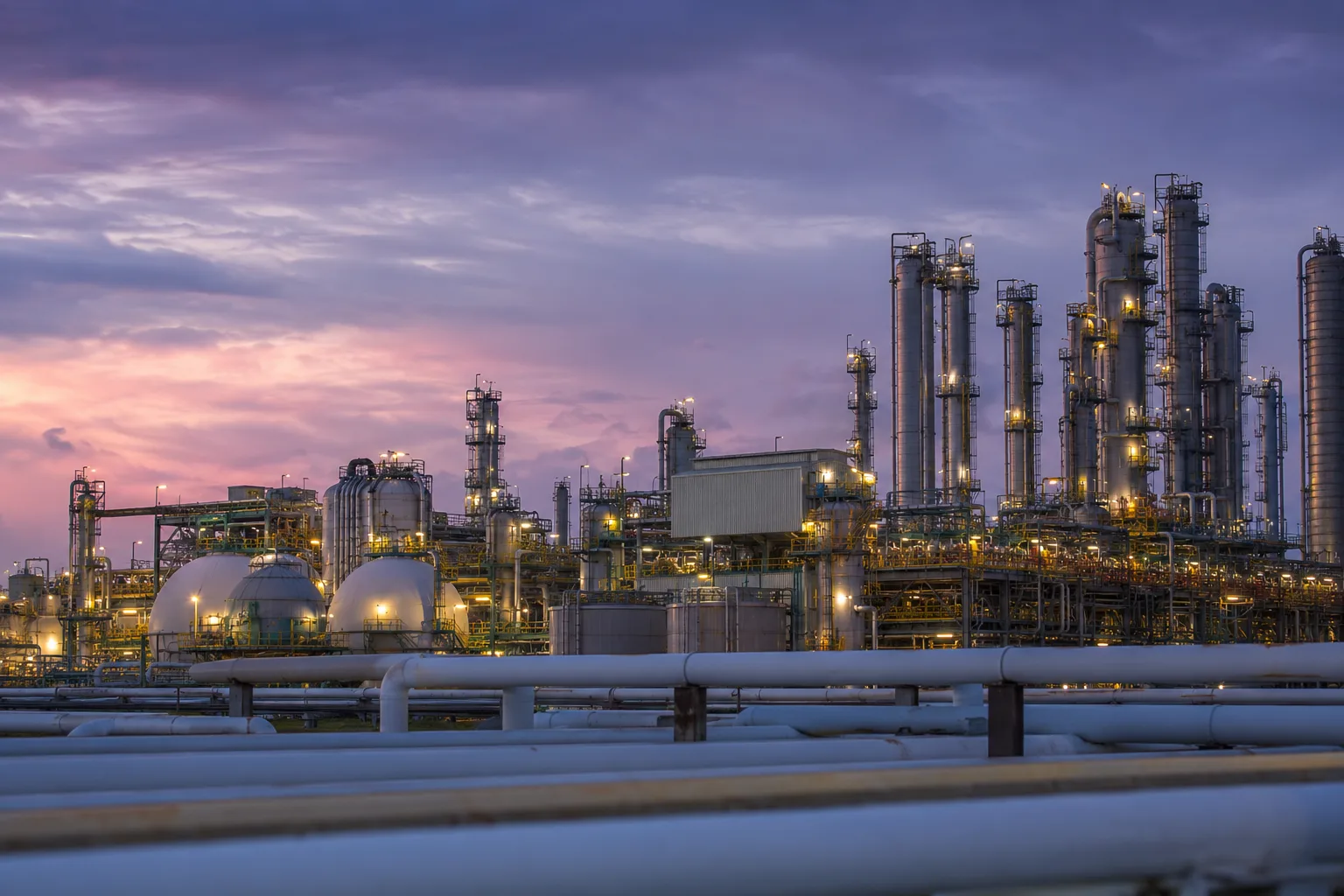
The potential transaction is significant because of the industrial scale of the assets involved. Shell’s U.S. chemicals portfolio includes facilities located in Texas, Louisiana, and Pennsylvania, which manufacture products subsequently used across industrial value chains including plastics, detergents, and other chemical applications.
One of the most prominent assets is Shell Polymers Monaca in Pennsylvania. The facility began operations in 2022 and has the capacity to produce approximately 1.6 million metric tons of polymers annually. Shell has deployed approximately $14 billion of capital into the complex, according to information presented by the company itself.
Shell’s position on the U.S. Gulf Coast is also significant, where the company maintains integrated chemicals assets within one of the world’s largest petrochemical corridors.
The scale of these facilities helps explain why the process could attract industrial companies pursuing different strategies, ranging from major integrated oil companies to petrochemical producers and investment groups interested in large-scale assets.
Shell seeks to reduce capital employed in chemicals
The potential divestment does not appear to be an isolated decision. During its Capital Markets Day 2025, Shell explicitly outlined a strategy to reposition its chemicals portfolio and unlock value, providing broader strategic context for the potential restructuring of Shell chemical assets in the United States. The company acknowledged that, despite having individually competitive assets, it does not necessarily consider itself the natural owner of its entire chemicals portfolio.
The strategy calls for reducing capital employed in this business toward 2030 and assessing opportunities from a regional perspective. In the United States, Shell specifically identified strategic opportunities or potential partnerships, while highlighting advantages such as Monaca’s access to competitive feedstocks and the position of its Linear Alpha Olefins business on the Gulf Coast.
This approach forms part of a broader corporate transformation based on performance, discipline, and simplification, with capital allocation directed toward businesses where Shell believes it holds stronger competitive advantages.
The move is also related to other recent portfolio-restructuring transactions. In July, Inspenet reported on the sale of Shell’s offshore assets in the Gulf of America, another transaction associated with asset optimization and more efficient capital allocation.
ExxonMobil could strengthen its position in petrochemicals
ExxonMobil’s interest in Shell chemical assets adds another dimension to the potential transaction. For an integrated company, chemicals represent a way to capture value beyond traditional hydrocarbon production and refining. Petrochemicals transform raw materials derived from oil and gas into components used across multiple manufacturing value chains.
However, the reported interest should not yet be interpreted as an acquisition. ExxonMobil declined to comment on the information, and the proposals submitted are preliminary.
Precisely for this reason, the evolution of the process will be important: Shell could sell the entire business, transfer only certain assets, bring in partners, or even modify the process depending on economic conditions and the offers received.
Shell accelerates the reorganization of its energy portfolio
The review of the U.S. chemicals business coincides with other moves aimed at concentrating capital in areas considered strategic.
Shell has been adjusting different segments of its portfolio. Inspenet had previously reported that the company was considering the sale of wind farms valued at more than $1 billion, as part of a strategy that gives greater priority to businesses such as LNG and hydrocarbon production.
In 2025, the company said it aimed to become a global leader in integrated gas and LNG, maintain material liquids production, and direct investments toward businesses where it believes it can generate higher returns.
In chemicals, that discipline translates into a “value over volume” strategy: improving the portfolio, reducing capital employed, and reallocating resources toward opportunities considered more competitive.
A transaction that could reshape the U.S. petrochemical landscape
A potential transaction worth up to $8 billion would have implications that go beyond a conventional asset sale. The buyer could add large-scale industrial facilities within one of the world’s most important petrochemical markets, while Shell would advance its objective of reducing capital exposure to chemicals.
For ExxonMobil, LyondellBasell, or another interested party, the attractiveness will depend not only on the acquisition value, but also on factors such as feedstock integration, logistics, installed capacity, petrochemical margins, and the potential to optimize each complex.
The difference between the capital historically invested by Shell and the reported valuation of the assets as a whole also makes the process an indicator of how the market is currently valuing certain petrochemical facilities.
For now, Shell chemical assets remain under the company’s control and no definitive transaction has been reached. However, interest from several potential buyers demonstrates that Shell’s strategic reorganization could create a significant consolidation opportunity within the U.S. petrochemical industry.
Sources: Oil Price