Renewable energy agreements have become one of the main instruments enabling industries to reduce their carbon footprint without compromising the stability of their electricity supply. As pressure grows to achieve climate neutrality targets and improve energy competitiveness, companies across multiple sectors are increasingly turning to long-term power purchase agreements to secure access to electricity generated from renewable sources.
This trend continues to expand across Europe, where manufacturers, industrial operators, and large energy consumers are seeking mechanisms that help reduce their exposure to electricity market volatility while advancing their sustainability strategies.
Renewable energy agreements drive the energy transition
Within this context, power purchase agreements (PPAs) and their financial variant, Virtual Power Purchase Agreements (VPPAs), have become increasingly important as strategic tools for directly connecting industrial electricity demand with new renewable energy generation projects.
Unlike conventional electricity procurement, these agreements establish long-term commitments that provide greater predictability for both energy consumers and renewable asset developers. This model facilitates the financing of new wind and solar projects while offering companies greater stability against fluctuations in the energy market.
The Repsol–Grupo Bimbo agreement reflects this evolution
As an example of this growing trend, Repsol and Grupo Bimbo announced the signing of nine 12-year Virtual Power Purchase Agreements (VPPAs) to support the supply of renewable electricity for the bakery company’s operations in Spain, Portugal, France, and Italy.
The agreement covers approximately 150 GWh of renewable electricity per year, equivalent to the annual electricity consumption of Grupo Bimbo’s facilities across Southern Europe. The electricity will be sourced from Repsol’s wind and solar assets in Spain, including some of its first hybrid renewable projects that combine different renewable technologies to optimize power generation.
Beyond the contracted energy volume, the agreement illustrates how large industrial energy consumers are moving beyond traditional emissions offset mechanisms toward long-term contracts directly linked to new renewable generation capacity.
Hybrid renewable projects improve power system efficiency
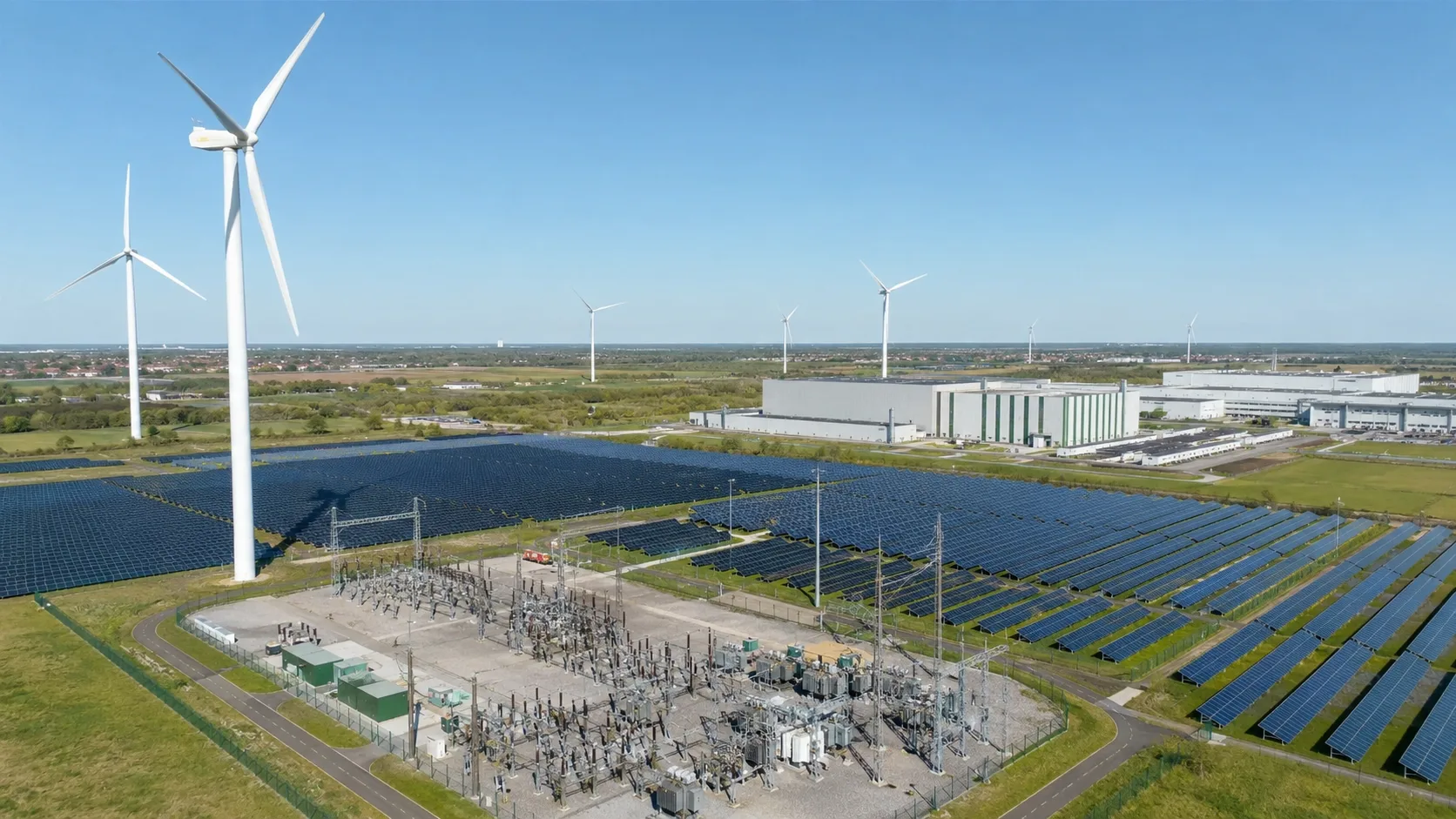
One of the most significant aspects of these agreements is the integration of hybrid renewable projects, where solar and wind facilities share infrastructure to maximize available resources and enhance the continuity of electricity supply.
By combining both technologies, operators can reduce the inherent variability of each renewable energy source while optimizing the use of transmission networks, substations, and other electrical assets. This approach contributes to greater operational efficiency and improves the long-term profitability of renewable energy investments.
It also addresses the growing need to provide a more stable supply of renewable electricity to energy-intensive industries with continuous manufacturing processes.
PPAs are shaping a new model for industry
The growing adoption of renewable energy agreements confirms a broader transformation in how companies manage their electricity procurement strategies. Increasingly, organizations view these contracts as strategic tools to strengthen their competitiveness, reduce exposure to electricity price volatility, and advance their decarbonization commitments.
At the same time, PPAs and VPPAs support the development of new renewable energy projects by providing developers with stable, long-term revenue streams, helping accelerate the integration of clean energy capacity into the power system.
As renewable electricity demand continues to grow, long-term agreements are also becoming an important risk management tool for both energy producers and industrial consumers. By providing greater price certainty and supporting investment in new renewable assets, PPAs and VPPAs contribute to a more resilient electricity market while helping companies align their procurement strategies with increasingly ambitious environmental, social, and governance (ESG) objectives. This evolution reinforces the role of renewable energy agreements as a key element of Europe’s long-term energy transition.
In this context, agreements such as the one signed by Repsol and Grupo Bimbo illustrate a trend that extends beyond the two companies, reflecting the increasing integration of renewable power generation with the energy needs of European industry.
Source: Repsol