Pumped storage hydropower is once again playing a strategic role in the United Kingdom’s energy transition. After more than four decades without building new facilities of this type, the UK is combining the modernization of long-established assets with the approval of new projects to strengthen the stability of an electricity grid that is becoming increasingly dependent on wind and solar power generation.
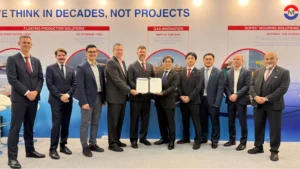
In this context, First Hydro Company, jointly owned by ENGIE and La Caisse, has awarded GE Vernova the next phase of the modernization program for the Dinorwig pumped storage hydropower station in North Wales. The initiative is designed not only to extend the operational life of one of the country’s most important energy infrastructures, but also to reflect the renewed interest in long-duration energy storage technologies as an essential complement to renewable energy integration.
Pumped storage hydropower regains prominence
As the share of variable renewable energy sources such as wind and solar photovoltaic power continues to grow, so does the need for systems capable of storing electricity when surplus generation is available and releasing it quickly whenever demand increases. Within this context, pumped storage hydropower remains one of the most mature and highest-capacity technologies available for providing flexibility to the power system.
Its operating principle is straightforward: surplus electricity is used to pump water from a lower reservoir to an upper reservoir. When additional power is needed, the stored water is released back through hydroelectric turbines, generating electricity within seconds.
Unlike other energy storage systems, these facilities can operate continuously for several hours while providing frequency regulation, operating reserves, and rapid response capabilities—functions that are becoming increasingly critical in power systems with a high penetration of renewable energy.
Rather than functioning solely as conventional hydroelectric power plants, these facilities serve as large-scale energy storage systems capable of absorbing fluctuations in renewable power generation and enhancing the stability and reliability of the national electricity grid.
Dinorwig begins a modernization program to extend its operational life
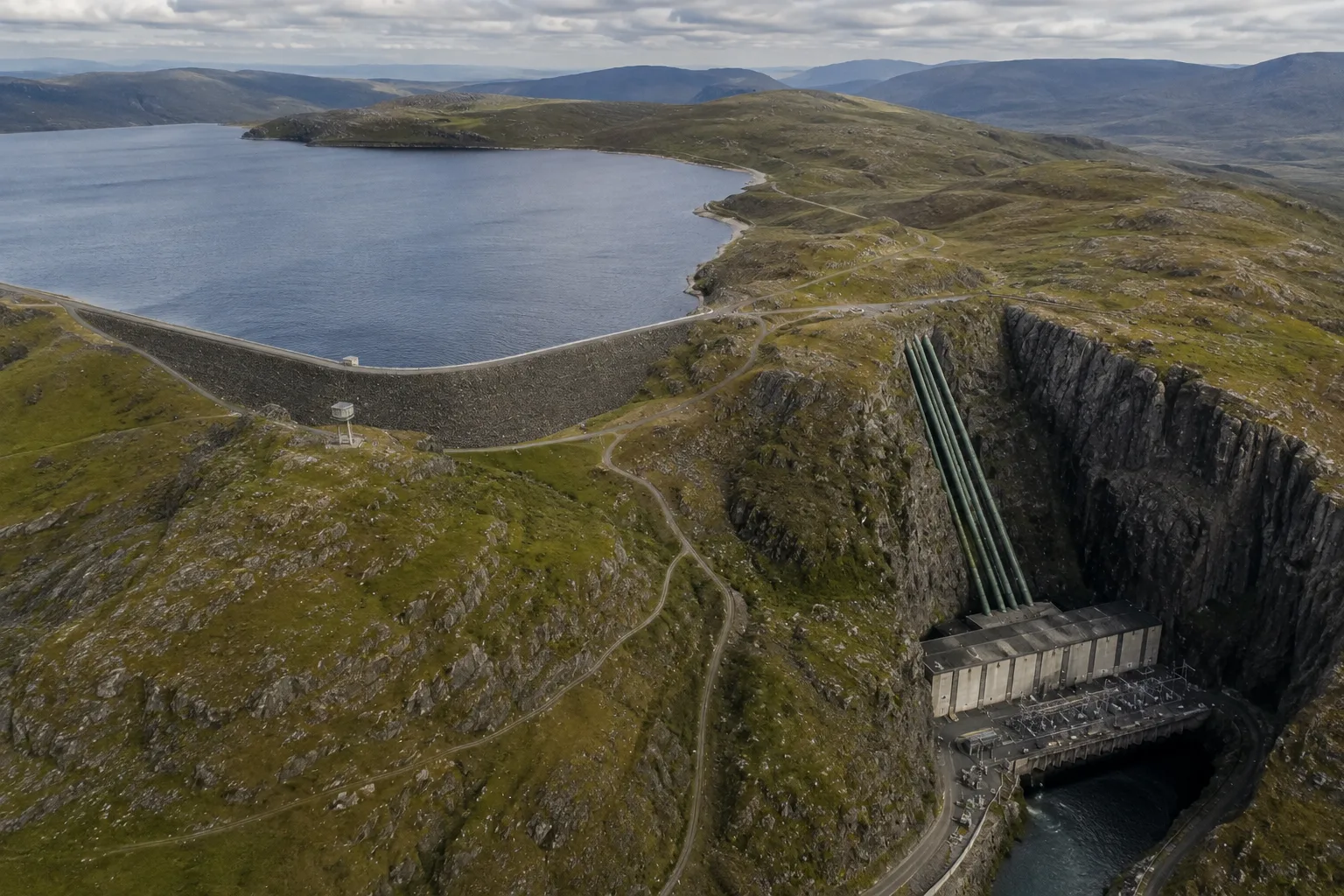
The Dinorwig Power Station, widely known as Electric Mountain, began operations in 1984 and remains one of the largest pumped storage hydropower facilities in Europe.
Operated by First Hydro Company, the facility is undergoing a comprehensive modernization program under which GE Vernova will replace two of its 315 MW reversible generating units, while also upgrading key components such as motor-generators, pump turbines, control systems, and several critical hydraulic elements. The objective is to enhance the plant’s reliability, availability, and efficiency, extending its operational life by at least 25 additional years.
This investment forms part of a broader refurbishment program that will progressively modernize all six generating units at Dinorwig.
From an engineering perspective, this type of refurbishment represents an efficient alternative to constructing new power plants. The modernization leverages the existing civil infrastructure, incorporates more advanced electromechanical technologies, and reduces both project execution time and the environmental impact associated with developing new facilities.
In addition, GE Vernova will manufacture the main equipment through its European network of specialized facilities, including sites in France, Switzerland, Germany, and Spain, strengthening the regional industrial supply chain for large-scale hydropower projects.
The UK prepares a new generation of projects
The refurbishment of Dinorwig coincides with a shift in the United Kingdom’s energy strategy.
For more than four decades, the country did not build any new pumped storage hydropower plants. However, the growing need for greater grid flexibility has led to the approval of several strategic projects in Scotland, including Coire Glas, Loch Kemp, and Earba, along with other developments currently at various stages of planning and execution.
Together, these projects could add approximately 10 GW of new long-duration energy storage capacity over the coming years, strengthening the UK’s energy security while enabling greater integration of renewable power generation.
One of the most advanced developments is Coire Glas, promoted by SSE Renewables, which is expected to contribute approximately 1.5 GW of installed capacity once it enters commercial operation.
The combination of new facilities and the modernization of existing assets will allow the United Kingdom to significantly expand its energy storage capacity without relying exclusively on electrochemical batteries to manage the daily fluctuations of renewable power generation.
Grid flexibility will become as important as renewable generation
The rapid growth of renewable energy is reshaping the way power systems are planned. For decades, the primary challenge was to increase electricity generation capacity. Today, one of the industry’s greatest challenges is ensuring that the electricity produced can be stored and delivered precisely when it is needed.
In this context, pumped storage hydropower plants play a role that goes far beyond electricity generation alone. These facilities can absorb excess renewable generation during periods of low demand, respond almost instantly to grid frequency fluctuations, provide operating reserves, and reduce the need to rely on thermal power plants to meet peak electricity demand.
The modernization of Dinorwig clearly reflects this evolution. The strategic value of the facility no longer depends solely on the amount of electricity it generates, but also on its ability to provide flexibility, grid stability, and resilience to an increasingly decarbonized power system.
Pumped storage hydropower strengthens the energy transition
The investment led by ENGIE, La Caisse, and GE Vernova represents far more than the refurbishment of a power station built more than four decades ago. The project confirms that existing hydropower infrastructure continues to be a strategic asset in the energy transition and that technological modernization can be just as important as constructing new facilities.
As the United Kingdom continues to increase the share of renewable energy while advancing new long-duration energy storage projects, the ability to manage generation variability will become a decisive factor in maintaining power system reliability.
The Dinorwig project demonstrates that extending the operational life of hydropower assets through more efficient technologies can become a key strategy for strengthening energy security, optimizing renewable energy integration, and accelerating the transition toward a more flexible and resilient electricity grid.
Sources: Energy Digital / GE Vernova / ENGIE