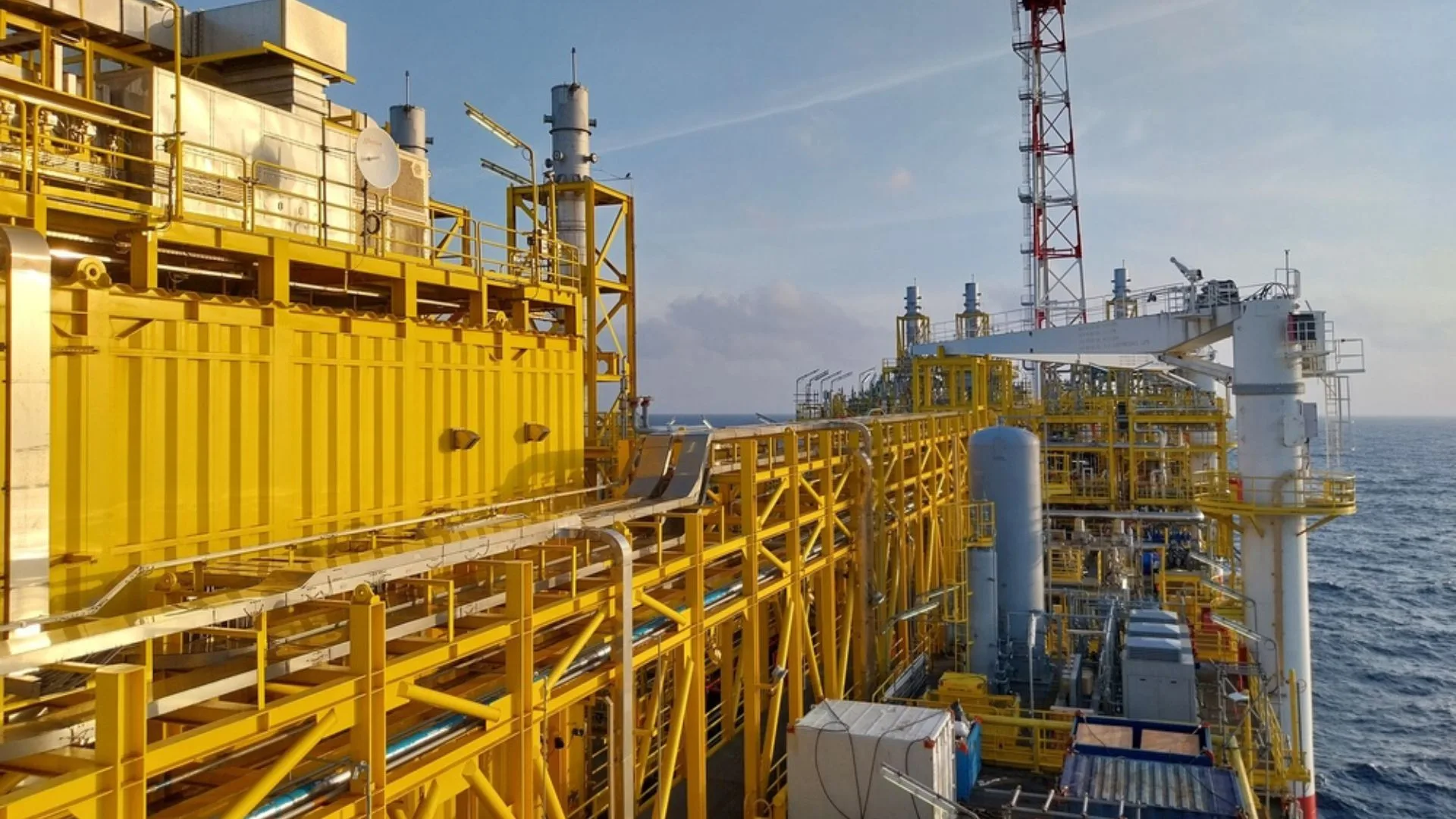
Petrobras awarded SBM Offshore the contracts for the design, construction, and operation of the SEAP-I and SEAP-II floating production, storage, and offloading (FPSO) units, two key assets for the development of the Sergipe-Alagoas Basin, located off Brazil’s northeast coast.
The award strengthens the strategic relationship between the two companies and marks further progress in one of the country’s most significant offshore developments. The units will be used to increase oil production and optimize the utilization of associated natural gas through direct export infrastructure to shore.
Two FPSOs designed to operate in ultra-deep waters
The new FPSOs will be built using SBM Offshore’s standardized Fast4Ward platform, a solution aimed at reducing execution timelines and improving efficiency throughout the projects’ life cycle.
The SEAP-II FPSO, identified as P-87, will have a production capacity of 120,000 barrels of oil per day. In addition, it will be able to process up to 425 million standard cubic feet per day of associated gas and will have a water injection capacity of 120,000 barrels per day.
This unit is expected to enter operation in 2030. It will be located approximately 80 kilometers off the Brazilian coast and will operate in waters around 2,500 meters deep.
Meanwhile, the SEAP-I FPSO, designated P-81, will also have the capacity to produce 120,000 barrels of oil per day. Its processing system will be able to handle up to 355 million standard cubic feet per day of associated gas and will have a water injection capacity of 200,000 barrels per day.
Delivery of this unit is scheduled for 2031, and it will operate about 100 kilometers offshore, likewise in waters approximately 2,500 meters deep.
Natural gas takes center stage in the project
One of the most notable elements of the development is the integration of a gas export system that will connect both FPSOs to onshore infrastructure.
Thanks to this configuration, the associated gas produced offshore can be transported directly to shore for marketing and domestic consumption. This strategy helps reduce gas flaring and decreases the need for reinjection into offshore reservoirs.
Likewise, the incorporation of advanced onboard gas treatment capabilities represents a technological evolution within SBM Offshore’s project portfolio and makes it possible to maximize the economic value of the extracted resources.
Petrobras backs the SEAP-I and SEAP-II FPSOs
The Sergipe-Alagoas Basin has established itself as one of the areas with the greatest potential for growth in Brazilian offshore production. The development of the SEAP-I and SEAP-II FPSOs is part of Petrobras’ strategy to expand its production capacity and strengthen the national energy supply.
SBM Offshore, recognized for its global leadership in deepwater ocean infrastructure, will be responsible for operating both units for an initial period of 6.5 years under separate operations and maintenance contracts.
The company has more than 8,000 professionals worldwide and maintains a business model based on long-term assets, focused on ensuring high levels of operational availability, technical efficiency, and emissions reduction.
Øivind Tangen, CEO of SBM Offshore, noted that the award confirms the strong partnership between the two companies and emphasized that the project’s gas export capacity will help increase energy availability in the region, while also generating economic benefits for Sergipe-Alagoas and its communities.
Source: SBM Offshore
Photo: Shutterstock