Oil prices retreated this Tuesday after strong gains in the previous session, as markets remain attentive to Iran’s response to a U.S.-backed proposal to extend the ceasefire and reduce tensions in the Middle East.
Brent crude fell 0.7% to $94.29 per barrel, while West Texas Intermediate (WTI) dropped 0.9% to $91.34. This movement represents a correction after Monday’s rally, when both contracts advanced driven by uncertainty over the conflict and energy supply security.
Negotiations continue to set the market’s direction
Traders’ attention remains focused on talks between Washington and Tehran. U.S. President Donald Trump stated that negotiations are progressing and expressed his expectation of reaching an agreement next week to extend the ceasefire and facilitate the reopening of the Strait of Hormuz.
However, Iran is still reviewing the final text of the proposal, which maintains caution among investors and companies linked to energy trade.
Likewise, the evolution of these talks directly influences the risk premium incorporated into oil prices. Any diplomatic progress could alleviate upward pressures, while a prolonged supply disruption would have the opposite effect.
The Strait of Hormuz remains a key factor
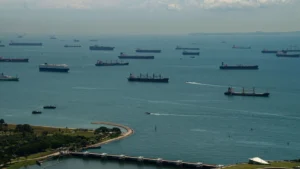
Despite diplomatic efforts, the flow of oil through the Strait of Hormuz remains limited by the regional conflict. This maritime route is one of the world’s most important energy arteries, through which a significant portion of global crude and liquefied natural gas exports circulate.
Restrictions on maritime transport have disrupted the international hydrocarbon trade in recent weeks and have contributed to the volatility observed in energy markets.
Industry analysts indicate that the actual movements of tankers and statements from both governments will continue to be decisive in anticipating price direction.
Concern over global reserves
Furthermore, the International Energy Agency warned that global reserves could approach historically low levels before the peak summer demand period if the current rate of stock reduction continues.
Concerns are also emerging from the industry. Representatives of the energy sector in the United Arab Emirates believe that August could become a turning point for the market if demand increases while supply restrictions persist.
This scenario maintains pressure on consumers and economies dependent on energy imports.
Oil prices remain conditioned by reserves and demand
Market participants also await new data on U.S. reserves. A preliminary survey points to a reduction of approximately 3.6 million barrels in crude inventories during the week ending May 29.
If this trend is confirmed, the decline in stocks would support the perception of a tighter market just as the peak U.S. fuel consumption season approaches.
Meanwhile, traders continue to evaluate the combination of geopolitical factors, crude availability, and global demand to determine the next direction of oil prices.
Source: Reuters
Photo: Shutterstock