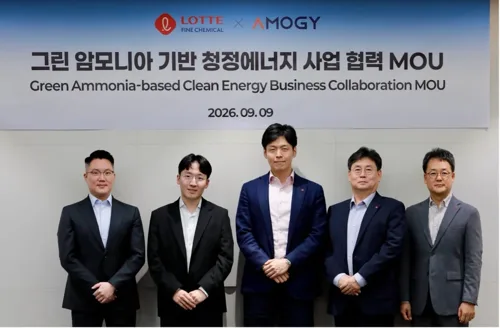
Amogy and LOTTE Fine Chemical will explore systems in South Korea capable of converting green ammonia into hydrogen and electricity for land-based and maritime applications.
Amogy and LOTTE Fine Chemical (LFC) signed a memorandum of understanding to jointly evaluate green ammonia-to-hydrogen conversion and power generation solutions in South Korea.
The agreement seeks to connect LFC’s ammonia supply, storage, and distribution infrastructure with Amogy’s ammonia cracking technology and power generation systems.
LFC will contribute its international procurement capacity, storage, and domestic ammonia infrastructure, while Amogy will provide systems to transform the compound into high-purity hydrogen or use it as fuel for power generation.
The companies will study applications related to hydrogen refueling, distributed generation, and maritime ammonia supply.
The agreement builds on infrastructure already in commercial operation. LFC reports having completed the first commercial import of green ammonia and the first green ammonia supply for ship bunkering.
Its ammonia terminal in Ulsan constitutes one of the core assets for the applications both companies intend to evaluate.
From imported ammonia to on-site hydrogen
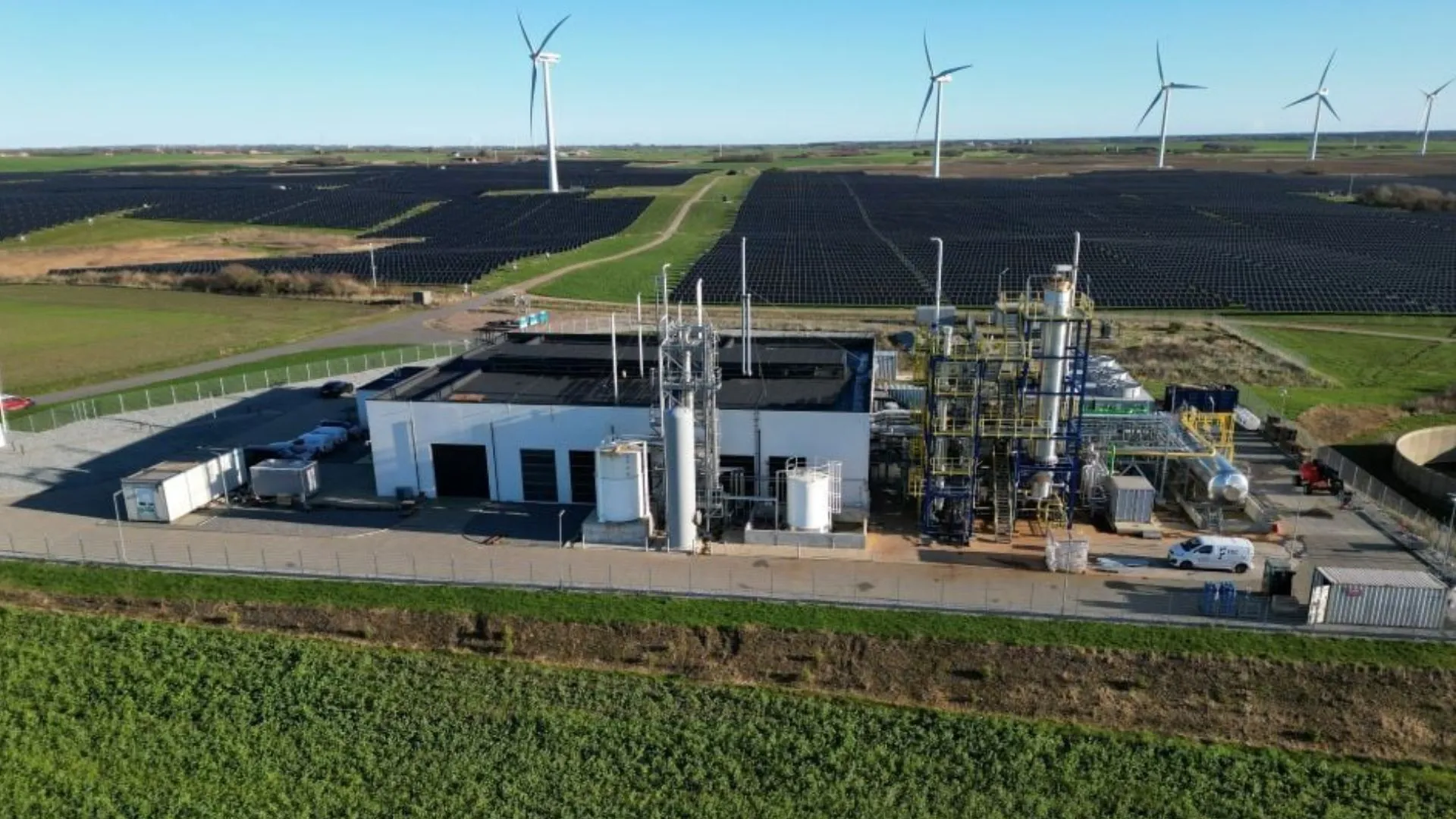
Amogy’s technology uses a cracking process to separate ammonia and produce hydrogen. The proposal for refueling stations consists of transporting and storing ammonia through LFC’s infrastructure and subsequently performing the conversion to hydrogen near the point of use.
The system proposes an architecture in which ammonia functions as a hydrogen carrier, while conversion to the gas used by certain applications is performed locally.
This modifies fuel logistics. Instead of transporting exclusively hydrogen to each consumption point, part of the chain can be carried out using ammonia, which presents different storage and transport characteristics.
Hydrogen is subsequently generated through cracking when and where needed.
But system efficiency must be analyzed as a complete chain. Losses and energy consumption from synthesis, transport, storage, cracking, purification, and use determine the actual performance of the whole.
Therefore, the logistical advantage of ammonia must be evaluated together with the energy efficiency of its reconversion
An architecture for distributed generation
The second application contemplated by the companies is distributed power generation. LFC would supply, store, and transport ammonia, while Amogy would provide generation modules that can incorporate configurations based on fuel cells or internal combustion engines.
The architecture allows envisioning commercial and community facilities that receive fuel from an ammonia logistics network and convert it locally into electricity.
This could be especially relevant in applications where electrical infrastructure availability, energy resilience, or distributed generation needs condition supply design.
The technology also opens a second pathway. Ammonia can be used directly in certain generation systems, while in others it can first be transformed into hydrogen.
Selection between both routes will depend on conversion technology, efficiency, emissions, operational requirements, and load characteristics.
This point is important because “ammonia-to-power” and “ammonia-to-hydrogen” do not represent exactly the same process. They are different architectures that can use the same initial supply infrastructure.
Ulsan connects the maritime chain
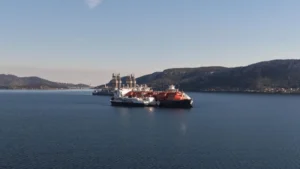
The third application is linked to maritime transport. Amogy and LFC will study ammonia supply to vessels equipped with Amogy power generation systems, leveraging LFC’s terminal at the port of Ulsan and its experience in bunkering.
The concept thus integrates port infrastructure and onboard conversion technology. Fuel can reach the vessel through an existing logistics chain and subsequently be used to produce electricity or power systems specifically designed to operate on ammonia.
The MoU does not by itself establish a commercial project with capacity, investment, or definitive execution date. The companies will continue defining opportunities and subsequently determine the scope and timelines of projects that may be developed.
The industrial significance of the agreement lies precisely in another point: it attempts to connect the upstream of clean ammonia with downstream applications that require a specific utilization pathway.
For South Korea, this means that import, storage, and distribution infrastructure can become a platform for different energy pathways: ammonia used directly, ammonia converted into hydrogen, and ammonia transformed into electricity.
SOURCE and PHOTO: https://www.hydrocarbonprocessing.com/