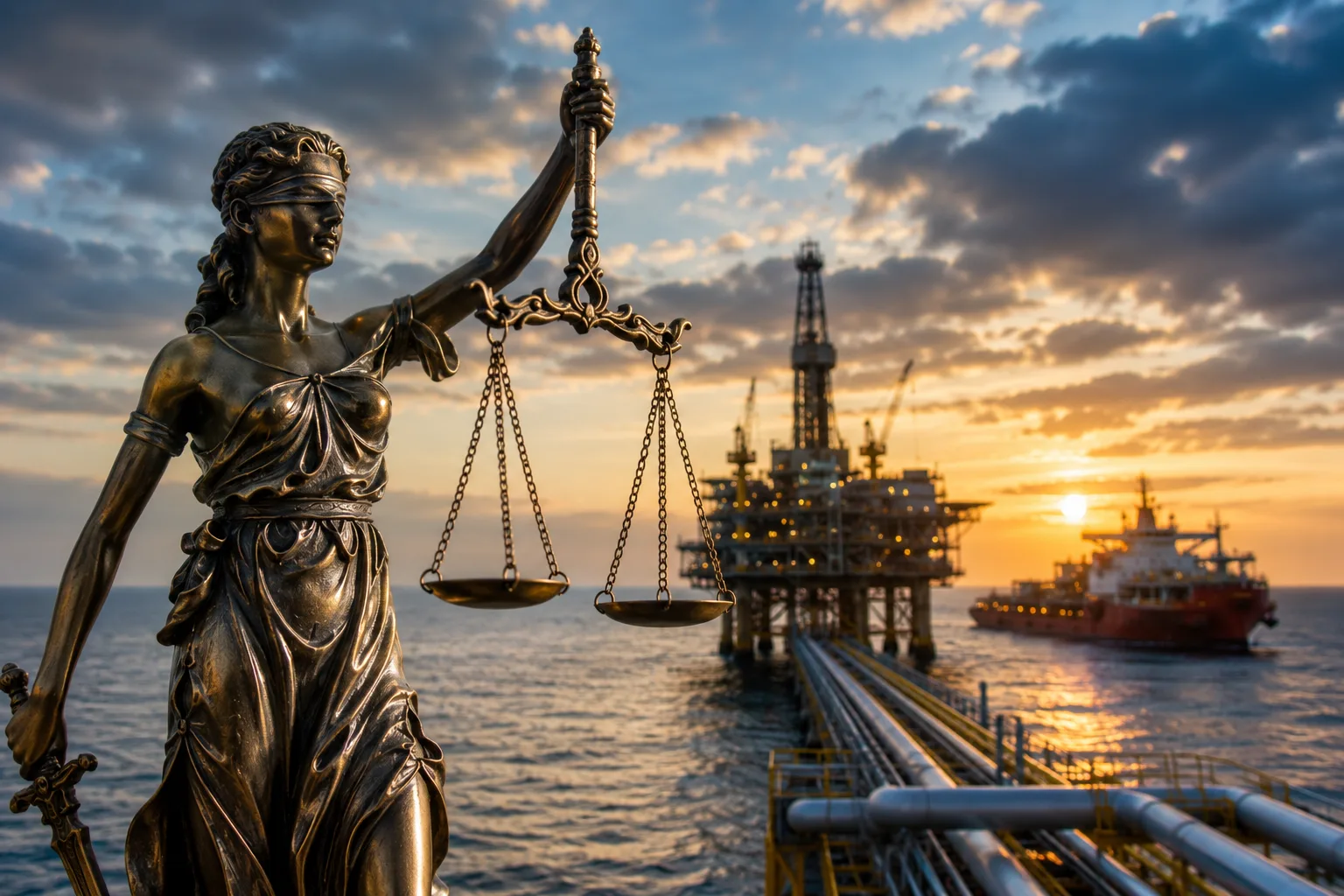
The Norwegian oil fields Breidablikk, Tyrving, and Yggdrasil are entering a new legal stage as Norway’s Supreme Court examines the validity of the process used to approve their plans for development and operation. The case could have implications beyond these three assets because of its potential impact on future environmental assessments of oil projects on the Norwegian Continental Shelf.
The government asked the country’s highest court to overturn an earlier ruling that challenged the approvals over the way emissions subsequently generated by the use of the oil and gas produced were addressed, commonly known as Scope 3 emissions.
Reuters reported that the hearings began on Monday, August 24, and are scheduled to last four days, while the Supreme Court’s decision is expected later in 2026.
The proceedings also involve projects at different stages of maturity: Breidablikk and Tyrving are already producing, while Yggdrasil continues progressing toward its planned start-up in 2027.
Norwegian oil fields reach the Supreme Court
The dispute dates back to the approvals granted by the Ministry of Energy for the plans for development and operation, known in Norway as PDOs, for Breidablikk, Tyrving, and the fields included within the Yggdrasil area.
The environmental organizations that initiated the legal proceedings argue that the original assessments did not adequately consider the emissions associated with the subsequent combustion of the hydrocarbons produced.
The state, for its part, maintains that the approvals are valid and argues that the additional assessments subsequently carried out meet the applicable requirements. This distinction is fundamental. The Supreme Court is not simply deciding whether Norway should or should not produce oil, but rather examining aspects of the environmental and legal procedure used to support the approvals for these developments.
The Norwegian government had already decided on May 12, 2026, not to revoke the PDO approvals: Breidablikk had received approval in June 2021, while Tyrving and Yggdrasil were approved in June 2023.
Breidablikk is already producing oil in the North Sea
Breidablikk represents one of the most advanced assets involved in the proceedings. Operated by Equinor, the field is located in the central North Sea and uses an entirely subsea development solution tied back to the Grane platform. Production began in October 2023, four months earlier than initially planned.
The development comprises 22 subsea wells distributed across four templates and has recoverable reserves of approximately 190 million barrels of oil. Equinor estimates investments at slightly more than NOK 21 billion in 2023 value terms.
Breidablikk’s configuration is also significant from an infrastructure perspective: rather than installing a standalone production platform, the project uses existing Grane facilities to process the hydrocarbons before transporting the oil by pipeline to the Sture terminal.
Tyrving leverages existing Alvheim infrastructure
Tyrving follows another development strategy based on integration with existing assets. The project, operated by Aker BP, received approval for its PDO in 2023, with investments originally estimated at approximately NOK 6 billion and recoverable resources of around 25 million barrels of oil equivalent.
Aker BP subsequently confirmed that Tyrving began production in September 2024. The company has also stated in its corporate reports that it is not a party to the litigation between the state and the environmental organizations.
This distinction helps separate the legal proceedings affecting the government’s administrative decisions from the industrial execution of the projects by their operators.
Yggdrasil represents the largest industrial-scale development
Among the three developments, Yggdrasil stands out for its scale. Aker BP currently describes it as the largest ongoing development on the Norwegian Continental Shelf. The area contains estimated gross recoverable resources of around 700 million barrels of oil equivalent and is expected to achieve first production in 2027.
The design includes Hugin A as the central processing platform, the unmanned Munin production platform, Hugin B, and extensive subsea infrastructure consisting of templates, pipelines, and umbilicals. Around 57 wells are also planned. In addition, the facilities will receive power from shore and will be remotely operated from an integrated operations center located in Stavanger.
Aker BP reported in its first-quarter 2026 report that execution was continuing as planned, with intense offshore activity to install subsea infrastructure, pipelines, and other components. The company continues to expect production to begin in 2027.
The ruling could influence future oil developments
The significance of the proceedings extends beyond the individual circumstances of Breidablikk, Tyrving, and Yggdrasil. The central issue is determining how far the environmental assessments used to authorize new oil and gas projects should extend, particularly with regard to emissions generated after the hydrocarbons leave Norway and are consumed in other markets.
The decision also comes as the country maintains a strategic position within Europe’s energy supply. Norway produces around 2% of the world’s oil and became Europe’s leading supplier of natural gas following the reduction in flows from Russia after the invasion of Ukraine in 2022.
For this reason, the outcome will be of interest to environmental organizations as well as operators, investors, and offshore project developers. While the Supreme Court considers the arguments, industrial activity continues. Breidablikk and Tyrving remain in production, while Aker BP continues executing Yggdrasil with the goal of starting production in 2027.
The true scope of the proceedings will become clear when the ruling is issued. Until then, the Norwegian oil fields involved in the case represent a point of convergence between offshore development, environmental assessment, legal certainty, and long-term energy investment.
Sources: Oil Price / Reuters — Norway asks Supreme Court to overturn environmental verdict against oilfields | | Equinor — Breidablikk | Aker BP — Yggdrasil | Aker BP — Tyrving