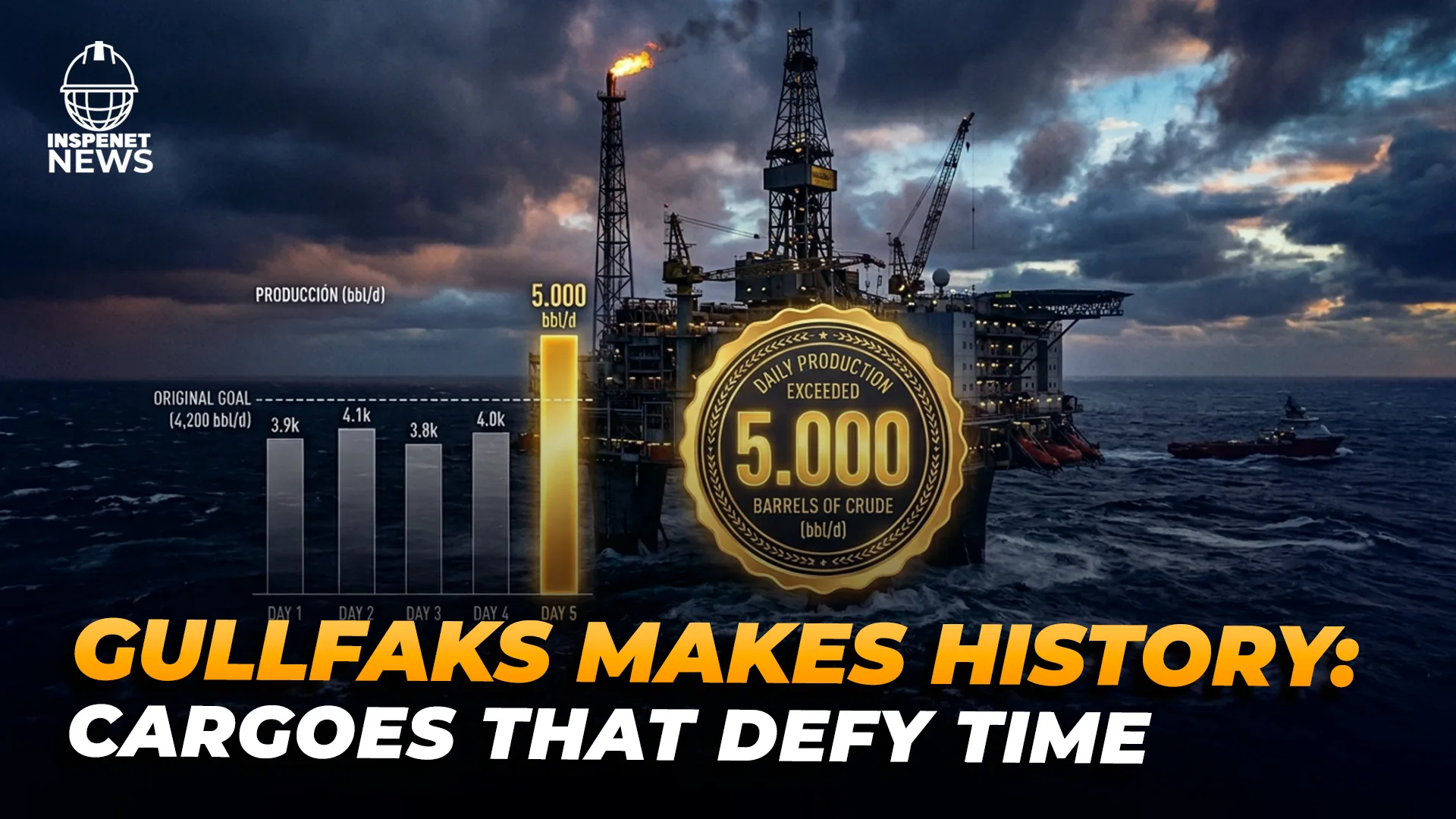
Gullfaks reaches 5,000 shipments and sustains European supply
The Gullfaks field, operated by Equinor in the North Sea, reached the delivery of its 5,000th oil shipment , a figure that reflects the importance of Norwegian oil within the European energy supply in a context marked by geopolitical tensions and high demand for crude.
Currently, the field continues to send weekly shipments to various European refineries, even though it was originally expected to cease production in 2007. Production began in 1986 and, almost four decades later, Gullfaks remains one of Norway's most important offshore assets.
Gullfaks extends its lifespan beyond initial forecasts
Since the Gullfaks A, B, and C platforms began operations between 1986 and 1989, the field has produced approximately 2.8 billion barrels of oil equivalent. This figure nearly doubles the original estimates made during the early stages of the project's development.
In addition to its own production, Gullfaks serves as an export hub for other nearby fields such as Snorre and Visund, as well as several subsea developments connected to existing infrastructure on the Norwegian continental shelf.
According to Equinor, investments focused on enhanced recovery and infrastructure maintenance have allowed them to extend the operational life of the field and sustain consistent deliveries to the European market.
Norwegian oil maintains its importance in Europe
Much of the crude oil produced at Gullfaks is destined for refineries in Sweden, the UK, and Poland. The 5,000th shipment was delivered to the St1 refinery in Gothenburg, a facility that produces gasoline, diesel, jet fuel, and marine fuels for the Nordic markets.
Gullfaks oil stands out for being light and low in sulfur, a characteristic highly valued by refineries because it facilitates the production of fuels and petrochemical derivatives with greater efficiency.
Also, some of the crude oil is used to produce LPG and naphtha, essential raw materials for the petrochemical industry and the manufacture of industrial and everyday consumer products.
Offshore logistics sustains Gullfaks exports
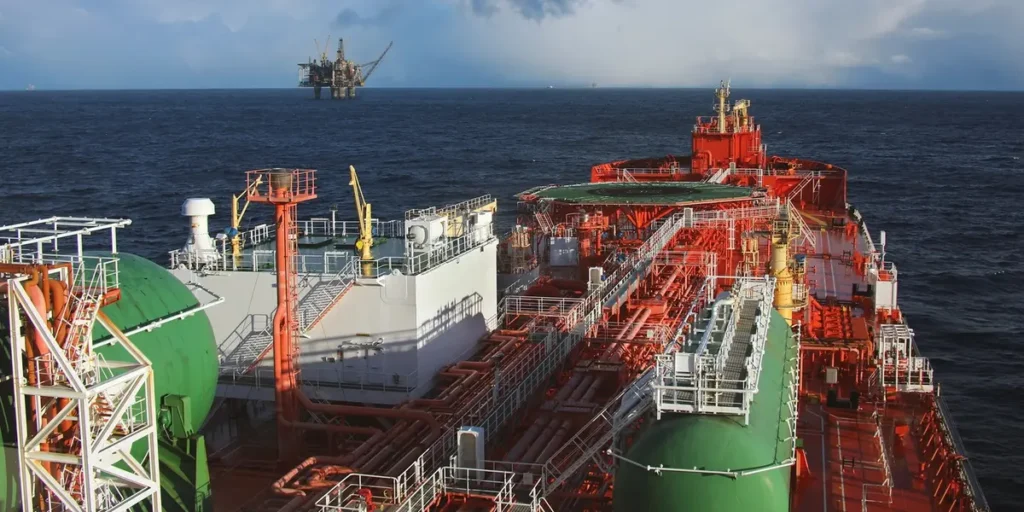
Maritime transport plays a central role in Gullfaks' operation. Cargoes are transported by specialized tankers capable of carrying approximately 800,000 barrels of oil from the North Sea to European terminals.
Among the vessels used, the Eagle Balder stands out, a dual-fuel vessel built in 2020 and operated by OSM Thome for the company AET. The ship can run on liquefied natural gas and has systems to capture volatile organic compounds generated during loading.
In addition, the ship uses dynamic positioning technology to perform loading operations directly from offshore fields without the need for conventional anchoring.
Gullfaks integrates oil production and wind energy
Equinor 's offshore oil and gas production in the North Sea.
Although Gullfaks reached its peak production in 1994, the field and associated subsea developments still generated more than 17 million barrels of oil during the last reported year.
In this way, the field continues to consolidate itself as one of the historical pillars of Norwegian offshore production and an important component within the energy supply that serves Europe.
News of additional interest
HandySCAN EVO takes 3D design to another level
FARO CREAFORM received the Red Dot Award for Product Design for its HandySCAN 3D EVO™ series. The award highlights the combination of industrial precision and a more comfortable and practical user experience. The line of handheld 3D scanners now boasts six Red Dot Awards and maintains its position as a leading name in the metrology and industrial scanning sector.
The EVO series was designed to facilitate work on the shop floor thanks to its lightweight and compact form factor. Key features include a 4.3-inch touchscreen for real-time data display and a graphical interface that reduces reliance on a laptop during inspections. The device also incorporates physical controls for faster menu navigation and an industrial connectivity system designed to improve operator balance and mobility.
AMETEK shakes up the market with a multi-million dollar purchase
AMETEK announced an agreement to acquire Indicor Instrumentation in a transaction valued at approximately $5 billion. The company seeks to incorporate a group of businesses specializing in instrumentation solutions for demanding industrial and scientific applications. Indicor generates around $1.1 billion in annual sales and has businesses focused on mission-critical technologies and after-sales services.
The transaction will allow Indicor's companies to be integrated into AMETEK's Electronic Instruments Group and Electromechanical Group divisions. According to the company, Indicor's technologies and markets align with its growth strategy based on acquisitions and technological expansion. The purchase will be financed through debt and existing credit lines and is still subject to regulatory approvals before closing in the second half of 2026.
DNV creates new rules for floating solar power
DNV has introduced two new technical standards to strengthen the safety and performance of floating solar power systems. The standards aim to establish clearer criteria for the structural design of floating platforms and the mooring systems that keep the installations stable on water. This initiative comes at a time when these types of projects are gaining traction as an alternative for expanding renewable energy generation without requiring large tracts of land.
The new regulations are complemented by a technical guide published by DNV in 2021, which will be updated throughout 2026. The aim is to provide a comprehensive framework covering everything from the design and operation to risk management and maintenance of floating solar plants. DNV highlighted that the global market for this technology could grow from $7.9 billion in 2026 to $9.2 billion in 2035, driven by the demand for clean energy and the need to utilize protected waterways.
Venture Global expands LNG sales with Vitol and TotalEnergies
Venture Global announced new liquefied natural gas (LNG) supply agreements with TotalEnergies and Vitol to bolster its exports from the United States. The agreement with TotalEnergies covers shipments of approximately 0.85 million tons of LNG annually for nearly five years, beginning in 2026. Simultaneously, Vitol expanded its existing contract to 1.7 million tons per year.
The agreements will be supplied from Venture Global's portfolio of projects on the U.S. Gulf Coast. The company emphasized that global demand for energy security continues to grow and that its contracts aim to offer greater supply flexibility in the short, medium, and long term. Venture Global currently has over 100 million tons of annual capacity across projects in operation, under construction, and in development.