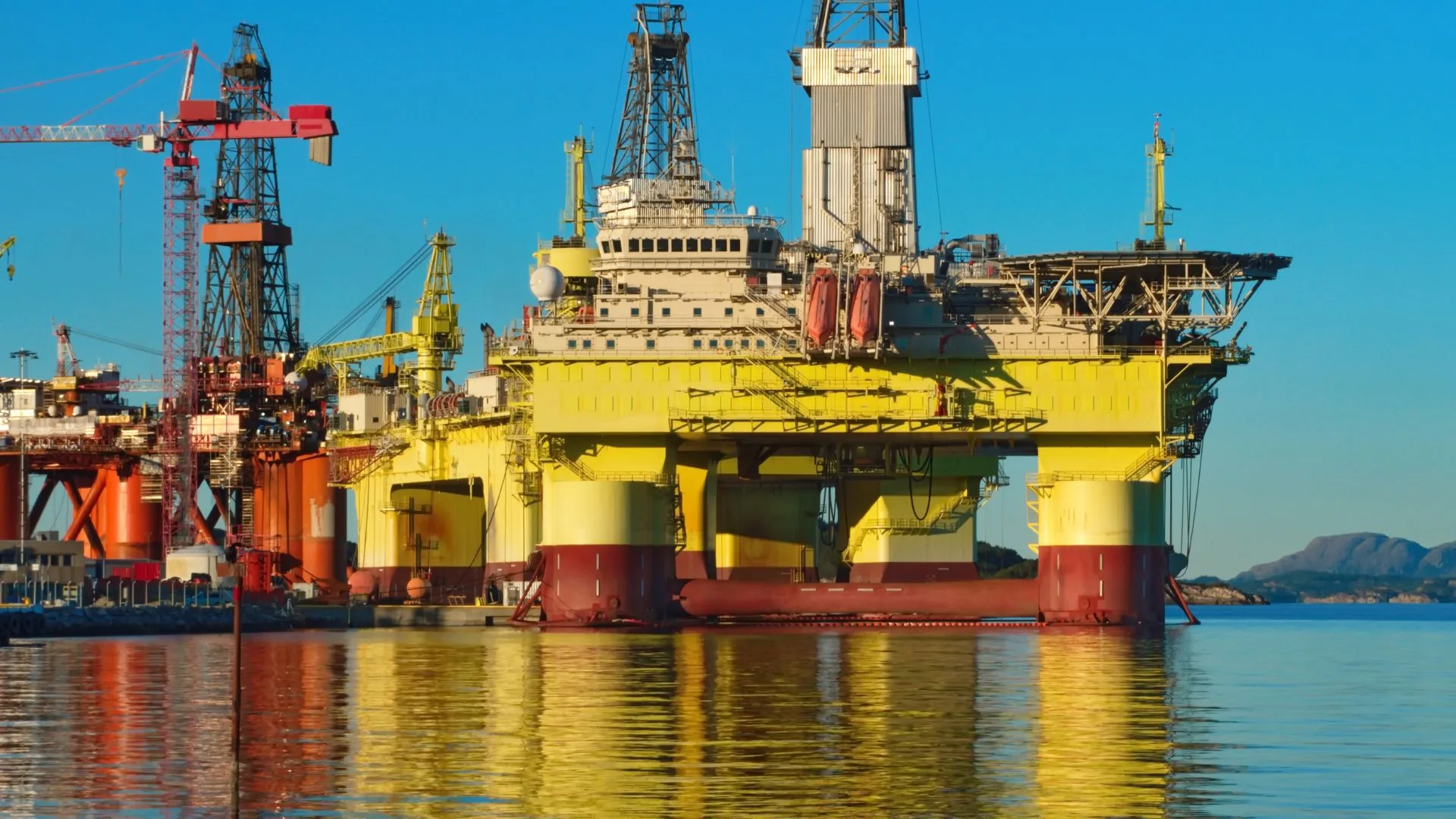
Norway it strengthened its gas activity in July 2026 with a production of 350.6 million cubic meters of natural gas per day this comes during a period marked by the uneven performance of its hydrocarbons and the challenges of sustaining extraction on the continental shelf. The result confirms the second consecutive month of growth and keeps the Norwegian energy sector focused on the development of new resources.
Norway increases its gas production by 5.2% in July
Norway it increased its natural gas production again in July, reaching an average of 350.6 million cubic meters per day (MMcmd) the result represents the second consecutive monthly increase for one of the leading producers of hydrocarbons of Europe. According to preliminary figures from Norwegian High Seas Directorate (NOD) the volume increased by 5.2% compared to June and there remained a 6.3% above July 2025 despite the progress, natural gas production was 1.8% lower than the official forecast.
In addition, the country sold approximately 10.9 billion cubic meters of gas during July this represents an increase of approximately 900 million cubic meters compared to the previous month. This trend reinforces the importance of the Norwegian continental shelf in gas supply. However, the data paints a different picture when considering oil production.
Oil production falls during July
Meanwhile, oil production averaged 1.77 million barrels per day during July. This represents a 2.6% reduction compared to June and a 9.9% drop compared to the same month in 2025. Likewise, the volume was 2.1% below the NOD projection.
The results of oil and gas they met after several weeks of labor dispute between the Norwegian Energy Workers’ Union (SAFE) and Offshore Norway the strike began on June 15 after SAFE, an organization representing companies operating on the Norwegian continental shelf, rejected proposals related to the Well Services Agreement. The conflict affected key offshore service providers such as SLB, Halliburton, Weatherford, DeepOcean, Subsea 7, and Baker Hughes, among others.
Subsequently, SAFE and Offshore Norge agreed to submit the dispute to a voluntary wage board and resume operations. The conflict had generated expectations of production losses that could reach approximately 120,000 barrels of oil equivalent per day.
More than 90 discoveries await development decisions
While natural gas production is advancing, Norway faces another challenge transforming its discovered resources into new production projects. NOD reported that over 90 discoveries in Norwegian waters they are still awaiting a decision on their development. A significant portion consists of small accumulations whose profitability depends on connections to existing oil and gas infrastructure.
This situation is significant because current production is growing faster than resource growth. According to the Norwegian authority, the remaining resources in the Norwegian continental shelf (NCS) they are estimated at around 7 billion standard cubic meters of oil equivalent nearly half of it still hasn’t been discovered.
In comparison, approximately 9 billion standard cubic meters of oil equivalent have already been produced and supplied from the NCS.
Norway seeks further exploration in the Barents Sea
Given this scenario, the NOD believes that accelerating the development of new fields can help contain the natural decline in production in the short term. Reducing the time between a discovery and its entry into operation would allow for the earlier production of new volumes. However, the authority warns that developing existing discoveries more quickly does not solve the underlying problem resource growth remains insufficient to compensate for the depletion of producing fields.
Therefore, oil and gas exploration will continue to be a key element in sustaining the activity of the Norwegian upstream sector Far North and the Barents Sea they attract a significant portion of that attention. The NOD considers this region to hold the greatest remaining resource potential of the Norwegian continental shelf and notes that extensive areas remain largely unexplored.
Thus, the increase recorded in July improves the immediate balance of gas production in Norway, although the long-term evolution will depend on the development of new discoveries and the ability to incorporate additional resources.
Source: Rigzone
Photo: Shutterstock