Natural gas in the Eastern Mediterranean continues to establish itself as one of the pillars of the European energy strategy, thanks to the progress of new offshore developments aimed at diversifying regional supply. The recent declaration of commercial discovery for the Glaucus and Pegasus fields in Cyprus’s Block 10, presented by ExxonMobil, QatarEnergy, and the Cypriot government, represents a new step in a process that is transforming this region into a strategic hub for natural gas production.
Over the last decade, the Eastern Mediterranean has shifted from being an exploratory frontier to becoming one of the gas provinces with the greatest international projection. Discoveries made off the coasts of Cyprus, Egypt, and Israel, along with the sustained interest of global operators, have increased the region’s potential to contribute to European energy security through new supply sources close to the continental market.
In this context, the announcement regarding Block 10 is not merely an administrative advance within a specific project, but evidence of the level of maturity that several offshore developments in the Eastern Mediterranean are reaching and the confidence that investors maintain in the potential of this basin.
Natural gas in the Eastern Mediterranean consolidates new developments
Increasing exploratory activity and resource assessment have confirmed significant natural gas accumulations in different sectors of the Eastern Mediterranean. This process has driven a new stage of investment aimed at transforming geological discoveries into commercial projects capable of supplying regional and international markets.
The development of these resources responds to a combination of strategic factors. On one hand, Europe seeks to broaden the diversification of its energy supply sources through geographically close providers. On the other, producing countries find in offshore development an opportunity to strengthen their economies through the responsible exploitation of high-value natural resources.
Block 10, located off the coast of Cyprus, is part of this regional consolidation process, where each regulatory advance brings projects closer to future stages of engineering, infrastructure development, and production.
Cyprus moves toward commercial natural gas production
The declaration of commercial discovery submitted by ExxonMobil and QatarEnergy for the Glaucus and Pegasus fields constitutes a fundamental step within the development process of Block 10.
This type of declaration confirms that the identified resources possess sufficient potential to move toward the next phases of the project, which include regulatory evaluations, development planning, engineering studies, and the definition of the infrastructure necessary to start production.
The project is operated by ExxonMobil, which holds the majority stake in the concession, while QatarEnergy participates as a strategic partner—an alliance that combines technical expertise, financial capacity, and knowledge in the development of large-scale offshore natural gas projects.
Beyond the contractual aspects, the collaboration between both companies reflects the industry’s growing confidence in the energy potential of the Eastern Mediterranean.
Mediterranean offshore gains importance for Europe
The evolution of the Eastern Mediterranean transcends the development of a single field. Its importance lies in the possibility of incorporating new natural gas sources into a European market that continues to strengthen the diversification of its supply matrix.
The region’s offshore resources could complement existing processing, transport, and export infrastructure through pipelines and liquefied natural gas (LNG) supply chains, favoring greater flexibility to meet the continent’s energy demand.
At the same time, the growth of offshore activity drives investments in production platforms, subsea installations, processing systems, port infrastructure, maritime services, and industrial inspection, generating opportunities for companies specialized in engineering, mechanical integrity, non-destructive testing (NDT), automation, and asset management.
This dynamic makes the Eastern Mediterranean a market of growing interest for the entire value chain of the energy industry.
Energy cooperation drives new offshore investments
The development of energy resources in the Eastern Mediterranean depends not only on exploratory success but also on cooperation between governments, operators, and regulatory bodies capable of facilitating long-term investments.
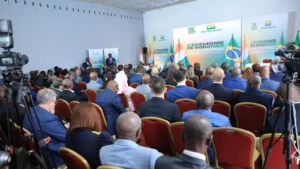
The joint declaration presented by the Cypriot authorities along with ExxonMobil and QatarEnergy reflects precisely that vision of collaboration aimed at accelerating the next stages of the project and ensuring technically viable and commercially sustainable development.
These types of initiatives strengthen the confidence of international investors and create favorable conditions for new exploration and production projects in a region that continues to expand its prominence within the global energy landscape.
The Eastern Mediterranean strengthens European supply
The evolution of offshore developments off the coast of Cyprus confirms a trend that has been strengthening in recent years: the Eastern Mediterranean is shifting from being an emerging region to becoming a strategic component of the European energy system.
The progress of projects such as those in Block 10 demonstrates that the combination of competitive resources, international cooperation, and technological capacity can accelerate the development of new natural gas sources intended to reinforce the continent’s energy security.
In this scenario, the announcement by ExxonMobil and QatarEnergy represents much more than a commercial declaration. It constitutes an indicator of the growing prominence that the Eastern Mediterranean will have in energy planning, offshore development, and infrastructure investments over the next decade.
Source: Offshore Energy