The expansion of Kinder Morgan pipelines took a significant step within the U.S. regulatory process after the Federal Energy Regulatory Commission (FERC) concluded the environmental assessment of two of the most important natural gas transportation projects planned for the southeast of the country. If final approval is granted, both initiatives will incorporate nearly 500 miles of new infrastructure and significantly expand transportation capacity to meet the region’s growing energy demand.
Energy infrastructure continues to gain prominence in the United States as natural gas consumption associated with power generation, industrial expansion, and the growth of liquefied natural gas (LNG) exports increases. In this context, the Mississippi Crossing and South System Expansion 4 projects represent one of the largest recent investments in pipeline transportation within the midstream market.
Kinder Morgan Pipeline Expansion Strengthens the Midstream Market
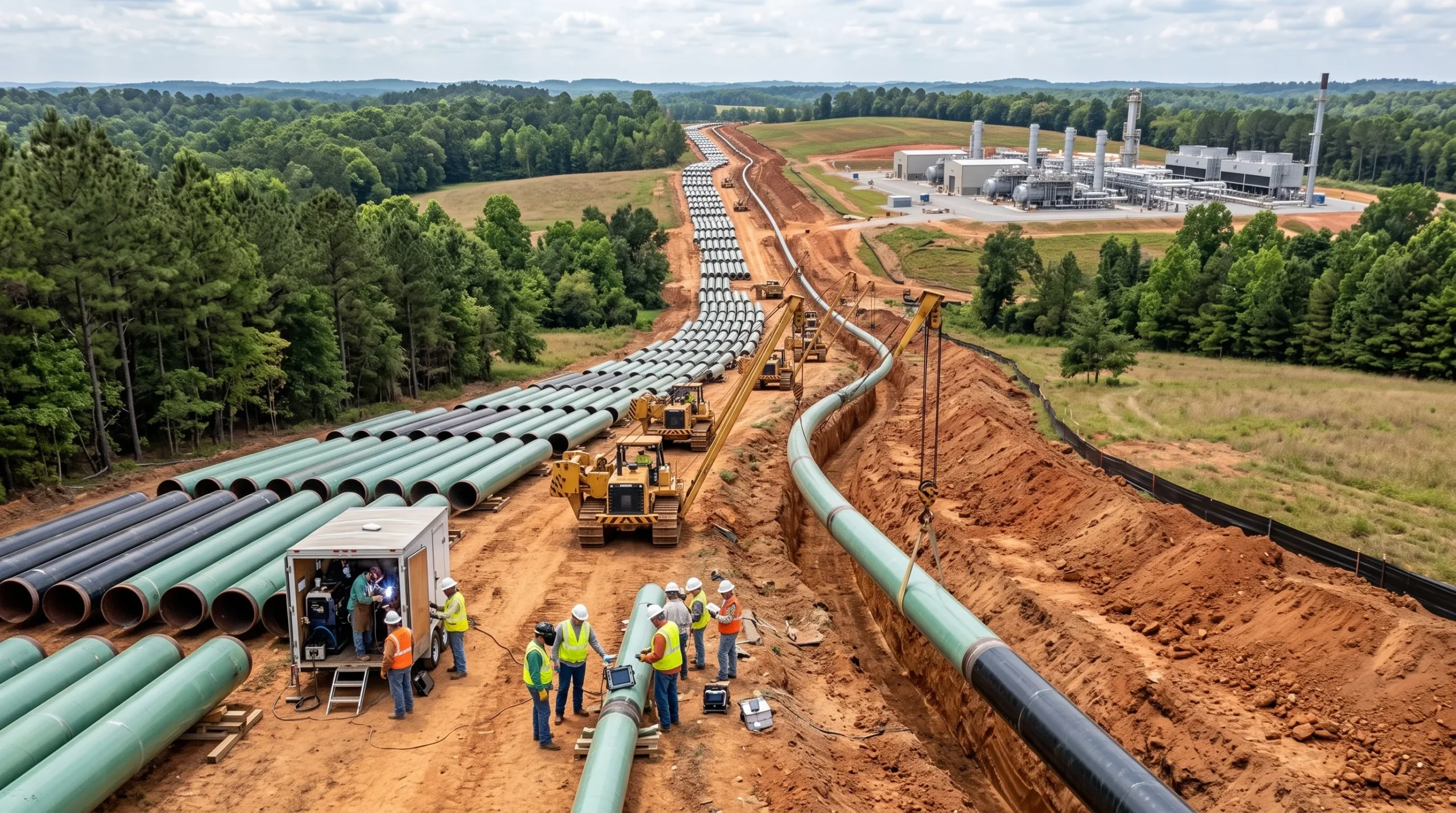
The projects promoted by Tennessee Gas Pipeline and Southern Natural Gas, both Kinder Morgan companies, seek to increase transportation capacity through new large-diameter lines, compressor stations, metering facilities, and various improvements to existing infrastructure.
Together, the works include approximately 490 miles of new pipelines and expansions distributed across Mississippi, Alabama, and Georgia. Once completed, they will add more than 3.4 billion cubic feet per day of additional capacity to supply markets in the American Southeast, a region where gas demand continues to grow for residential consumption, power generation, and energy-intensive industries.
The environmental progress constitutes one of the most important milestones within the federal authorization process, as it brings both projects closer to the final decision to be issued by FERC during the next stages of the regulatory schedule.
Environmental Assessment Brings Projects Closer to Final Decision
During the review, the federal agency analyzed aspects related to ecosystems, water resources, wetlands, historical heritage, protected species, and potential impacts derived from the construction and operation of the infrastructure.
As a result, technical staff concluded that the identified environmental effects could be mitigated through specific environmental protection, monitoring, and restoration programs, as well as measures aimed at erosion control, sediment management, spill prevention, and post-construction follow-up.
Although the environmental report represents a decisive step, final approval still depends on the issuance of the final order by the Commission, which will evaluate both the technical conclusions and compliance with regulatory requirements before authorizing the start of the works.
New Pipelines Support Growing Natural Gas Demand
The development of new transportation infrastructure responds to a transformation of the U.S. energy market. The incorporation of new power generation plants, the growth of data centers with high energy demand, and the steady increase in LNG exports are driving greater capacity needs in interstate transportation systems.
For the midstream sector, projects of this magnitude also represent opportunities for manufacturers of pipes, compressor stations, metering systems, valves, coatings, mechanical integrity solutions, pipeline inspection, and asset monitoring technologies.
Beyond the regulatory component, the progress of Mississippi Crossing and South System Expansion 4 reflects the U.S. market trend toward the modernization and expansion of its gas infrastructure. If FERC grants final authorization in the coming weeks, Kinder Morgan will be in a position to start a new investment phase that will reinforce the energy connectivity of the Southeast and consolidate the role of natural gas as one of the pillars of the North American energy system.
Sources: Pipeline & Gas Journal / FERC / Kinder Morgan