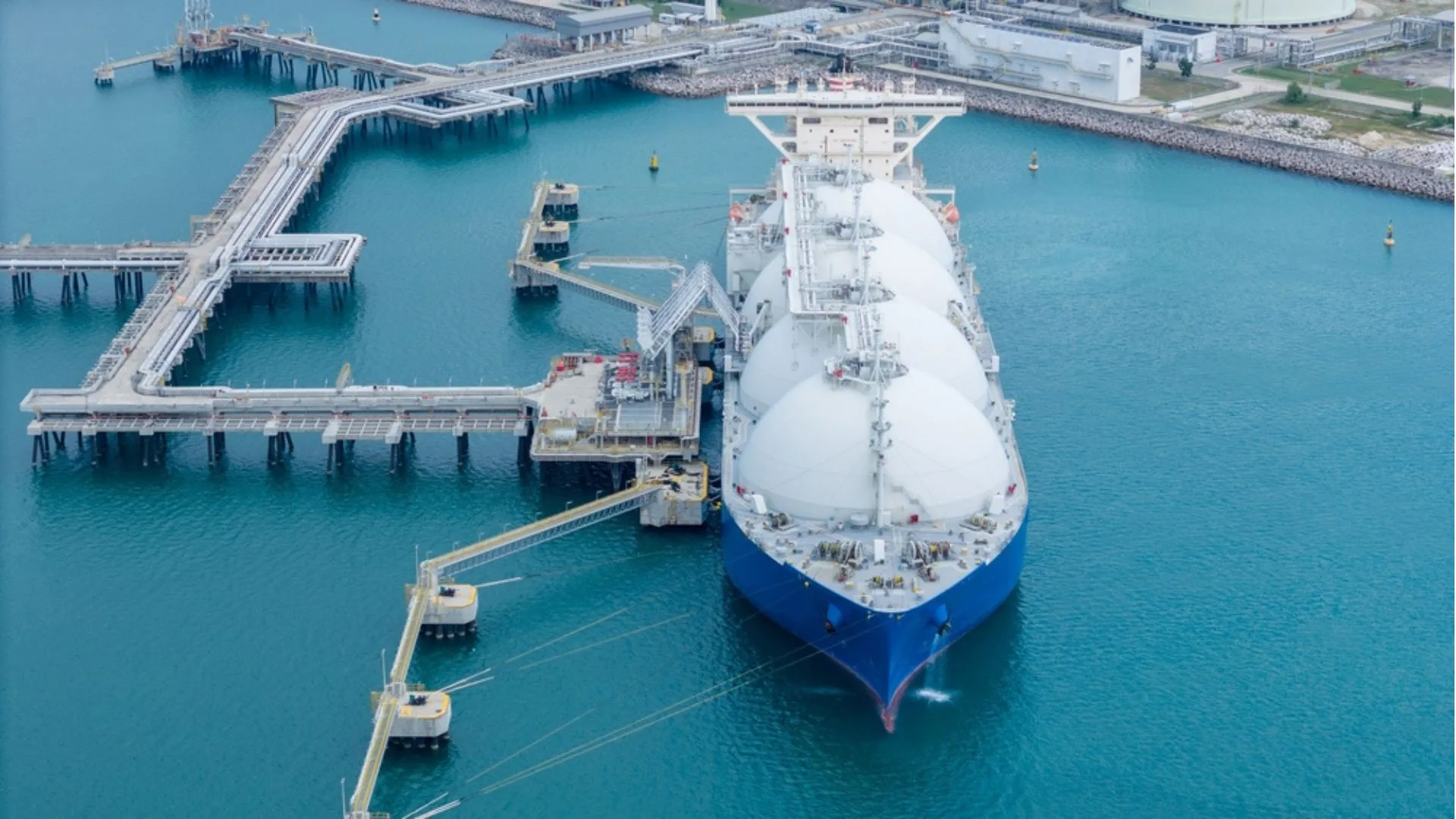
The Longkou LNG terminal, operated by PipeChina in the city of Yantai, Shandong province, has completed mechanical construction and will be operational before October 2026, according to a Reuters exclusive from June 22. The facility becomes China’s second terminal for sanctioned Russian LNG, strengthening the only active absorption corridor for cargoes from the Arctic LNG 2 project, which no Western buyer publicly acknowledges.
The first terminal in that corridor is Beihai, also operated by PipeChina, in Guangxi province. Beihai has already accumulated 41 Arctic LNG 2 cargoes, totaling 2.6 million tonnes, according to cargo-tracking data cited by Reuters.
Longkou’s geographic advantage over Beihai
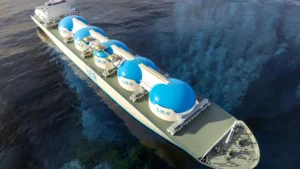
Longkou’s location on the Yellow Sea in northern China places it closer to the Koryak floating storage and transshipment unit, anchored in Russia’s Far East, where Arctic LNG 2 cargoes are consolidated and transferred before sailing to Asian destinations. This proximity reduces transit times for available LNG carriers, which are scarce as international sanctions limit access to conventional fleets.
Arctic LNG 2 represents a $21 billion investment with capacity for 19.8 million metric tonnes per year. The project, led by Novatek with stakes held by TotalEnergies, CNOOC, and CNPC, faces restrictions on access to Western technology and operates outside the trade channels recognized by Europe and the United States.
Flows of sanctioned Russian LNG to China in 2025 and 2026
In 2025, China imported 7.57 million tonnes of Russian LNG, according to Kpler and LSEG data. All Arctic LNG 2 cargoes were delivered to Beihai, the only operational terminal for that route so far.
“China is the only known buyer of Arctic LNG 2 cargoes,” Reuters confirmed in its June 22 exclusive. This concentration of demand in a single country is unprecedented for a project of that scale in the global LNG market.
The Portovaya project—another sanctioned Russian terminal—has also sent cargoes to China, indicating that the corridor is not limited to Arctic LNG 2. In addition, the Dalian terminal in northeastern China, also operated by PipeChina, is listed as a potential future receiving site, according to the same source.
For regulatory context around Russian LNG projects, see the inspenet.com article on TotalEnergies and Arctic LNG 2 following Putin’s decree authorizing the transfer of its stake to Novatek.
Infrastructure and Phase 1 capacity
Longkou Phase 1 has a capacity of 6.45 million metric tonnes per year and includes six cryogenic storage tanks of 220,000 cubic meters each, a jetty capable of handling the world’s largest LNG carriers, and regasification systems connected to northern China’s gas pipeline network.
Risk management in cryogenic facilities of this scale requires robust asset integrity frameworks from commissioning, such as those described in the analysis of risk management in mechanical integrity, complemented by the technical reference on LNG terminals.
The energy corridor and European decoupling
Longkou’s commissioning deepens the gap between Beijing and Western regulatory frameworks. While Europe diversifies its supply toward the U.S., Qatar, and Australia, China is building dedicated infrastructure to absorb volumes of Russian LNG that the West rejects.
The Russia–China LNG corridor is advancing terminal by terminal: Beihai first, Longkou now, Dalian on the horizon. Each new facility increases Arctic LNG 2’s operating margin, whose financial viability depends on maintaining a stable destination for its cargoes. The role of China’s sanctioned Russian LNG terminal in this energy architecture is central to the future of Russian Arctic LNG.
Source: Reuters
Photo: shutterstock