Six Japanese companies received approval from In the beginning (AiP) for a liquefied CO₂ vessel a low-pressure tank of 42,000 m³, designed to support the development of the supply chain Carbon capture and storage (CCS) in Japan.
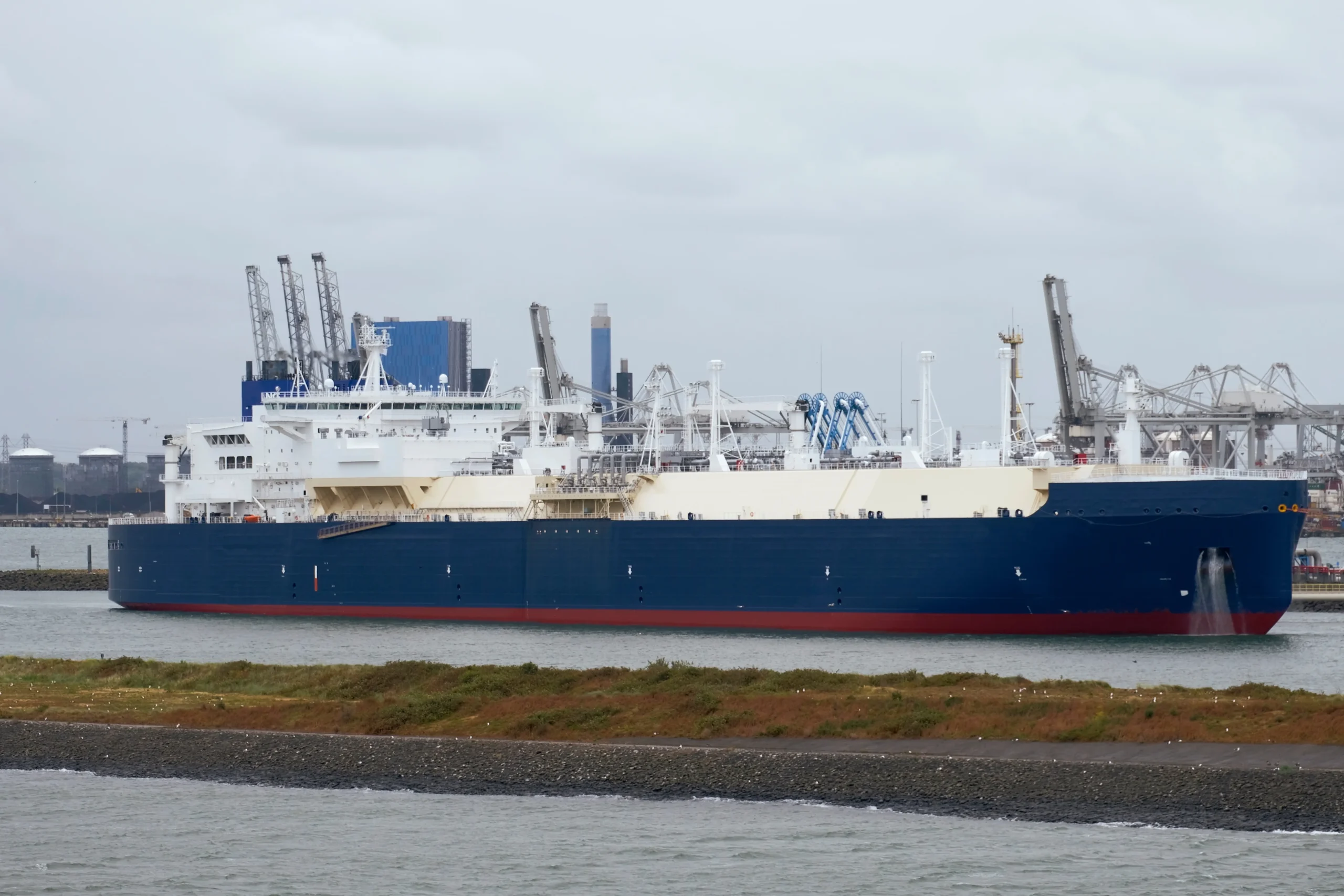
A 42,000 m³ liquefied CO₂ vessel is making progress in Japan
ClassNK AiP granted the design of a standard vessel for the transport of liquefied CO₂ (LCO₂) at low pressure, a solution designed to facilitate the development of future CCS projects in the country.
The approval involves Mitsubishi Shipbuilding, Kawasaki Kisen Kaisha (K Line), Mitsui O.S.K. Lines (MOL), Nippon Yusen Kabushiki Kaisha (NYK Line), Nihon Shipyard (NSY), and MILES the certificate was presented on September 15th during Gastech 2026, held in Bangkok, Thailand.
The project envisions a 42,000 m³ class vessel and represents the first concrete result of the MILES-based standard design framework that the six companies have been developing.
ClassNK assesses the safety of LCO₂ transport
Before obtaining the AiP, the companies conducted a Hazard Identification and Risk Assessment (HAZID) study focused on low-pressure LCO₂ handling operations.
This assessment leveraged the experience of K Line, MOL, and NYK Line in operating vessels designed for transporting low-pressure gases. The analysis identified specific risks associated with handling liquefied CO₂ and defined design criteria aimed at enhancing safety.
The results of HAZID will be incorporated into the standard design of the vessel, this technical basis seeks to facilitate the development of future units intended for maritime transport of CO₂ within Japanese CCS projects.
The AiP confirms that ClassNK He reviewed the basic design and verified its compliance with the applicable technical and safety standards at this stage of the project.
MILES seeks to standardize liquefied CO₂ vessels
The development stems from a Memorandum of Understanding announced on December 1, 2025, following that agreement, the six companies began working on a common framework based on MILES to develop LCO₂ ships and vessels powered by alternative fuels.
With this platform, participants seek to create common designs that reduce the workload during the engineering phase and improve efficiency in construction.
Standardization also aims to strengthen Japan’s capacity to reliably build and supply liquefied CO₂ vessels, this objective is directly linked to the creation of a CCS value chain capable of connecting capture facilities with storage sites.
Maritime transport is gaining importance within the CCS chain
The need for this type of vessel responds to the progress of the CCS projects planned in Japan, once captured, the CO₂ must be moved from the facilities where it is separated to the selected locations for permanent storage.
In this context, LCO₂ vessels allow the transport of large volumes of carbon dioxide by sea and offer an alternative to connect points that do not have direct infrastructure via pipelines.
The participating shipping companies already have experience in international projects, MOL for example, it maintains long-term charter agreements for two LCO₂ vessels that it plans to own for Northern Lights and whose CO₂ transport operations are scheduled to begin around 2028.
K Line, for its part, has participated in the supply of three liquefied CO₂ vessels for Northern Lights and subsequently moved forward with agreements related to two other vessels.
In this way, the standard 42,000 m³ design incorporates previous operational experience in a platform geared towards the future needs of the Japanese CCS infrastructure.
A common platform for shipbuilding
Mitsubishi Shipbuilding, part of the MHI Group, is participating in the initiative along with shipping companies and engineering firms to develop a common solution for transporting captured carbon.
Using a standard platform could reduce the engineering tasks that typically need to be repeated for each new project and improve efficiency during construction. Furthermore, having a previously evaluated design provides a technical benchmark for future LCO₂ vessels.
With the AiP granted by ClassNK, the six companies now have a safety-oriented design basis on which to continue standardizing the low-pressure liquefied CO₂ conveyor and advance its integration within Japan’s CCS chain.
Source: Mitsubishi Heavy Industries
Photo: Shutterstock