Japan prepares financial support for oil pipelines and new crude oil routes given its high energy dependence on Strait of Hormuz.
The Japanese government will strengthen the security of its oil supply through a strategy that includes diversifying suppliers and supporting pipeline projects capable of avoiding the Strait of Hormuz.
The initiative is part of a package presented to the Green Transformation Implementation Council (GX), specific measures and legislative initiatives linked to the plan must be defined before the end of the year.
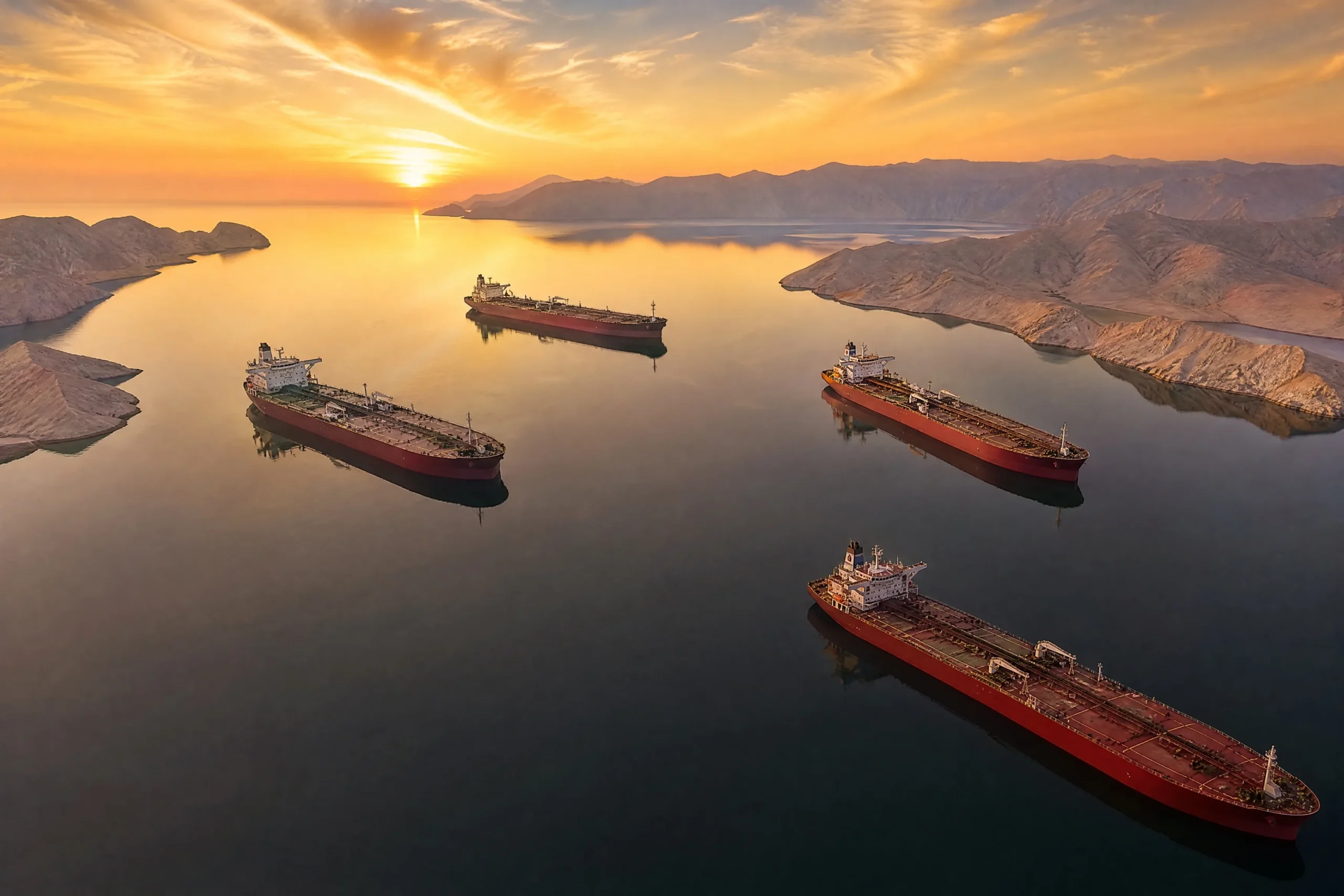
Furthermore, the strategy addresses Japan’s vulnerability stemming from its reliance on a maritime route subject to significant geopolitical tensions. In 2025, the Middle East accounted for 94% of Japan’s crude oil imports, and 93% of those imports entered through the Strait of Hormuz.
Japan seeks alternative routes to the Strait of Hormuz
Given this scenario, Tokyo will collaborate with Middle Eastern producing countries to promote pipeline projects that allow oil to be transported without crossing the strait.
Financial support will be channeled through the Japan Metals and Energy Safety Organization (JOGMEC), a state agency that will play a central role in reducing the risks associated with these investments.
Among the alternatives being considered are infrastructures connected to Fujairah in the United Arab Emirates and Yanbu in Saudi Arabia. Both points provide access to oil terminals located off the usual route through Hormuz.
In turn, diversification could increase the weight of other oil suppliers, the United States, Algeria, and Peru are among the alternative sources being evaluated to reduce Japan’s exposure to potential disruptions in the Middle East.
The Government will share the costs of alternative crude oil
However, importing oil via different routes can significantly increase logistical costs, therefore, the Japanese government plans to establish a levy-funded mechanism to share these additional expenses among refineries and trading companies.
The measure aims to allow companies to use alternative supplies when necessary without individually bearing the entire increase in transport costs.
Furthermore, the Asian country plans to create a reinsurance system for shipping companies, with the aim of maintaining maritime operations in scenarios where the international reinsurance market ceases to offer sufficient coverage. The set of measures thus expands the strategy from oil infrastructure to maritime transport and financial risk management.
Japan will bolster its naphtha reserves
Another front will be the storage of raw materials essential to industry, Tokyo intends to create national reserves of naphtha in the form of crude oil after supply disruptions affected the availability of this petrochemical product.
Naphtha is a raw material used in numerous industrial chains, including the production of plastics and printing inks. Its shortage demonstrated that a disruption in energy transport can quickly spread to other sectors of the Japanese economy.
Therefore, increasing reserves would provide additional leeway in the face of future restrictions in the oil supply the derivatives.
Japan will reduce its dependence on fossil fuels with nuclear and renewable energy.
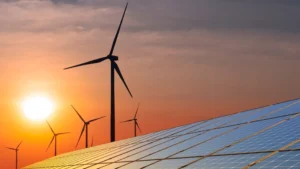
In parallel, Japan wants to reduce its structural exposure to energy imports through greater participation in the nuclear power and renewable sources.
The country spends more than 20 trillion yen, about $125.8 millions, annually on fossil fuel imports, to reduce this burden, the government plans to replace between two and five nuclear reactors during the 2040 and between 11 and 14 during the 2050.
In addition, Japan aims to develop domestic supply chains linked to perovskite solar cells, next-generation geothermal energy, and offshore wind power.
In this way, the strategy combines immediate measures to protect the crude oil imports with long-term changes aimed at increasing the country’s energy self-sufficiency and reducing its exposure to disruptions in the Strait of Hormuz.
Source: Hydrocarbon Processing
Photo: Shutterstock