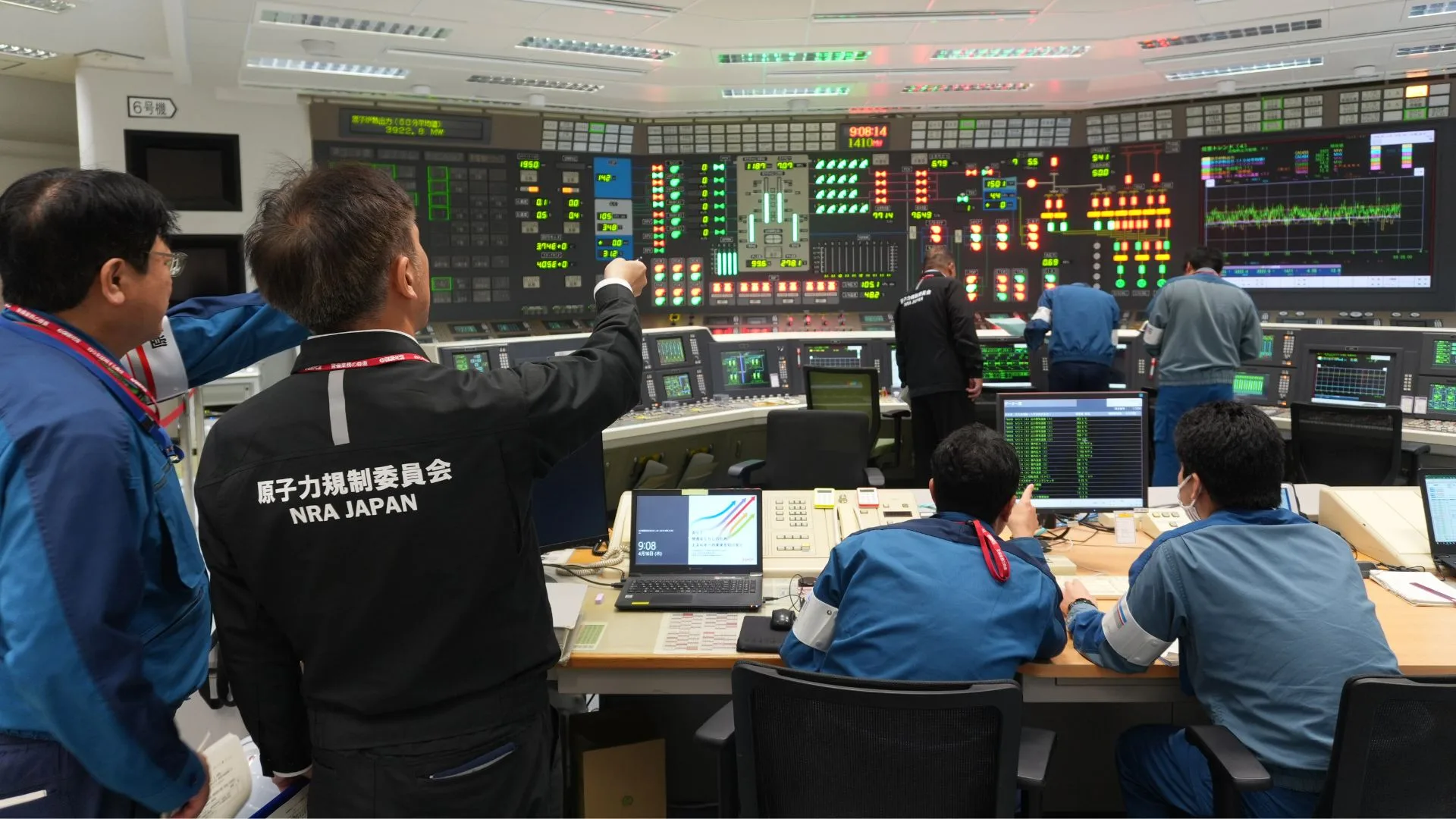
Japan restarted Reactor No. 6 at Kashiwazaki-Kariwa, the world’s highest-capacity nuclear power plant, to meet electricity demand intensified by the 2026 global energy crisis. However, the restart, operated by Tokyo Electric Power Company (TEPCO), highlights a problem with no short-term solution: spent fuel pools at the country’s plants are at an average of 80% of total capacity, according to the Ministry of Economy, Trade and Industry (METI).
The Kashiwazaki-Kariwa pools
As of the end of December 2025, the cooling pools at 17 nuclear power plants held more than 17,000 tonnes of spent fuel—15,422 metric tonnes—according to METI data cited by the Associated Press. Kashiwazaki-Kariwa is one of three facilities whose pools will reach their limit within five years, according to the Federation of Electric Power Companies of Japan. Reactor No. 6’s pool is operating at 88% capacity, visible from the plant’s observation deck.
General Manager Inagaki confirmed that TEPCO is transferring fuel from Reactor No. 6 to other units at the plant with more available space, while the company awaits the resumption of shipments to a dry storage facility in the north of the country. The only operational interim storage facility in Japan is in Mutsu, Aomori, reserved for TEPCO and a smaller electric utility.
Japan and the lack of a permanent repository
Japan has spent decades without resolving permanent geological disposal for high-level waste. The government is evaluating Minamitorishima, a remote island south of Tokyo, as a possible site for a feasibility study; it is the fourth location considered since the early 2000s. The review process would take about twenty years, and municipalities participating in the first phase could receive up to 2 billion yen ($12.8 million) in subsidies.
Lila Okamura, a Senshu University professor specializing in environmental policy and nuclear waste management, warned that Japan must also account for significant quantities of high-level waste stemming from the Fukushima disaster, much of which has yet to be quantified. Selecting the site and building the facility would require a century, plus tens of thousands of years of monitoring in deep storage.
The real limit of the restart program
The restart of Kashiwazaki-Kariwa is part of Japan’s bet on nuclear energy as a pillar of the energy transition, accelerated by the 2026 oil crisis. Japan has two options for managing spent fuel: direct disposal as waste or reprocessing to extract reusable plutonium and uranium. The reprocessing program, centered on the Rokkasho plant, has accumulated decades of delays.
Without a viable long-term storage solution, reactors could be forced to shut down once their pools run out of capacity, according to experts cited by AP. The energy security dimension is straightforward: if operating reactors cannot transfer spent fuel, the restart of new units is constrained by available physical space, not electricity demand.
Japan’s nuclear policy faces a structural contradiction: restarting reactors without resolving the final destination of spent fuel prolongs regulatory uncertainty and undermines the program’s long-term viability. The government estimates that a definitive solution requires more than two additional decades of planning.
Sources: Associated Press / NPR — “Japan reactor restart sparks fresh fears over nuclear waste storage”, June 11, 2026 | World Nuclear News — “Tepco restarts Kashiwazaki-Kariwa unit 6”, February 9, 2026
Photo: TEPCO